Joker is a truly unexpected treat; by flipping long-standing preconceptions of DC Comics’ most popular villain on their head, it delivers a moving tragedy that’s rooted in the fantastic writing and excellent performance attached to its main character. Although it makes strides to carry a thematic current, it doesn’t always hit the mark, and as much as its comic book connection and cinematic inspirations lend themselves to the movie, they also detract from the film’s attempts to feel original. Regardless, it proves to be a much-needed breath of fresh air for DC and comic book movies in general, and quickly asserts itself as one of the best movies released this year.
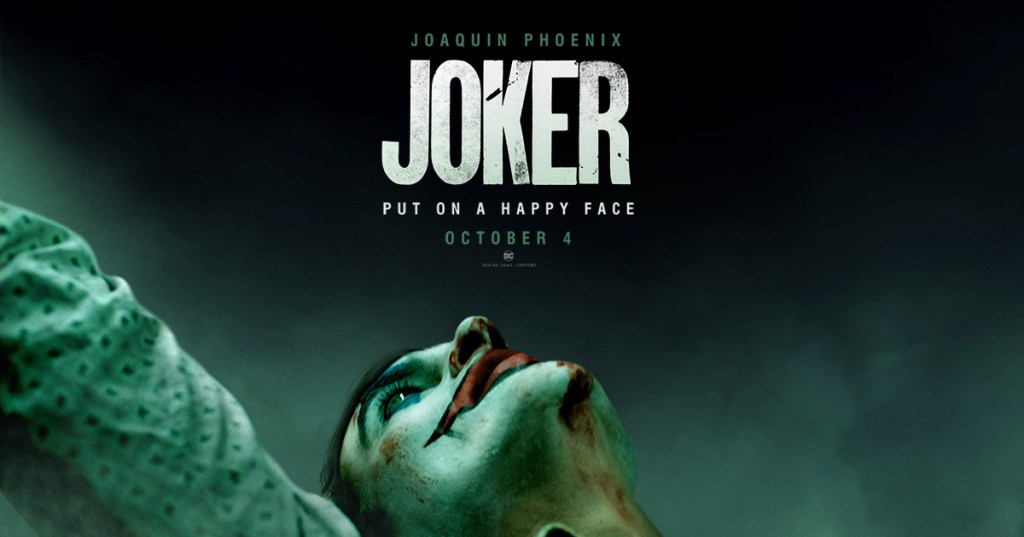
There’s been nothing short of a storm in the media leading up to the release of DC Comics and Warner Brother’s latest film, Joker, with incessant flapping about the supposed “danger” this movie poses to society, and potential violence it might spur in the so-called “incel community”. It’s undoubtedly a product of the contemporary hysteria over fringe right-wing circles and their online presence, as well as the widely accepted fiction that the 2012 Dark Knight shooting was inspired by the Joker character in that film, yet based on what I’ve seen of Joker‘s marketing, I fail to see what relevance this has to real world politics beyond being forged into another talking point for the never-ending “culture war”. However, what the film’s promotional material has done is thoroughly stoke my feelings of anticipation, especially given that I didn’t particularly think much of the idea of a solo outing for the Clown Prince of Crime penned by the guy behind the Hangover films back when it was announced, but after seeing the film today, I’ve been surprised and then some.
Spoilers ahead!
Joker sets out a melancholy atmosphere from the very beginning, as we are introduced to the day to day life of our protagonist – rental clown, struggling amateur comedian and social pariah Arthur Fleck (Joaquin Phoenix), who even by virtue of having a definitive name is differentiated from more mainstream takes on the Joker character. It goes further through the story’s more sympathetic take on the character, who’s gentle nature is contrasted against the harsh, uncaring attitude of the world around him, which takes the form of a grimy, grounded take on DC Comics’ Gotham City in the 1980s. It’s less of the gothic, comic-book world of the Tim Burton Batman movies and more closely mirrors the real life New York City, but it complements the gritty atmosphere of the story and allows it to feel more serious than your standard comic book caper. This is demonstrated twofold as the story takes the form of a tragic character study that sees Arthur befallen by repeated instances of bad luck and abuse, that when compounded by his mental illness, cause him to lose his grip on reality and begin lashing out through impulsive acts of violence. Arthur, and by extension the film in its entirety, are undoubtedly carried by Phoenix’s absolute commitment to his performance, from the intense physicality he brings to the role to his frighteningly unpredictable changes in mood, not to mention the disturbing and sure-to-be iconic laugh of his take on the titular character.

As an outcast in the eyes of the world, Arthur ultimately seeks a sense of belonging and approval from a number of places; whether that be chasing his mother’s delusion that Thomas Wayne (Brett Cullen) is secretly his father, his attempts to court his neighbour Sophie (Zazie Beetz), or his parasocial relationship with talk show host Murray Franklin (Robert De Niro). However, when he is attacked by three Wayne Enterprises employees during a subway ride, Arthur inadvertently sparks a political movement in the downtrodden citizens of Gotham after killing the businessmen, and when his clown makeup becomes the face of the movement and the ensuing riots, he begins to find that acceptance he so badly desires. The subtext of the film’s political elements drive at an ever increasing disparity between the rich and the poor, and although the commentary is vague enough not to overpower the plot of the film, they’re also so vague that it fails to make any sort of poignant remark at all – likely in order to stray as far away from controversy as possible, and it would have better suited the story had it focused on delivering its other, and frankly far superior point of messaging with regards to the mishandling of mental illness by society at large. Still, the civil unrest serves as a compelling backdrop for Arthur’s descent into madness, and its hard not to notice the inspiration Joker takes from Taxi Driver as Arthur becomes increasingly disdainful of the world around him and the societal status quo that has brought him down throughout his life.
This culminates at the film’s end, as Arthur embraces his “Joker” persona for an appearance on Murray Franklin’s show, where he attempts to humiliate Arthur with a video of one of his hysteric episodes. Arthur confesses to the initial murders and spews a vitriolic dismissal of contemporary society before killing Franklin himself; inciting total chaos in the streets as Gotham becomes the crime ridden hellhole reminiscent of more traditional Batman stories, including the film’s own take on the deaths of Thomas and Martha Wayne. The latter portion of the film also reveals the extent of Arthur’s delusions as it shows that much like his initial daydreams about appearing on Murray’s show, his relationship with Sophie was entirely fabricated, and it’s implied that he even kills her as a final act to destroy what remains of Arthur alongside murdering his elderly mother. As much as it’s clear that he has long been hiding violent and insidious impulses, Arthur is ultimately shown to be a reflection of the cruelty that he has suffered, giving him a more sympathetic slant as opposed to portraying him as a cut-and-dry villain, and the story offers a morbidly satisfying end point as he finds his peace stood amongst crowds of rioters celebrating him as a Messianic figure. In spite of some amateurish dialogue and a nipping sense of plagiarism that accompanies certain elements that the plot borrows from other films, Joker is an exceptionally well rounded tragedy with a masterfully crafted character at its heart.
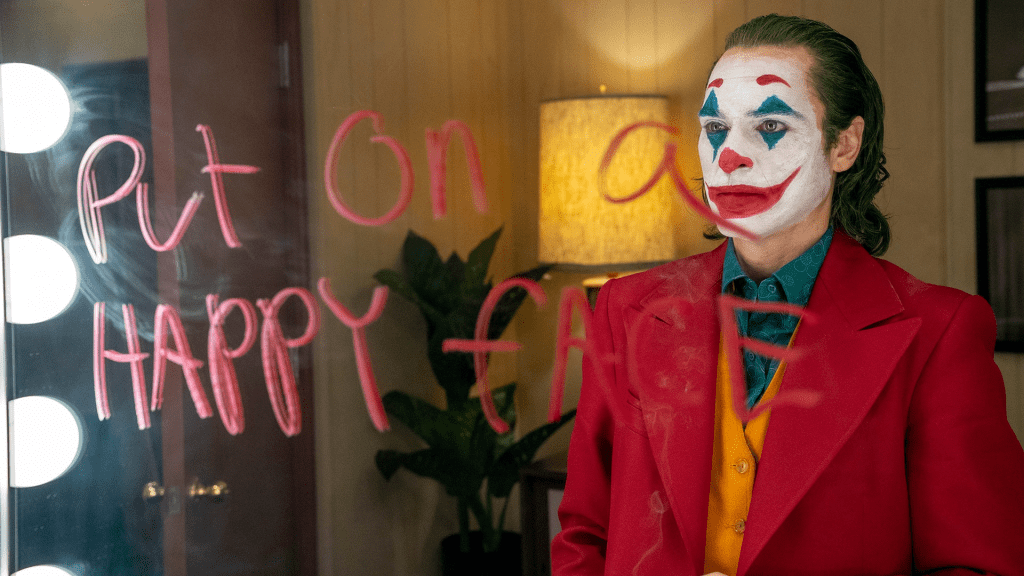
As much exceptional performances and masterful storycraft bring Joker to life, it’s only elevated by the superb standard of filmmaking that accompanies it, with a distinctly artistic presentation that makes it clear the movie wishes to be taken seriously. Beyond blatantly excellent cinematography, the film uses colour as an excellent companion to the content of the script, with the sickly, muted colours of Arthur’s day to day life becoming bright and vibrant as he loses his grip on his sanity. This is reflected in his costuming too, where the dull greys and browns of Arthur’s wardrobe gradually become the reds, yellows and greens of his iconic Joker outfit, and the film consistently makes use of masks and makeup as iconography to reflect the state of its characters. An unorthodox, groaning score from the mind of Hildur Guðnadóttir enhances the discomforting atmosphere of Joker‘s Gotham City with its uniquely haunting sound, while it uses a small number of popular songs to reflect Arthur’s mindset at key moments. Finally, the film manages to offer action setpieces that compliment the story of the film, without descending into the stereotypical full blown fist fighting so commonly seen in the comic book genre – instead opting for frantic chase sequences and brief but intense bouts of violence that perfectly reflect Arthur as a character.
It’s safe to say Todd Phillips and DC as a whole took a gamble with Joker; especially when straying as far from the titular character’s comic book origins as they feasibly could, but they’ve proven that with a good enough story you can make a grounded, character-driven comic book movie work – something that much of the industry has failed to see. By keeping the character and the setting at the heart of the film, everything else stems from Arthur’s characterisation and Joker‘s take on Gotham City; making it a tight, well rounded project that near enough achieves everything that it set out to. With only minimal flaws in the content of the film itself, Joker is held back by little else than a lack of originality and uncertain footing in its thematic elements, but with that aside, it undoubtedly rises above naysayers in the media thanks solely to its artistic merit.
8/10


 A.J. Slater
Leave a comment