The Mandalorian’s premiere season breathes new life into the Star Wars galaxy thanks to its classic Western-style storytelling, solid archetypal characters, and visceral action, proving that with enough love and attention to detail, the franchise has much more left to give. Although the writing can leave a lot to be desired after it’s all said and done, stellar performances, revolutionary special effects and a fantastic soundtrack give the show an extra edge – making it not only some of the best Star Wars has had to offer in the last few years, but one of the most memorable sci-fi titles of recent times too.
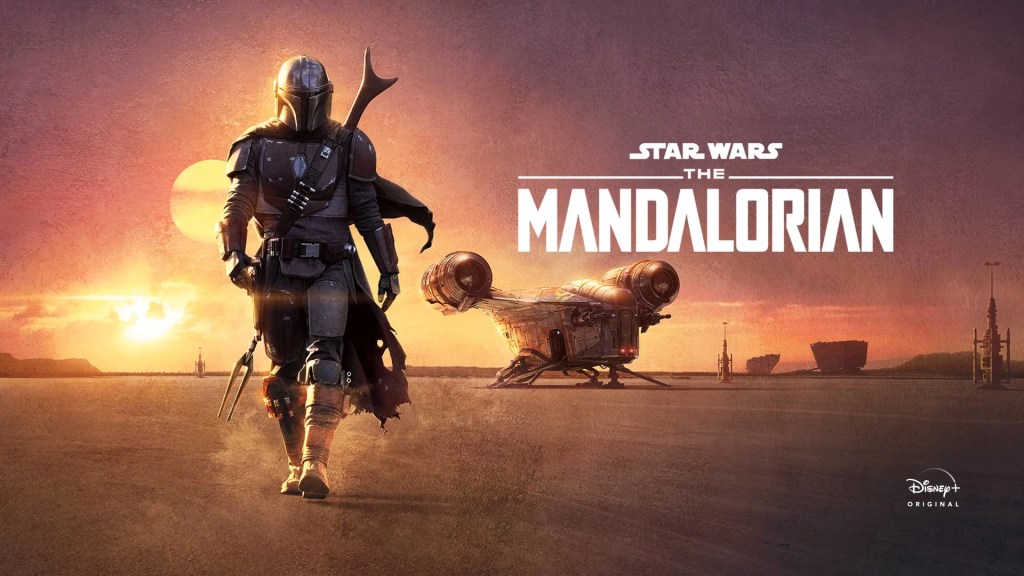
I don’t think it’s amiss for me to say that all things considered, Disney’s handling of the Star Wars brand has been nothing short of a failure. Although with a few exceptions, everything that Lucasfilm has put out under the House of Mouse has generally ranged from mediocre to downright terrible – I’m looking at you, Rise of Skywalker (you can read my review here!). Nevertheless, given that the company was looking to broaden their horizons by going into live-action television serials on the new Disney Plus streaming service. Given that the service is not yet available in the UK, I had to get a little… creative – but I was nevertheless determined to give The Mandalorian a fighting chance, and after wrapping up it’s eight episode premiere season today, I’ll admit I’ve become a fast fan.
Spoilers ahead!
The Mandalorian‘s first episode was very much a rollercoaster ride in its own way – it is of course the first time that Star Wars has brought a series to live-action, and it begged the question of whether it would even work, let alone be of good quality. However, my worries were soon quashed, as the premiere episode delivers a solid adventure built around getting to know its titular character (Pedro Pascal), as he undertakes a secretive bounty on behalf of a surviving faction of Imperials, following chronologically from Return of the Jedi. The hook at the end is that Mando’s elusive target is a small, Yoda-like child, and the second episode, while a little meandering, reveals that The Child is also Force-sensitive. It’s not until the third episode that things really kick off, as Mando grapples with his conscience after handing off The Child for a payment, and ultimately turns on the Imperials and the Bounty Hunter’s Guild to rescue him. From here, the bulk of the episodes are relatively self-contained adventures, taking clear inspiration from a number of classic Westerns, as Mando tries to lay low and evade his enemies. Realising that they’ll never be safe on the run, Mando gathers up his various newfound allies and returns to Nevarro to wipe out the Imperials there for good. It doesn’t quite go to plan, as we learn that there are a fair few more Imperials than first realised, led by the sinister Moff Gideon (Giancarlo Esposito), but by the end it appears that Mando and the Child are safe for the time being, and that’s that until the presumable next season. The story is pretty straightforward all things considered, but given that the episodes can be a little shorter than you’d expect from the premium TV format, they do well to keep the plot simple and work in a suitable amount of character work, world building and action also.
The writing isn’t without it’s flaws however. For one, the overarching plotline doesn’t quite feel fully realised – it’s clear that some material is being saved for future seasons, but there are a lot of questions that go unanswered. By the end we still know virtually nothing about The Child, which doesn’t make for a very engaging mystery, especially when it comes to the season’s rewatch value, and even minor plot points start to become glaring issues when you think back on them – why did the Imperials want The Child alive, but then send countless bounty hunters to kill him? How did a bunch of pirates even manage to steal him from the Empire? What even for? It ends up feeling a little frustrating when the weekly releases keep you hanging on for answers that never even come. The story also plays hard and fast with Star Wars lore, much of which was already penned by the series’ own creator, Dave Filoni. Mandalorians as a whole have gone from simply just a planet/race of people to some sort of warrior faith; spread out across the galaxy and bound by strict rules, notably being forbidden from removing their helmets, which all seems like a heavy contradiction to what we’ve seen of them before. In spite of the inconsistencies, The Mandalorian does feel refreshingly detached from the mainline story of Star Wars. Sure there’s a couple of big references here or there, from an episode on Tatooine to a possible Boba Fett return, but it nice to have something that feels original and somewhat removed from the events of the Skywalker Saga when they’re so often relied upon as a storytelling crutch across Star Wars media. That sense of novelty echoes throughout the series; for one, the fact it is a live-action series already differentiates it from anything seen before in Star Wars, and its Western inspirations, although sometimes a little too familiar, offer a breath of fresh air to the brand also.
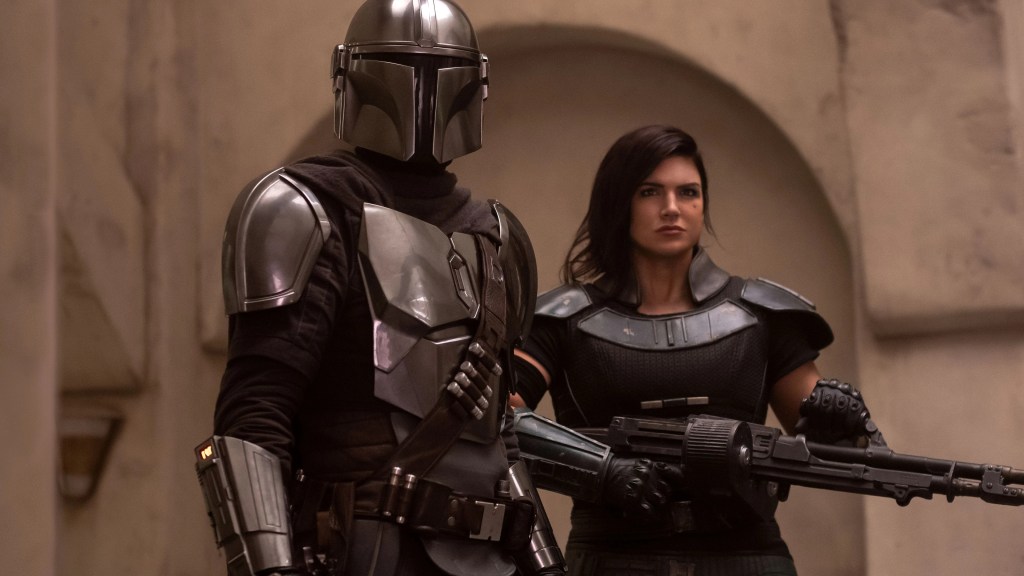
That Western inspiration can also be felt through The Mandalorian‘s characters – right from the get-go, it’s hard not to recognise the titular Mando as the stereotypical nameless and stoic gunslinger popularised by the likes of Clint Eastwood’s Man With No Name. As a no-nonsense bounty hunter, Mando gets the job done even as he’s knocked down time and time again, but his moral compass guides him to protecting The Child and other innocents throughout the galaxy, making him a refreshingly complex protagonist compared to the likes of Rey, Finn and others from the Sequel Trilogy. As his mission puts him on the path of many allies, Mando also learns to overcome his zealously independent nature and work alongside others for the greater good, which proves to be a nice little character arc which is only supported by his growing sense of responsibility to The Child. Mando isn’t the only character who follows a very traditional archetype; he finds himself working alongside a war-weary ex-soldier, a wise old farmer, and all number of self serving scoundrels amongst others over the course of the season, and while most of them lack the same sort of progression Mando receives, a suitable amount of depth and exploration to their motivations means they work just fine as static characters. Where The Mandalorian doesn’t fare so well is with regards to its antagonists; between one-off villain-of-the-week types, and overarching nemeses that don’t have anywhere near enough screentime to be fleshed out, there’s not much to latch onto in terms of a solid bad guy, and even the magnetic performances given by Giancarlo Esposito and Werner Herzog as Moff Gideon and The Client respectively aren’t enough to carry paper-thin characters with very little discernible motivations.
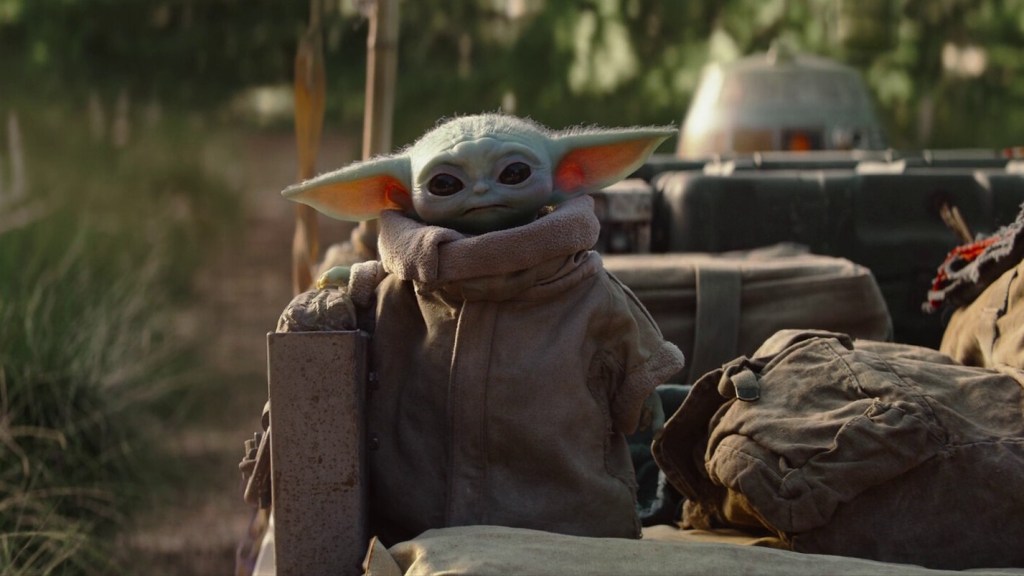
Still, while The Mandalorian‘s writing might not be all the way there in terms of quality, one aspect of the show that doesn’t disappoint is its production values. Chief of all is the show’s impressive new soundstage technology, dubbed “The Volume”, developed for the series by special effects powerhouse Industrial Light & Magic, who continue to affirm Star Wars‘ place on the furthest frontiers of cinematic technologies. With realistic lighting and real-time rendering, The Volume provides the show with vast, realistic environments that enhance the show’s already-impeccable set work, and it gives it an incredible edge in its visuals that far exceed that of most other TV shows, and even many films. This is only bolstered by impressive CGI, that while not quite on par with the 400 million dollar-plus budget of Episode IX, certainly holds its own with an inherently cinematic quality to the special effects across the board. The same goes for countless other facets of the series – the set design I’ve already mentioned, but on top of this the costuming, editing and sound design all meet the very high standard one should expect from a Star Wars production. It’s good then that the stunts and choreography don’t disappoint either, with weighty, intense action scenes across the season that are only knocked down a peg by the plot mechanics of Mando’s Beskar armour saving him time and time again from certain death. One of the simplest pleasures this show has to offer is in observing the work put into the puppet for The Child, which despite the option to forego the practical effects in favour of CGI, ultimately brings the adorable little critter to life. Last but not least, Ludwig Göransson’s soundtrack, much like many other elements of the show, breathes new life into Star Wars thanks to a unique sound that wholly complements the story despite being a far cry from the more classical sound of John Williams – especially with that main theme I’m still struggling to get out of my head!
In truth, The Mandalorian‘s reinvention of classic Star Wars tropes is what makes it work so well – it laid out the strong foundations of the setting and the lore, and took a risk by building on that with an as-yet unexplored style. Yet, it paid off and then some, as the show’s Western inspirations produce an ultimately satisfying body of work when fused with those key facets of the Star Wars brand; revitalising it in a way I don’t think many had considered possible. Still, that’s not to say that it’s without flaw, as a variety of shortcomings in the script – as well as a general air of persistence to drag out the show’s plot as much as possible into future seasons – do great damage to the overall quality of the writing. Regardless, I was very impressed with what The Mandalorian was able to accomplish, especially in the wake of Episode IX, and I look forward to seeing where it goes next.
7/10


 A.J. Slater
Leave a comment