The Clone Wars makes a short but sweet return for its final season, delivering a heartfelt and action-packed conclusion to the beloved series, even when a large chunk of its limited runtime feels wasted on low quality filler episodes.

Besides the movies themselves, The Clone Wars was probably the most important thing that ever came out of the George Lucas era of Star Wars. It brought into that universe new and beloved characters like Anakin Skywalker’s snippy young Padawan Ahsoka Tano, or loyal Clone soldier Captain Rex, as well as bringing back existing characters like Darth Maul and giving them a second chance at life (literally in his case). It also bridged the story rich gap between Episode II and III, helping us get to know some of the background Jedi characters in those films, as well as deeply humanising the Clone Troopers, making the events of Revenge of the Sith all the more heartwrenching. Perhaps most importantly, it was a staple part of the entertainment diet of the growing Star Wars superfan born in the early 2000s, so when it was prematurely cancelled back in 2013, it was a bit of a bummer. Yet, fast forward five years, one 4 billion dollar studio acquisition, and a juggernaut fan-led campaign for the show’s revival, and it was announced that Clone Wars was making its return for a final (but unfortunately brief) season to be aired on the Disney Plus streaming service. Now, having just wrapped up this week, let’s see how it was.
Spoilers ahead!
The final season is comprised of three distinct arcs, with each one consisting of four connected episodes, and first up is The Bad Batch. Fun fact – the majority of these episodes were completed in an early stage of animation, and have been available online for years now, albeit in an unfinished state. It’s this arc that feels most like your average Clone Wars episodes, with a unique mission for the main characters and action packed battles between Jedi, Clones and Droids. Credit to the creators for retaining the feel of the original series, but that’s not to say there’s nothing fresh about the first set of episodes. We’re introduced to the titular squad of Clone Force 99, made up of four Clones with distinct personalities, looks, and skills as a result of mutations in their DNA, making them a bit like the X-Men of the Star Wars universe. They’re an entertaining presence on screen, both thanks to their unique personalities and their function in the action scenes. This speaks to the clear theme of this arc about the individuality of the Clones – that despite being all created from the same DNA, they’re not all uniform with one another, and are more than just mindless soldiers. It also takes the time to reflect on the many Clone characters that had died over the course of the series, and this really serves to set up Captain Rex’s place in the story prior to the finale. His character essentially exists at the heart of these episodes as he leads the mission to track down his fallen brother-in-arms, Echo, who in a shocking bit of body horror for a children’s cartoon, has been experimented on and turned into a living computer by the Separatist villains. Overall, while it isn’t the most ground-breaking story ever told, the first set of episodes is a nice, entertaining way of easing back into the show as well as providing some valuable insight into some of the main characters.
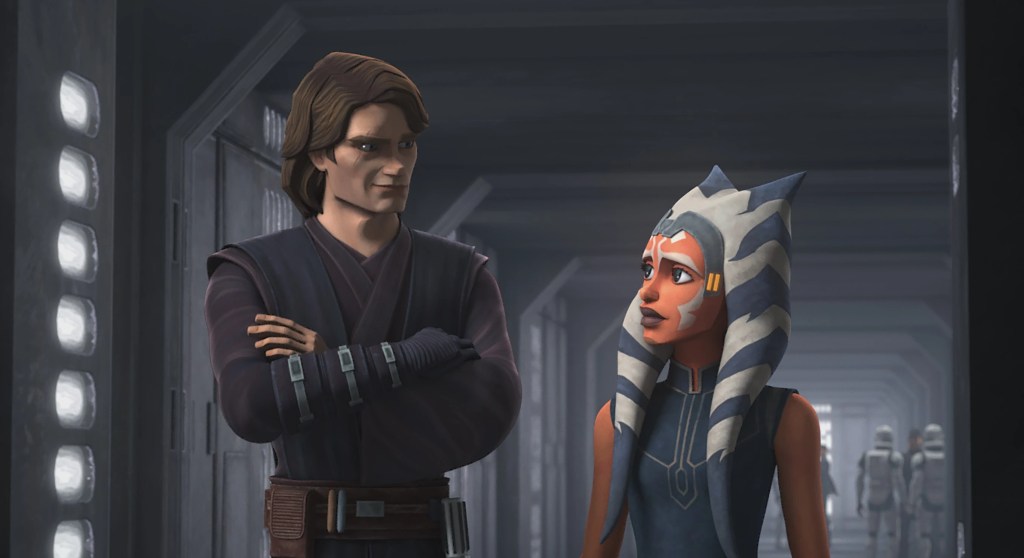
Our second arc, entitled Ahsoka’s Journey, is undoubtedly the weakest of the bunch. Much like the first arc with Captain Rex, the second set of episodes serves to bring viewers up to speed with Ahsoka’s place in the story, so if The Bad Batch asks the question “what does it mean to be a Clone?”, Ahsoka’s Journey equally asks what it means to be a Jedi. However, the way in which this is done leaves a lot to be desired. Some time has passed since Ahsoka left the Jedi Order at the end of the fifth season, and she finds herself caught up in the lives of two smugglers in the Coruscant underworld. The sisters, Rafa and Trace, exist to show the negative impact of the Jedi and the Clone Wars on the ordinary people of the galaxy, as you come to find out they were orphaned by Jedi antics seen earlier in the show, but the message is largely diluted by the characters being so abrasive and unlikeable. This is made all the worse by the tediously boring plot across these episodes that only seems to exist to give these characters something to do together. The first part has the three characters chasing rampaging robots across the city, and whilst I see the merit of establishing a trusting relationship between the characters by forcing them to work together, the episode itself is highly uninteresting and feels like a waste of the very small amount of time this season had to work with. It doesn’t get much better from there, as the next three episodes stretch out the whole “smuggling run gone wrong” thing far longer than necessary. Honestly, the only time my interest was piqued was on the visual callbacks to 2018’s Solo, as well as the appearance of Maul and the Mandalorians towards the end to lead into the finale, but otherwise the middle set of episodes were largely forgettable sludge.

Right off the bat, the third and final arc – The Siege of Mandalore – is noticeably different to any other episodes of The Clone Wars. In a very meta fashion of nostalgia-baiting, its opening titles are a beat by beat imitation of Revenge of the Sith, complete with the original Star Wars theme and even a 2005-esque Lucasfilm logo. This is, of course, completely by design, as this entire arc is seamlessly interwoven with Episode III’s plot in a way that concludes Clone Wars in a beautiful fashion, whilst complimenting the story of the movie itself, resulting in something that feels like more of a companion piece to the film than a simple cash-in on fond memories. The two previous arcs converge merely hours before Revenge of the Sith‘s opening as Ahsoka reconnects with her old friends to plan an attack on Darth Maul’s seat of power on Mandalore, but plans change when Anakin and Obi-Wan rush off to rescue Chancellor Palpatine, kicking off the events of the film. A number of references to Episode III’s story crop up now and then across the arc, and despite knowing exactly what happens, they’re all delivered in a way that feels oddly fresh and impactful. Some solid action scenes lead into the confrontation between Ahsoka and Maul, where the sinister atmosphere starts to build alongside the fantastic duel sequence. The last two episodes ramp it up as Order 66 begins and the Clones turn on Ahsoka, giving her side of the events that we’ve seen across all sorts of Star Wars media. These are very action heavy episodes so there isn’t much to say for the story aside from a few scenes where Ahsoka and Rex reflect on their journeys up until this point for a bit of emotional weight. The real kicker comes at the very end however, with the final scene of Ahsoka stood over the graves of her former brothers-in-arms. Without a word of dialogue, this ends up being perhaps the most poignant and emotionally rich scene in the entire series, tying together the crashed ship, helmets of the dead Clones, and finally Ahsoka dropping her lightsaber to the ground in a powerful visual metaphor to signal the end of The Clone Wars and the series itself. This is followed by an equally sad stinger of Anakin, now entombed in his iconic Darth Vader suit, arriving at the same location some time later, seemingly to investigate the fate of his apprentice. The reverence that the final arc shows for the source material almost seemed like a long-forgotten art by Disney’s standards, so it was a pleasure to sit through something that was made with so much care and deliberation, and I’ll gladly say that it’s been some of the best content to come out of the entire franchise.
Whilst the final season of Clone Wars feels very much like a direct continuation in most ways, being six years since the last episodes aired has had its benefits too. The animation and general visual quality of the show has skyrocketed, and especially so in the final episodes as far as I could tell. In particular, the duel between Ahsoka and Maul was confirmed to be done in motion capture, with original actor Ray Park doing the choreography for the latter. The majority of the main characters also received fresh looks, whether to bring them in line with their appearance in Episode III, or otherwise for story reasons. It’s a shame then that the final season was so short, as there were a number of other unfinished episodes that would have been great to see brought to completion, and arguably more impactful to the season’s wider story. With that said, Clone Wars Season 7 was certainly enjoyable, even when having to slog through those middle four episodes, as it’s the finale that really ties the whole thing together.
7/10


 A.J. Slater
Leave a comment