Marvel Studios’ first foray into animation is a classic example of a great idea poorly executed. The unique animation style and fun premise gets you hooked, but there’s no saving it when nearly every episode is an overcomplicated, rushed mess that tosses basic tenets of storytelling aside to stroke the ego of its writers and their political inclinations.
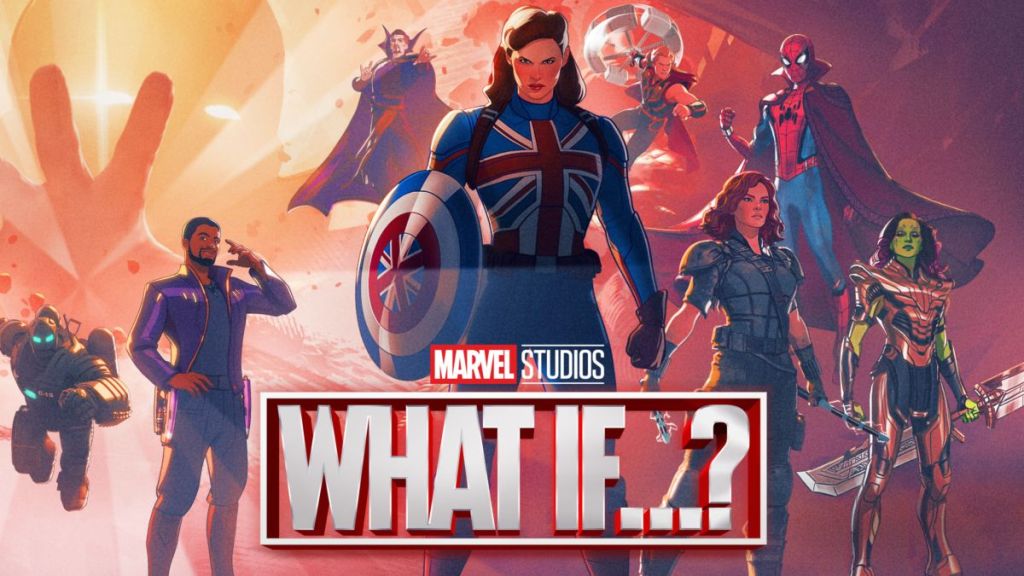
It’s often said that variety is the spice of life, and in the never-halting machine that is the Marvel Cinematic Universe, an animated show exploring alternate-reality versions of the existing films seemed like just what the property needed to freshen things up a little, especially in the midst of the creatively braindead “Phase 4”. Even better was the news that a good chunk of Marvel’s star power would be lending their voices to the series, giving it that extra little bit of credence as to its importance. The marketing kept up my interest, but it kept its cards relatively close to the chest too, only opting to reveal the premise for each episode on a week by week basis. Yet, having just wrapped up today, I’ll admit I’m pretty disappointed.
Spoilers ahead!
The writing is the biggest offender here, which is all the more disappointing considering how much the creators had to play with. Every episode follows a basic formula – taking the events of a select MCU movie, making a change to one element of the story, and seeing how the narrative may play out from there. The first two keep it simple; swapping out the characters behind big names like Captain America and Star-Lord, but they’re also some of the worst that the show has to offer. I tend to suck it up and tell myself I’m being paranoid when it comes to these things, but it’s clear that diversity and inclusion take the helm here, ensuring that the all-new, all-progressive versions of the characters are far superior to their mainline counterparts, no matter what the expense is to the story. Who knew that Thanos just needed a good talking to from somebody a little more melanated to give up on his quest to genocide half of all life? Of course, they are just fun little retellings of those movies, but you’d think there could be a little more to it than “a female Captain America would have done it all better” or “a black Star-Lord would have drastically improved the universe in every way”. This kind of sentiment echoes throughout the less heavy handed episodes too – the writers seem to have gone out of their way to have female or ethnic characters appear far more competent or powerful in almost every possible instance, and I imagine they were let loose to be as deconstructivist as possible thanks to the low-profile nature of the show.
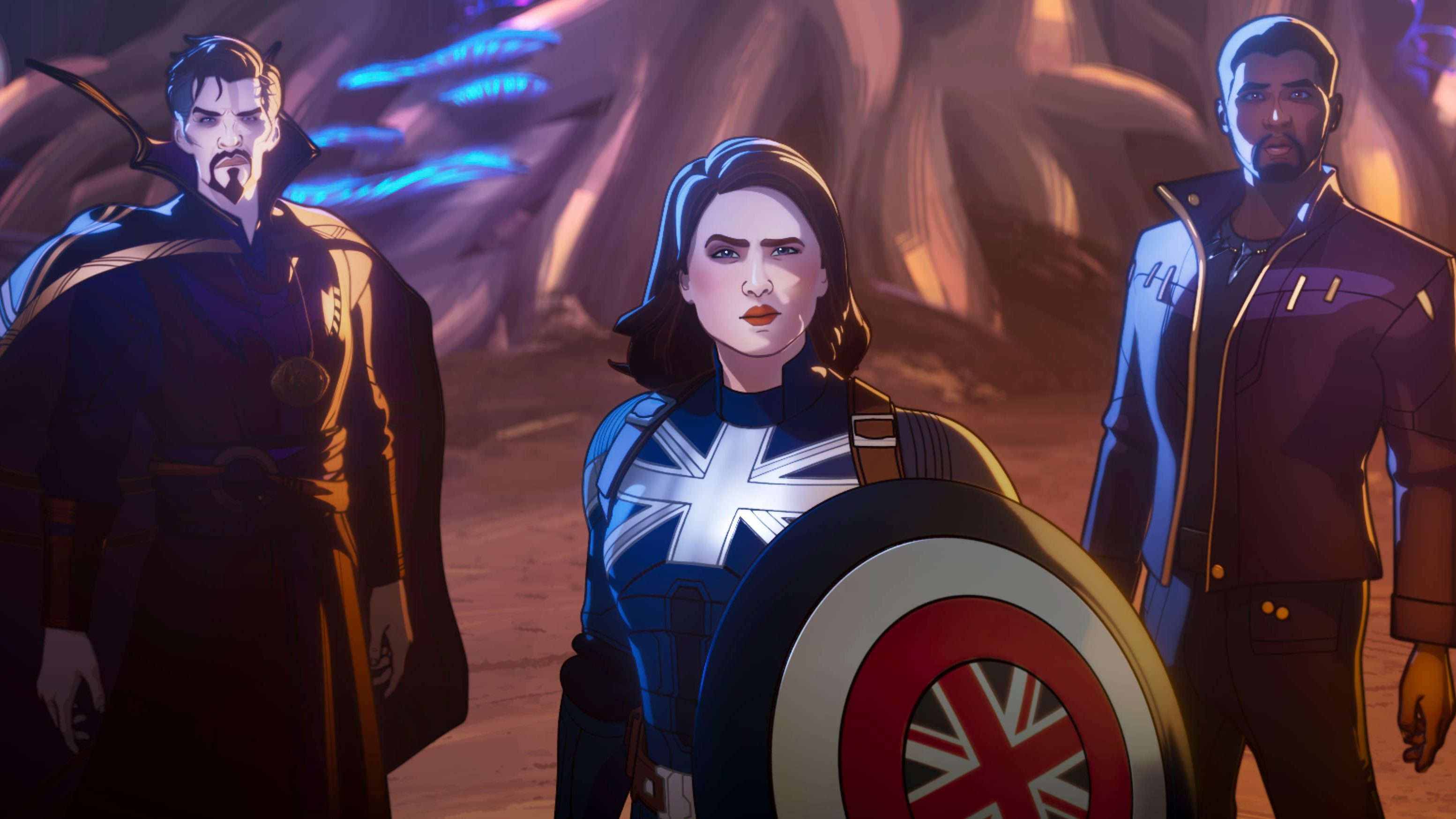
Thankfully the other episodes try to be a little more creative, spinning some bigger stories out from their defining plot points. Episode Three falls victim to some other issues in its writing – more on that later – but it plays around with a nice little murder mystery that crosses over with a number of the films from the Phase One slate, and only reveals its point of origin towards the end of the episode to flip the formula on its head a little. Episode Four was undoubtedly the highlight of the entire season, with a heart-wrenching reimagining of 2016’s Doctor Strange that sees him lose the love of his life as opposed to the use of his hands. Maybe my inclination to tragedy in fiction has elicited a bias, but I was quickly drawn into this version of Stephen Strange as he descends into madness, obsession and evil, culminating in an uncharacteristically dark ending for a Marvel story. Tied together with stunning visuals and solid performances from Cumberbatch and Co, and for me, it was certainly the only episode that managed to come across as well-made all around.
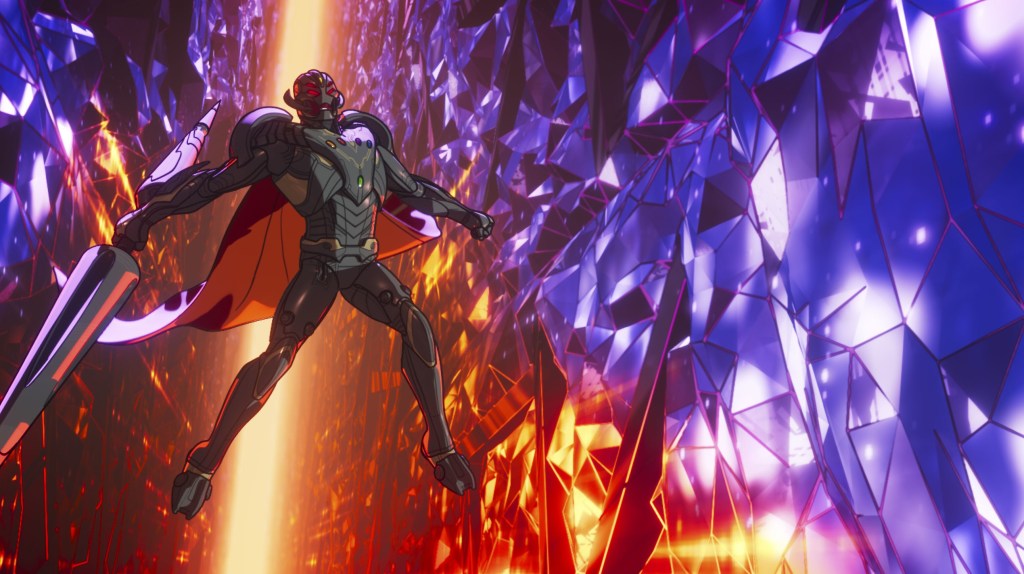
Unfortunately, it’s all pretty much downhill from there. The Marvel Zombies-inspired fifth episode is pretty fun on a superficial level, but just doesn’t have the time to grow into anything beyond a highlight reel of MCU heroes being turned into undead versions of themselves, and Episodes Six and Seven are pretty much just bland, forgettable sludge with a little more divisive rhetoric sown in to pad out the remainder of the season. The finale comes as a sort of two-parter, with Episode Eight focused around an alternate Age of Ultron that sees the titular android lording over a post-apocalyptic future where he won out over the Avengers. It’s another fun one, but it’s also written completely haphazardly, with many key moments being glossed over to get the plot moving, and some unbelievably imbalanced power disparity between characters. The final episode isn’t terrible, but much of the plot is largely nonsensical considering the stakes, and really it’s just a drawn out, predictable “team-up special” kind of thing that just serves to bring the show’s original creations together for a handful of Avengers-style moments.
With maybe one or two exceptions, the episodes generally suffer from some terrible pacing, indicative of a creative tug-of-war between the allocated run-time and all the story that the writers wanted to cram in. As I’ve already mentioned for a couple of examples, they really do blitz through the plot in almost every episode, trying to fit even just basic story beats into thirty-ish minutes. A number of them tend to feel like they’ve overshot the mark too; trying to fit in a narrative too complicated, and rather than simplifying it, the writers have trimmed out just about everything else they can. If the cutting room floor wasn’t piled high enough already, the finale also makes it painfully clear that a tenth episode, featuring a Sakaarian Iron Man and Thanos-like Gamora, was also very likely cut out from somewhere in the middle of the season. Despite managing to keep the personality of the characters consistent with their on-screen counterparts, dialogue is also pretty poor. It’s written halfway between quippy cartoon-speak and a tone more akin to that of the live action performances, but ultimately comes across as a mess, especially when you’re being hit with fast-delivered, exposition-filled lines one after the other to keep the story going no matter what.
It’s not all terrible though – many of the show’s peripheral elements were up to a fairly good standard. The performances were pretty solid for the most part – there were a few instances of dodgy fill-ins for absent live-action stars, but equally there were some good soundalikes in there too. That said, even some of the talent from the films didn’t really seem to translate well into voice-acting, but there were no particularly stand-out instances of that, and I’m willing to let it slide considering it may have been the first time many of these actors had forayed into voice work. The show’s animation has generally come under fire across its first season, but I actually quite enjoyed the fusion of its classic style and contemporary approach, creating a look for the series that feels totally unique. The visuals are stunning across pretty much every episode too, with rich colours and atmosphere in addition to the freedom to go bigger and bolder with the design and action sequences. Unfortunately, it’s not enough to carry the series on its own, and ultimately the first season just doesn’t hit the mark thanks to its shockingly low quality of writing, so for now I’ll just have to hold out hope that the presumably inevitable second season won’t waste the potential that this show has to play with.
4/10


 A.J. Slater
Leave a comment