Neutered and impotent; Boba Fett becomes the latest in an ever-growing line of beloved Star Wars characters to be deconstructed into an insultingly ridiculous caricature of their former selves, in his very own show nonetheless. It’s bad enough that the series is hijacked by plot development for its parent show, but it really does speak volumes to the quality of the rest of the season when its best episodes didn’t even feature the titular character. What The Book of Boba Fett is left with is an inconsistent mess of a story with no stakes, no depth and no care; struggling to maintain itself on a clearly stunted budget and ultimately serving as nothing more than a springboard for the next season of The Mandalorian.
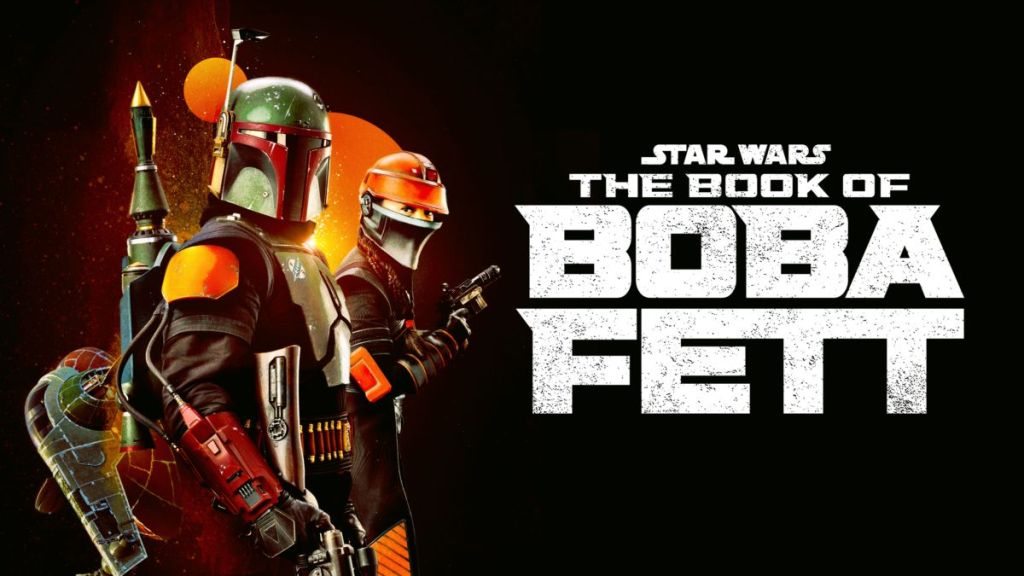
With each further instalment of the Sequel Trilogy, and a fair number of sub-par side projects in-between, my once-indomitable faith in Star Wars has been pretty shaken over the last few years, but the brand’s first live action show, The Mandalorian, has managed to quiet my fears somewhat over the last couple years with its excellent Western-style storytelling and strong archetypal characters. Its second season, though somewhat bloated with an extensive number of cameos, brought back legendary villain Boba Fett (Temuera Morrison) in roaring style; retaining his air of mystery and commanding presence, while letting him off the leash with some beautifully brutal fight scenes (you can read my Season Two review here!). So, as you can imagine, I was pretty thrilled when the post-credit stinger for Mando’s second season came bearing news of Boba’s very own Disney Plus series, but as The Book of Boba Fett came to a close today, more than anything I have to say “be careful what you wish for”.
Spoilers ahead!
Simply put, the fatal flaw at the core of this show is that Boba Fett isn’t really Boba Fett anymore. Right off the bat something feels off with the character – the first episode sees him parading around like an aloof old man, trying to consolidate his newfound power as head of a criminal empire, and failing miserably thanks to his equally newfound incompetence. He acts like a simpleton with no awareness of the world he has supposed to have inhabited for so long – relying constantly on painfully obvious exposition dished out by others to understand what’s going on – and he is treated with an equal amount of disrespect by the characters around him. This becomes all the more evident when he is openly attacked, and the mighty warrior we had all imagined, and even seen in The Mandalorian, was nowhere to be found, instead we are met with this new Boba; near-helpless to defend himself and needing to be carried to safety. It doesn’t get much better from here on out, with the majority of the present day segments being a series of increasingly bad decisions on Boba’s part whilst a cabal of mysterious foes run circles around him as they seek to take over his criminal empire. I didn’t really care for the main plot at all, but it’s made all the worse as you notice just how often it falls to Boba’s allies to guide and protect him through the events that unfold. Whether he’s trotting around in his bathrobe after an attempted assassination, or inexplicably trusting everyone that tries to cross him, Boba is nothing short of a laughing stock time and time again throughout the season.

Intermittent flashbacks provide some underwhelming connective tissue bridging Boba’s appearances in Return of the Jedi and The Mandalorian, but more importantly a half-hearted attempt at explaining the drastic change in his characterisation. With the show reframing the Tusken Raiders as peaceful, indigenous natives in what is some of the most blatant and ridiculous allegory out of Disney Star Wars yet, Boba, for some reason, becomes deeply invested in the wellbeing and rights of the tribespeople that kidnapped and beat him repeatedly, which supposedly teaches him the error of his ways and sees him yearn to create a fairer Tatooine for all. His poorly fleshed out change of heart only serves to demonstrate where the writers wanted to take him, rather than any logical progression based on the character’s history. I imagine the root cause of many of the problems in Boba’s reimagining can be traced back to Disney’s unspoken mandate of ensuring that their protagonists are as moralistic as possible, no matter the history of the character or the detriment it may cause to the story. This seems to have been taken to an extreme level with how passive and meek he comes across as – he’s a crime lord that doesn’t want to do any crime; a supposedly ruthless ex-mercenary who capitulates to every demand made of him by others. It’s ironic that other characters constantly call him out as soft, or weak, because I’d say that’s the perfect way to describe the show’s version of Boba.
Other characters might not be treated with so much disrespect, but that’s not to say that they’re well written either. Ming-Na Wen’s Fennec Shand was a straightforward supporting character in both seasons of The Mandalorian and in The Bad Batch, but here she’s put forth as a co-lead with none of the necessary depth to back it up – I still know nothing more about her than I learned from her first appearance, with no sense of personality or backstory really coming through at all, and she serves as more of a walking dispensary of exposition than anything else. That said, she does often take note of how idiotic some of Boba’s decisions are, meaning the writers clearly had some sense of what they were doing wrong, which just begs the question as to why they stayed the course on this one. The most egregious facet of her character is that she basically exists to do all the things the writers decided to strip away from Boba – she doles out the best strategies for their enterprise, takes the lead in every fight, and worst of all is the one who single-handedly kills the season’s main villains. There’s little to be said for the villains themselves beyond the fact they’re the go-to “criminal bad guys” for any Star Wars project, and in terms of Boba’s supporters your choices are the liberal arts cyborg gang, a big black angry-looking Chewbacca knock-off from some obscure comic book, or two fat blokes poorly dressed up like Gamorrean Guards from Return of the Jedi, all of which are equally lacking in any sort of characterisation at all; only serving to further dilute the audience perception of Boba’s personal capability.

It’s no surprise to see Pedro Pascal’s Mandalorian show up in during The Book of Boba, but in truth, I don’t think Mando even qualifies as a supporting character, given that he takes over two of the season’s seven episodes – both of which don’t even feature Boba in a speaking role! Episode Five is a wholly Mando-centric episode that sees him tracking down the Mandalorian Armorer (Emily Swallow), who dumps a metric shit-ton of lore on him as part of an obvious primer for The Mandalorian‘s upcoming third season. Mando then travels to Tatooine to build a new ship with the help of Amy Sedaris’ Peli Motto, but despite being the standout episode by far, it just feels like salt in the wound to see Mando out in the galaxy, bounty hunting and skirting the law whilst Boba is treated like an afterthought on top of the already thorough assassination of his character. After being recruited to join the fight against the Syndicates, Mando helps round up further allies in Cobb Vanth (Timothy Olyphant) and the people of Freetown, but to my disbelief, the majority of Episode Six focuses on Grogu’s training under Luke Skywalker, whilst Mando debates the merits of Jedi culture with none other than Ahsoka Tano (Rosario Dawson). It just feels like a relentless barrage of unnecessary cameos that turn The Book of Boba Fett into some sort of Star Wars Variety Show, when frankly almost all of this story content would have been far better placed in The Mandalorian‘s next season; making way for plot material that actually could have been relevant to the show.
Nevertheless, the season culminates as Boba and Fennec assemble their allies for a war on the streets of Tatooine with the Syndicates – if you can even call it a war, given that it ends up being a flaccid, by-the-books skirmish across a few near-empty sets with some big CGI bad guys added in post. An amusingly poor recreation of Clone Wars and Bad Batch‘s Cad Bane shows up at the eleventh hour to give Boba an underwhelming final battle, that sees the show kill off the blue-skinned bounty hunter in a rather unceremonious fashion given that he’s been one of the brand’s most popular characters over the years. In the meantime, Mando leads Boba’s other allies against a horde of Syndicate soldiers and a pair of giant robots, but the whole affair is cut through the middle by the return of Grogu, who is flown back to Tatooine by R2-D2 . Between every other problem this godforsaken show has, I thought nothing would surprise me, but the fact that Lucasfilm has used this show to renege on the well-earned and beautifully emotional conclusion of The Mandalorian Season Two is an absolute embarrassment. As you might expect, the heroes triumph over their foes, and peace is brought to Tatooine and so on, and I for one was glad that it was over. Still, as Episode Seven closed out on The Mandalorian and Grogu racing off into the stars, it was as blatant as ever that this show was meant for nothing more than furthering the plot of its parent show, leaving The Book of Boba Fett‘s original story as little more than a footnote.
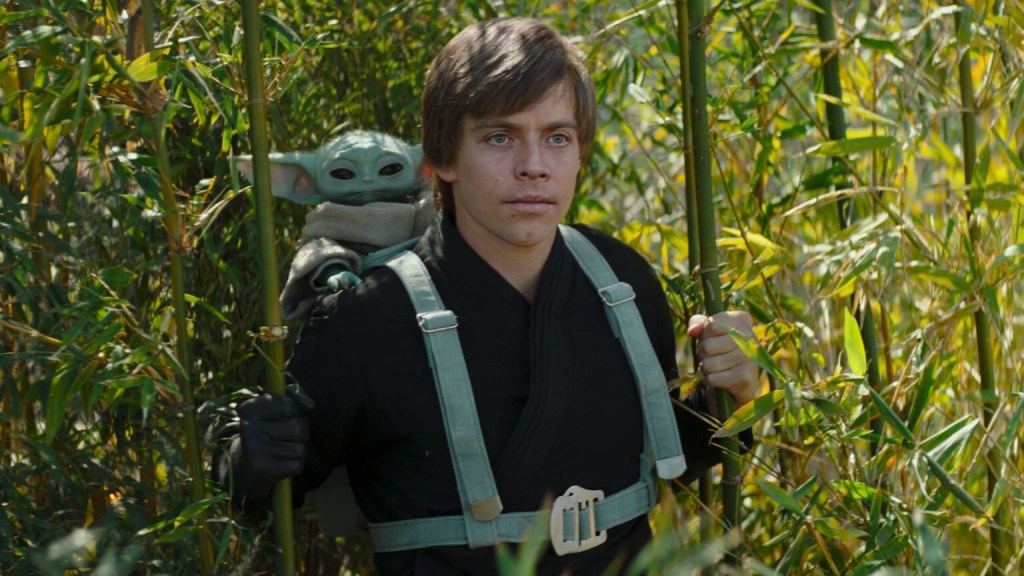
That neglect clearly extends much further than just the story – for one, it’s patently obvious that the majority of the show’s budget was diverted towards it’s Mando-focused episodes; both of which boasted sets, action scenes and special effects that were a definite cut above the rest. I’ve no doubt a big chunk of the budget went towards the deepfake Luke Skywalker, who now looks borderline lifelike during many of his scenes in Episode Six, even if the emotionless AI-generated dictation can leave something to be desired. Nevertheless, the rest of the show is hung out to dry with what little expenditure remained, giving The Book of Boba‘s main story a horribly cheap air about it. Although it may have COVID restrictions to blame, every set feels bland and lifeless, and there’s an unmistakable overreliance on the Volume Soundstage to fill out the sets with vast, empty backgrounds. Still, where a budget has limitations, creativity can go a long way – but there’s little room for forgiveness when most of the show’s action scenes are so terrible. Temuera Morrison may be a little aged for the role of the fighting fit leading man, but trying to mask the various takes of his fight scenes with literal dozens of jump cuts doesn’t help things at all. Even then, I don’t think anything in this show (or perhaps anything I’ve seen ever) can get much worse than the flying moped chase in Episode Four; a chase scene so bad I felt like I was going to fold inside myself from cringing so hard. In spite of failure in pretty much every other facet of its production, I was still quite content to compliment the show’s soundtrack – that was until the finale concluded with a reprise of the main theme with vocalists shouting “Boba Fett!” in time with the melody, which seemed like a befittingly stupid way to bow out for this stupid, stupid show.
If you couldn’t tell by now, I didn’t like this show at all – the majority of it is a lazy, unenthused mess that will only be remembered for the bonus episodes of The Mandalorian that Jon Favreau and Dave Filoni tacked onto it, even then offering little more than a careless invalidation of Season Two’s ending, more than likely intended to bolster sales of sweatshop-made Baby Yoda plushies. It’s disheartening to see the goodwill for Star Wars that The Mandalorian brought out in me evaporate before my eyes, and wherever Mando and Grogu are headed next simply isn’t an exciting prospect for me anymore. Still, there’s no mistaking that the biggest casualty of this show is Boba Fett himself – now a meek and unformidable old man, existing only at the behest of a lifeless supporting cast, he’s a far cry from the Boba that fans know and love, and with Lucasfilm creatives feeling so empowered to butcher a beloved legacy character to this extent, my tepid anticipation for the release of Obi-Wan Kenobi later this year has quickly turned to dread.
2/10


 A.J. Slater
Leave a comment