The Skywalker Saga is undoubtedly a fun rollercoaster ride through the highs and lows of the Star Wars movies, with a great free play mode to boot, but the rushed story, bountiful bugs and poor level design leave a stench of cheapness hanging off the final product, despite its continuous delays over the past couple of years. On top of this, the heavy changes to the LEGO formula, combined with the stripping back of staple features of the series, results in a game that loses much of its identity and ultimately fails to live up to its fifteen year old predecessor.
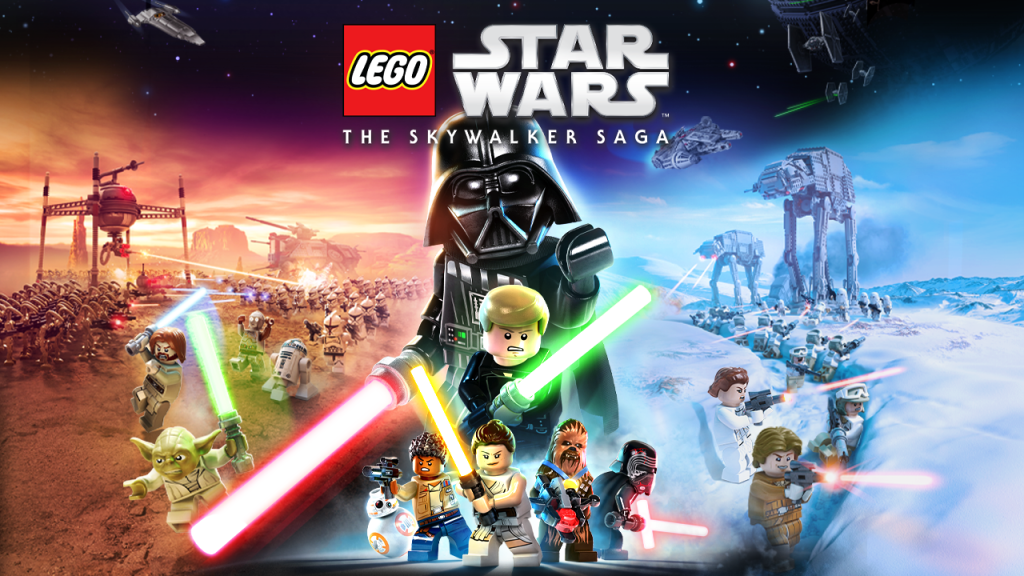
I’d be lying if I said the child in me hadn’t caused LEGO Star Wars: The Skywalker Saga to be one of my most anticipated games of the past few years. 2007’s The Complete Saga was a fundamental part of the young Star Wars fan’s entertainment diet back when I was growing up, whether it was owed to seeing your favourite toys brought to life on the screen, or the creatively comedic way the game remade the six George Lucas classics. On top of this, the simple yet effective core gameplay has carried the entire repertoire of LEGO games for nearly twenty years, giving them a reliable level of quality that even the adult in me is able to appreciate. So when a brand new LEGO Star Wars was announced in 2019, covering all three movie trilogies, I was pretty excited to see the franchise propelled into the modern era. Foolishly, I had expected that it was to release later that year to coincide with the release of Episode IX, due to the usually speedy turnaround of TT Games’ LEGO titles, but as the months, years, and many delays slipped by, snippets of news would escape into the public eye, suggesting both a tumultuous development, and the most revolutionary LEGO game to date. Now, having finally arrived this past week, let’s see how it shaped up in the end.
As with every LEGO title, the story is broken up into levels that span across a variety of films or chapters, in this case being the nine mainline Star Wars movies. Times change, and with each release, the LEGO games have too, with incremental adjustments to the formula to keep them fresh – the largest being the addition of an open world into all of their games past 2012, but The Skywalker Saga takes it to the next level by integrating the free play environment fully into the story. While it helps the game feel a little more tighter-knit together, it also starts to exacerbate some of its deep rooted problems already. The story relies far too much on the open-world elements, using it as a bit of an escape route for the very limited number of levels, with each film coming in with five levels each. On top of this, many of the levels are on the shorter side, taking place in a single environment or being completable in a matter of minutes. There’s some atypically great ones now and then, but as a whole they feel noticeably less creative than in previous games, with a surprising lack of puzzles or innovative boss battles, which is odd considering you can find them elsewhere in the game. However, it’s nothing compared to the open-world sections in the story, which are almost entirely walking from point A to point B while having dialogue from the movies hurled at you, with the occasional group of enemies showing up, or some sort of character-specific interaction to progress to the next stage. Worse yet, for a series that has so often incorporated replayability into its games, it turns out that these free-roam sections aren’t replayable without starting an entirely new save, meaning huge portions of the story are simply lost upon completion of your current playthrough.

The questionable structure of the story mode also seems to have reflected badly on the narrative itself. “Rushed” is the word that comes to mind here, as the limited number of levels, plus their general brevity, means that huge portions of the films are thrown into the open-world sections, reduced down to cutscenes, or even worse – glossed over entirely. The impact of this seems to be felt the most in the Prequel Trilogy episodes, which I imagine was a result of an attempt by the developers to make all three trilogies roughly equivalent in their playtime, even when Episodes I to III are ostensibly more complex in their stories than the others. However, the Originals and Sequels still don’t fare that much better, with many of the subtleties of the plot being lost across the board, resulting in something that feels far more like a LEGO‘d-up highlight reel of the movies than a proper adaptation. Even the already shaky Sequel Trilogy feels more shallow in its storytelling, something I wasn’t even sure was possible. It doesn’t much live up to the style and humour of the older games that took a similar approach to the story either. Much like the open world, voice performances aren’t anything new to the LEGO games, but The Skywalker Saga marks the first LEGO Star Wars title with an original voice performance, and I’m not entirely sure it serves the game well. The creative, physical humour seen back in the dialogue-less days of The Complete Saga is out, replaced instead with frequent quips and overplayed running gags. Furthermore, while there’s a few strong performances from movie stars like Billy Dee Williams and Anthony Daniels, and veteran voice actors from the Clone Wars animated show, a lot of the dialogue performances are pretty jarring, or even downright terrible. The highly-requested “Mumble Mode” doesn’t do much to offset this either; just turning the voice lines into incoherent babble that leaves the writing and humour feeling even flatter than they already did.
With all that said, I don’t want to pretend that this game wasn’t still great fun. The quintessential LEGO gameplay is still evident at its core, albeit with far greater changes to the formula than we’ve seen in any previous instalment. You’ll still spend much of your time running around, smashing up objects for money, interacting with various character-specific obstacles, and beating bad guys into little pieces, but it all feels a little deeper this time around. A class-based system means characters have a wider variety of options for getting around and interacting with the world, including their own weapons, skill trees and abilities. Combat is newly overhauled too with combo moves, over-the-shoulder ranged attacks, dodging mechanics, a cover system, and throwable objects – while it takes a little bit of getting used to, it feels far more interactive than spamming the same attack button over and over again, whilst not feeling too alienating to long-time players. Space combat also comes into its own with some pretty robust flight gameplay, and dedicated areas outside every planet to take on ship-based side content. The rest of the open world is equally engaging, and is undoubtedly the best from any LEGO title to date. There’s a vast, 24 planet galaxy for you to explore, with each one having a multitude of fun puzzles (surprising, considering their absence from the story), collectables and side-quests packed into surprisingly large locales from across the three trilogies.
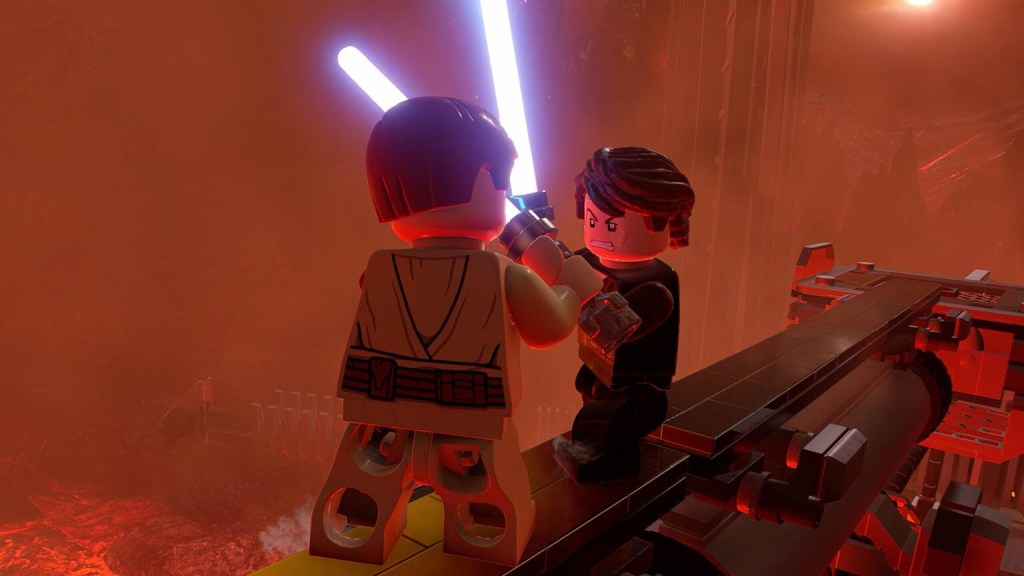
Whilst the gameplay does well to preserve the classic LEGO experience on top of its many improvements, there’s much to be said about certain other areas of the game. Right off the bat, the game is a noticeably far cry from the previous LEGO titles, which all retained a near-universal look in terms of the HUD, menus, and camera – now replaced by a rather claustrophobic screen covered in bars, meters, and popups, as well as an uncomfortably close field of view. I did my best to negate this through various settings but it could still feel cluttered in a lot of instances, and the menus themselves were pretty overpopulated with pages full of hints and tutorials that I can’t even recall looking at. There’s some big changes to progression too, whether it’s the inclusion of the class-based skill trees, or the wide sweeping changes to collectables, and while they aren’t unwelcome, I’m not entirely sure that they were necessary either. A glaring omission of a long-time feature is the lack of character creator, which is made all the more painful by the absence of characters that did not come included in the main roster, even if they are staples of the franchise by this point. Some have been packaged up and sold back to consumers as DLC packs, but there’s still a number of fan-favourites that have been completely passed over, even when the base game includes a plethora of background characters and expanded-universe nobodies dredged up from the depths of Disney’s Star Wars canon.
The Skywalker Saga is certainly the best-looking, most feature-filled entry from TT Games yet, but it also breaks from their tradition of putting out a generally well-polished product at launch. There was an infuriatingly high number of bugs, glitches and breakages across my entire playthrough, leading me to experience multiple crashes and unavoidable restarts to correct something that hadn’t loaded in properly, or was failing to work as intended, and I heard reports of many more across a variety of forums across the past few days. The first day of its release was also plagued by a number of frustrating graphical issues on PC, and while a quick hotfix managed to nip some of them in the bud, many of them still persisted across the entirety of my time with the game. I understand the difficulties of working on a brand new game engine, but the missing features, cut corners, and general unpolished feel of the game is ultimately pretty disappointing for a product that was delayed repeatedly for over two years. Add in all the questionable changes to the existing formula brought to bear by the developers, and it skims dangerously close to losing its magic amongst all the chaos, but overall, The Skywalker Saga retains the simplistic joy of a LEGO title with the atmosphere and “cool factor” of the Star Wars brand, resulting in a game that still manages by the skin of its teeth to be a solid and fun experience, in spite of its many problems. I can only hope that it manages to break one more tradition, and receive some extensive post-launch support from TT Games to help it live up to its full potential.
5/10


 A.J. Slater
Leave a comment