Robert Eggers’ historical epic is a departure from the norm of his previous works, but he masterfully marries the beautifully haunting imagery of Norse mythology with the brutal, bloody and unapologetically masculine tale of revenge that inspired some of the most timeworn storytelling in human history. What it may lack in the complexity of its narrative and characters, it more than makes up for with its visceral action and picturesque cinematography, delivering the kind of experience that the big screen has been missing these past couple of years.

Filmmaker Robert Eggers has become something of a sensation in recent years, with both of his previous movies, The VVitch and The Lighthouse blowing up in cult status in cinema discussion online. I must confess that I only saw both of his films for the first time in the week leading up to my viewing of The Northman, but I was near-instantly enthralled by the quality and creativity of his filmmaking. The Northman itself had been on my radar for a while, coming off the back of a bit of Viking-mania in the last few years with the successful reception of both Assassin’s Creed : Valhalla and Vikings, as well as some laughable pearl-clutching on the part of far-left journalists regarding the film’s all-White cast. The trailer was a pretty good encapsulation of the film with its simple premise and stunning imagery, so during a month with little else in the way of big releases, I took a chance – and it certainly paid off.
Spoilers ahead!
The Northman adapts the story of Amleth, a figure from a legendary Viking saga who directly inspired William Shakespeare’s Hamlet, and as such there are certainly some similarities between the two tales. We follow the young Prince Amleth at the beginning of his story, briefly witnessing the normality of his life and his relationship with his father, before being confronted with a chilling destiny, and the murder of his father at the hands of his uncle. His promise of retribution – “I will avenge you Father, I will save you Mother, I will kill you Fjölnir” – is well established, and echoes throughout the entire film, but the opening feels a little too brief to make it impactful. The same could be said of when we pick up with the adult Amleth, years after his escape from his uncle, as he fights among a clan of Viking raiders in Eastern Europe. There’s not really any indication of what he’s been through for all these years beyond some painfully obvious lines of exposition, and this entire sequence just seems to be there to contextualise a battle scene (albeit, a really fucking cool battle scene), before a spooky chance encounter with a Slavic priestess sets him back on his path of revenge. The entire opening does sort of fly by, and I wonder if maybe the meat of the film could have been cut down to accommodate some better character development in the beginning.

That bulk of the film I’m referring to isn’t just the arms of the lead star, rather the large portion of the film that takes place as Amleth sneaks into the village of his disgraced uncle; disguised as a slave to bring him down from the inside. It delves into some light horror, reminiscent of The VVitch and The Lighthouse, as he partners with his fellow slave Olga, a supposed sorceress from the village he raided, to sow fear amongst Fjölnir’s people that they are being punished by the Gods. Their nightly machinations ramp up, as Amleth kills more of his uncle’s men and grows closer with Olga, whilst placing himself in the good graces of the royal family by day. Mixed in with this are a few instances of supernatural craziness that play with the idea that they might all be happening in Amleth’s head, but all the while keep resurfacing the idea of fate and destiny as a central theme. A surprising twist comes when Amleth reveals his identity to his mother, and she claims to have ordered the death of his father, throwing both Amleth’s plans and emotions into disarray, but evidence planted throughout the story suggests Queen Gudrún may be suffering from something along the lines of Stockholm Syndrome, which adds another layer of ambiguity and intrigue to the plot of the film as you understand it.
The story culminates as Amleth kills his cousin, saves Olga and barely escapes with his life, and the story leads you down the garden path a bit as he escapes on a boat with her, which raised the concern that it may be about to lather on some preaching about the power of love over the pursuit of revenge, but it’s course-corrected in a very uncharacteristic way for a modern day Hollywood production. Amleth learns that Olga is carrying his children, so in a final twist, he embraces his destiny and jumps ship so he can face his uncle and ensure his family is safe for good. After being forced to kill his mother and half-brother, he confronts Fjölnir in an epic duel on the slopes of an erupting volcano. The two perish, but Amleth dreams of his children in Olga’s arms as he is carried to the gates of Valhalla, and the ending feels as fulfilling as it is beautiful in it’s imagery and score. The story as whole isn’t super complex, but it doesn’t need to be – avenging the death of one’s father is a compelling and timeless story on its own merits, but Eggers spices it up with the mythological elements and subtle questioning of what’s real and what isn’t. There’s a few instances of stupid decisions and plot convenience here and there, and the imbalance between the first act and the rest of the film leaves a little to be desired, but as a whole, The Northman is a solid example of how to tell a good story.

On the other hand, Northman‘s character writing doesn’t quite hit that same level of quality. I’d first like to point out that generally, there was nothing particularly wrong with the characters, but there was nothing that really stood out about them either. There were of course exceptions, as I mentioned Nicole Kidman’s Queen Gudrún could be understood in multiple ways based on what we see and what we come to learn about her. On the flipside of this, main villain Fjölnir, played by Claes Bang, was undoubtedly the weakest part of the film for me. His presence is felt across the film, but he doesn’t really spend that much time actually on the screen, and there’s very little sense of who he is and what drives his character, especially pertaining to why he killed Ethan Hawke’s King Aurvandill in the beginning. Lead protagonist Amleth, played by Alexander Skarsgård, is built up with solid motivations and demonstrable skills, but there isn’t much to him beyond that; nothing unique, no quirks to his character that make him stand out. You root for him to succeed, but it feels more owed to the nature of the story than the character. The same can be said of Anya Taylor-Joy’s Olga, you get a decent idea of who she is (which does call into question why she would so readily fall in love with a man who had just slaughtered his way through her village), but they don’t elaborate much on the most interesting aspects of her character with her beliefs and skills. I can’t knock the performances of the actors, each one is fantastic in their own right, even the single-purpose characters portrayed by big names like Björk and Willem Dafoe, but I was just left wanting more out of the character writing across the board.
One thing that The Northman certainly doesn’t fall short at is in the quality of its craft. The visuals, cinematography, score, and design are all exceptional regardless of one another, but combined together they truly bring this epic Viking saga to life on the screen. They also come incorporated into the storytelling itself with the changes between light and darkness from scene to scene. Sequences in the day portray the brutal reality of the Viking life, with hard work and vicious battles portrayed with harsh, muted colours. Meanwhile, those under the cover of night, shadow, or volcanic ash tie into the more mythological and psychological elements, from Amleth’s brushes with destiny and mind games against his uncle to duels with reanimated corpses and conversations with decapitated heads. It’s some of these moments that provide the most stunning visuals, especially those that really lean into that Norse folklore. Take for example Amleth’s ride into the gates of Valhalla, or his final duel at “The Gates of Hel”, as our characters had so often referred to the erupting Icelandic volcano. They cast glowing heavenly light, or spitting flames and luminous streams of magma against the darkness of the scenes, certainly showing off the advantages of a higher budget production, but ultimately imprinting these moments in your mind as some of the most beautiful cinema ever seen.
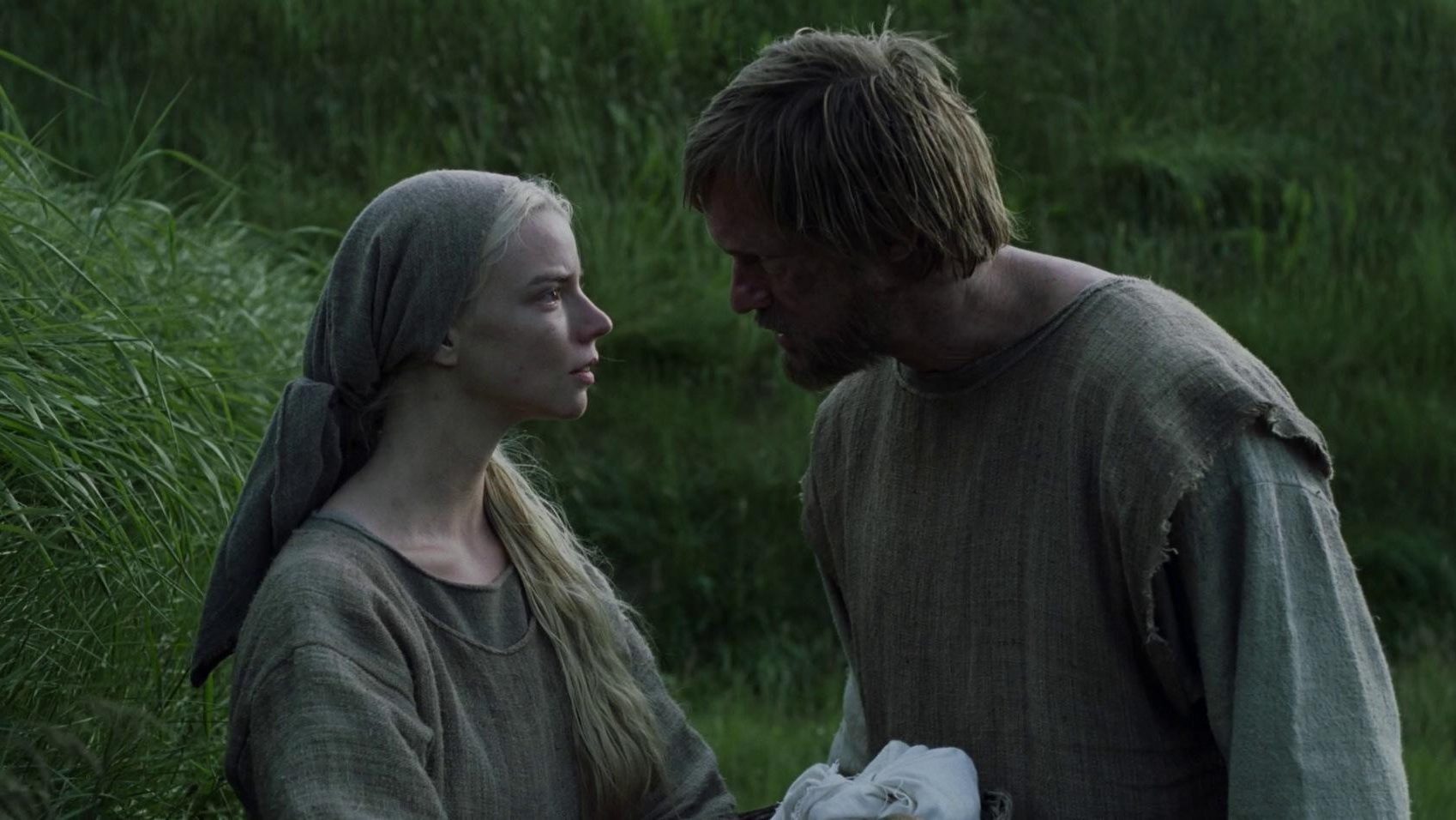
Robert Eggers also makes a bold commitment to the accuracy with which he tells his historical epic. The fantastical elements are deep rooted in Norse mythology, with recognisable elements like Odin and his ravens, Valkyries upon their winged horses, or terrifying Draugr, as well as more subtle references through depictions of ritual or even purely visual references. On the more realistic side of things, it’s clear that care was taken to make the sets, costumes and scenery as accurate as possible, helping to immerse the audience into every single scene. Aurvandill’s kingdom, Olga’s village, and Fjölnir’s settlement all have their own distinct feel and atmosphere, from which you can draw a little deeper context to what’s happening at the forefront of each sequence. Last of all, the film doesn’t shy away from the uncomfortable reality of the setting and time period. It lends a sympathetic eye to the abuse of women by men in power, but it doesn’t overdo it trying to push a strong feminist message – women aren’t the sword-swinging heroes and villains of this story, instead their strength is derived from motherhood and subterfuge. It also doesn’t make any qualms about using European slavery as a central plot point, and yes – the cast is indeed entirely White – a brave choice in today’s entertainment climate, when most filmmakers would find a paper-thin excuse to cast an ethnic character no matter the historical context as to not offend overly sensitive busybodies. Perhaps it’s not to everybody’s taste, but it shows a devotion to the craft of filmmaking over modern political sensibilities.
Everything pieces together nicely to create an authentic and immersive adaptation of Amleth’s story, but more than anything the film is entertaining – plain and simple. It may not be the most revolutionary, or even competent writing ever put to screen, but The Northman pulls you in with its timeless storytelling and gripping action, reminding me of the long-lost art of making a movie to be appreciated, not consumed with all of its interpretations and messaging pre-packaged in. It’s only elevated by Robert Eggers’ stunning visuals and filmmaking prowess, swiftly making it stand out as one of the best films in recent years, if not of my lifetime.
8/10


 A.J. Slater
Leave a comment