The Bear’s simplistic narrative is subject to a number of questionable choices, but it’s nevertheless elevated by generally sound writing and its well-rounded main characters, that when combined with its deep themes and punchy direction makes for a solid little show about cooperation, grief, and the stresses of working in a kitchen.

I’ve always found myself fascinated with the inner workings of the restaurant kitchen from many an hour spent watching shows like Man Vs Food, Diners Drive-Ins and Dives, and Kitchen Nightmares, and it was that interest that brought me to films like Jon Favreau’s Chef and Phillip Baratini’s Boiling Point – one of last year’s best movies. So on happening across a trailer for streaming series The Bear, I was naturally interested by its premise, but I didn’t have much to go on beyond recognising Punisher star Ebon Moss-Bachrach amongst its cast. Nevertheless, I stuck it on (befittingly as I was sitting down to eat), watched it all in one go, and I’ll say I rather enjoyed it.
Spoilers ahead!
The Bear‘s opening episode throws you right in the deep end with a chaotic rigmarole through a day in the life of the chefs at “The Original Beef of Chicagoland”. The premiere is a pretty masterful exercise in writing, as it manages to lay out its premise, conflicts and characters in a perfectly understandable fashion all in the space of about thirty minutes. To keep it simple, our leading man is Carmen “Carmy” Berzatto (Jeremy Allen White); a former chef who returns home to run his family’s Chicago diner following his brother Michael’s suicide, and faces obstacles both in dealing with his Mikey’s legacy and in trying to overhaul the restaurant. Each episode takes on a “problem of the week” format (a little strange given that they all released at once), with the throughlines following the characters as they navigate their relationships with one another and overcome their various hangups. Each of the main cast has a pretty satisfying conclusion to their arc; big or small, and usually tying into the show’s central themes. There’s a lot of heart to how the characters are written, stemming both from the chemistry in the performances as well as the thought given to their motivations and personalities – which can be one of the biggest sources of conflict in the story too. One of the best dynamics has to be between Carmy and his new hire Sydney (Ayo Edebiri), and the rest of the staff at The Beef, as they duke it out over proposed changes to modernise the restaurant. Given how quickly the writing allows you to get a grasp on its leads, there’s a lot of fun to be had seeing each of them react to the various situations that they’re presented with, from handling a health inspection to dealing with local gang violence. The editing on this show does particularly well to reflect the atmosphere of each scene, especially with how chaotic it becomes at times when the staff are under pressure, but ultimately it’s the core characters that make The Bear so engaging to watch.
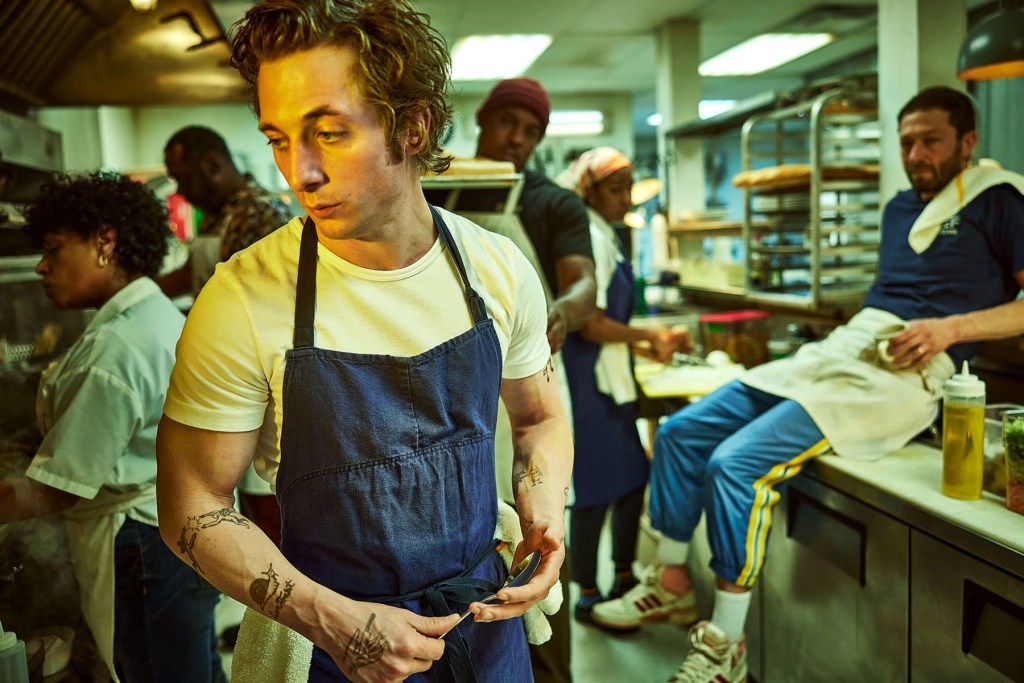
Not every character gets to see the limelight unfortunately, with a handful of the regular faces around the restaurant being relegated to the role of background character, or worse yet, comic relief, but nevertheless they still manage to work in their own distinctive personalities here and there. The Bear‘s most glaring flaws are inarguably born from its plot, both in the single-episode escapades and the broader storylines. A recurring problem is how outlandish some of the situations become – Carmy and Richie (Ebon Moss-Bachrach) at one point accidentally dose a group of children to the point of unconsciousness with Xanax, and face no consequences for it, and the finale sees Richie land in jail after a fight gone wrong, which feels a little out of left field given the low stakes nature of the show thus far. Speaking of the finale, it caps off one of the major plotlines involving the 300,000 dollar debt that Mikey left behind with the revelation that he’d stored bundles of cash inside tins of tomatoes. Why? Well, because the writers wanted to have a long-term payoff and a big old happy ending. Outside of that, it doesn’t make a lick of sense – what it essentially implied was that Mikey borrowed a load of money just to put it in chopped tomato cans that had a decent chance of never being opened, which would leave his brother saddled with eye-watering amounts of debt for a very long time. It cheapens a lot of the good work the show put in for the sake of what essentially amounts to a running joke, and it’s generally a very underwhelming conclusion when the critic review could have been a strong plot point to finish on. Some of the storylines don’t even get much of a resolution; among others, one that stood out was the recurring implication of Carmy’s mental health issues, but there’s no real explanation of what he’s dealing with and why, and they just seem to vanish by the conclusion, with no sense of him having overcome his demons.
All in all, The Bear isn’t a bad watch – at times, it may be a little confused on where it’s going, or what it’s going for, but the watertight character work carries the show more than enough to make it enjoyable. It doesn’t do much to reinvent the wheel, or blow you away in any regard, but it’s well put together, and harkens back to a better time for entertainment where you can sit down and get invested in something as ordinary as the day-to-day of a sandwich shop. The ending is concise and the character arcs are more or less satisfying, but there’s enough there to warrant a second season if needs be, and if not, I’ll still chalk up The Bear‘s first season as a win.
6/10


 A.J. Slater
Leave a comment