Although welcome in its distinctive choice to feature a cat as its protagonist, Stray’s novelty soon wears off as you work your way through an unimaginative story accompanied by shallow gameplay, only shielded from the clutches of mediocrity thanks to the solid attention to detail in its design, atmosphere and art style.
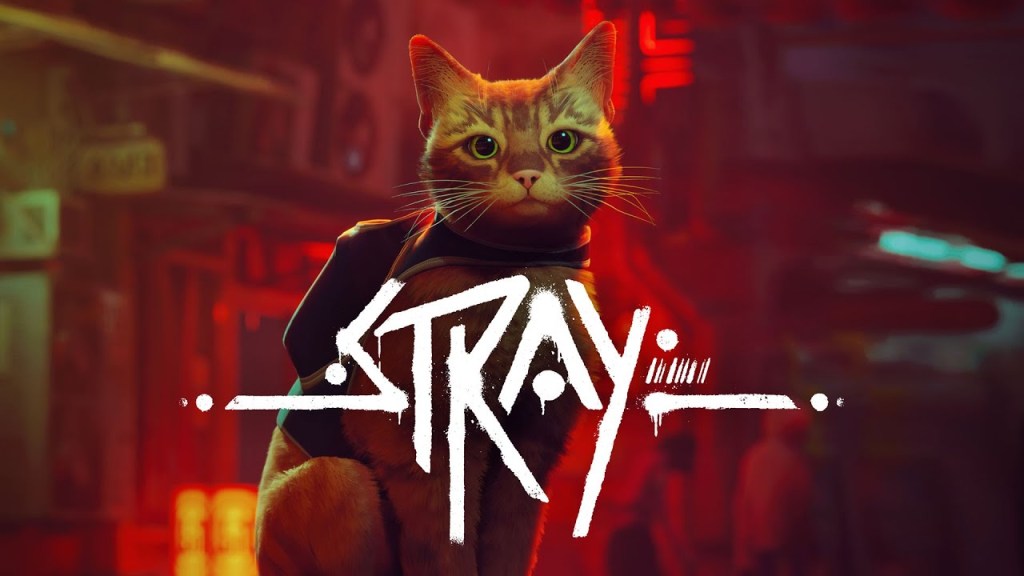
As a lifetime cat owner, it’s beyond obvious why Stray piqued my interest in the first place, but I’ve had my eye on it since it was first announced just over two years ago. A game focused on a cat with a cute little backpack adventuring through a cyberpunk city inhabited by robots was practically all I knew of it, and in a somewhat uncharacteristic moment of blind consumerism, it was pretty much all I needed to know of it. It certainly had that “sleeper hit” kind of tingle around it, and I was right in that regard judging by the game’s initial reviews, but having played through it myself these past couple days I’m not sure that I quite share the sentiment.
Spoilers ahead!
Stray‘s premise is incredibly straightforward – you are a cat. Specifically, you are one unnamed cat in a group of four, who gets separated from the rest of the bunch after falling down a hole into an underground city. The game itself never particularly states your goal from here, as the cat itself doesn’t communicate in any way other than you’d expect from a cat, but marketing material suggests your primary objective is to reach the surface and reunite with your fellow felines. The first little bit of the game is nice and simple as you wander around this strange new place, filled with garbage and fleshy monocular creatures, and before long you meet B-12, your robot companion (and handy translator). It quickly becomes apparent that the aforementioned creatures, known as Zurks, aren’t exactly friendly, and a chase sequence leads you into a much less hostile environment in the Robot Slums, although the introduction to this area is somewhat amusing as the robots hide away in fear of the cat, a creature of the kind that they have never met before. From here the story follows an extremely basic premise, as the cat and B-12 must track down the various “Outsider” robots who wish to open up the surface. A few hours later and you’ve done just that, as well as uncovering the mystery of what happened to the humans in the underground city through B-12’s memories. Your little robot friend sacrifices himself in an emotionally biting scene, the city is opened, and the cat returns to the surface – but surprisingly with no sign of its lost friends. Now, the upside of the story’s simplicity is that there isn’t much room for idiotic writing, but it also leaves it without much substance, making the whole ordeal largely unmemorable. You do get little snippets of lore through B-12’s memories and conversations with NPCs, but all that seems to come through is a half-hearted commentary on the evils of capitalism – how original.
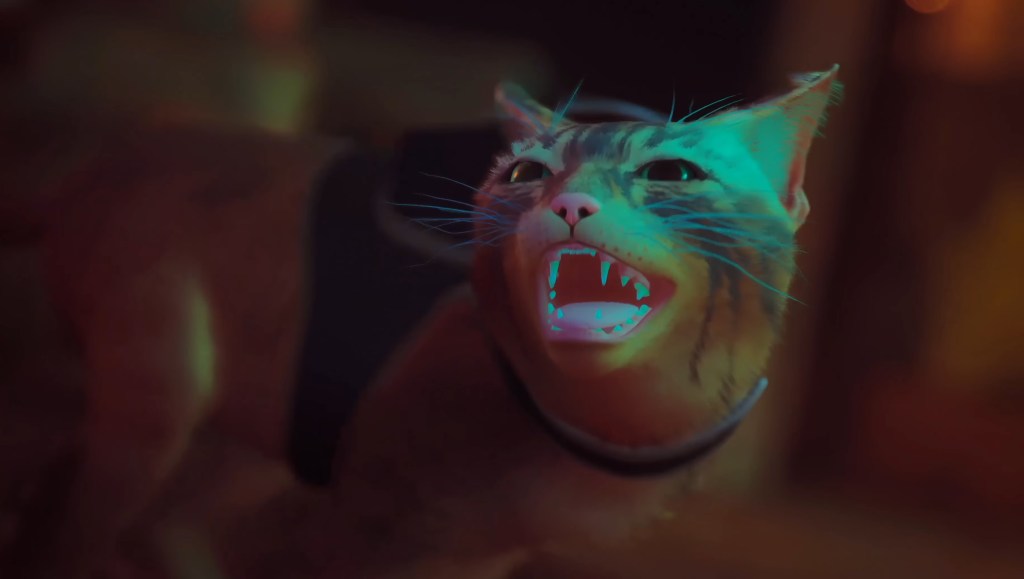
When a game doesn’t quite meet the mark in its story, you can always hope that the gameplay makes up for it, but unfortunately this isn’t really the case for Stray. Don’t get me wrong – it’s solid, it works, but it’s also just bland. Puzzles, platforming, stealth sections and chase sequences just about covers all the bases, and they’re all very straightforward. There were no puzzles that left me scratching my head; no solutions to any problems that weren’t spelled out for you, and while I’m no fan of artificial difficulty, I at least hope to expect some level of mental stimulation from a game. Thankfully, there is some novelty to be drawn from it in the sense of using your various – forgive me – cattributes in your favour, like luring away Zurks with a meow, or knocking things over to reveal an item or hidden secret. Yet, contrary to the nature of a cat, the game does also feel a little restrictive in terms of what you can do or where you can go. I’d put forward the claim that aside from just walking or running about, the majority of Stray consists of jumping on and off various objects to get around, yet it’s a very poorly realised mechanic. To jump on something, you have to look at it until a prompt appears, and then press a button. Want to jump on something but there’s no prompt for it? Too bad, you can’t. This problem extends to the level design also; there’s not much in the way of wandering from the beaten path, and when your route does open up, it only leads to a collectable or a main objective. Although there’s a couple of more open ended levels in there, it’s all built around specific tasks or items, so the game only allows you to explore when it wants you to.

Where Stray really does shine is in many of its other design elements. First and foremost, thank God it just about nails its protagonist. It’s clear that cat owners were involved in this game every step of the way, from the way the cat behaves down to every minute detail in the animation; it’s a hilarious encapsulation of everything we know and love about our pets. I often found myself furiously tapping away at the button for the aforementioned meow feature, but much of my enjoyment with the game came from all the little ways you can interact with the world. From clawing down curtains and batting around inanimate objects to things as mundane as taking a nap or drinking water, BlueTwelve Studios have definitely poured a lot of energy into portraying their feline figurehead as accurately as possible. As I said, it’s reflected in the animation too, with some surprisingly on-point animations considering they didn’t use any motion capture in the development of the game, even if the movement can ironically feel a little robotic here and there. The environments and general atmosphere of the game are really great too – the dark, dingy cyberpunk atmosphere runs throughout, but at points is meshed with the lush, overgrown feel of a post-apocalyptic setting or the subtle Eastern aesthetic of the robot city to create a unique and memorable look. As watered-down as they may be, the themes of classism in the story are actually well-reflected in the setting too, with the various locales becoming cleaner and more high-tech to coincide with the cat’s ascent through the city.
All in all, Stray has managed to situate itself amongst the rare examples of things I enjoyed in spite of its various shortcomings, and even then I’ll reiterate that there isn’t that much wrong with it, rather that there just isn’t that much to it in a lot of areas. The open-ended nature of the game’s conclusion has me hoping a sequel will capitalise on all its room for improvement, but nevertheless it was a fun little experience anyway.
6/10


 A.J. Slater
Leave a comment