Due in large part to their inability to escape the Marvel Studios brand of creative flavourlessness, the Russo Brothers’ Gray Man is a highly forgettable, cookie cutter action flick that suffers from unfulfilling characters, an unimaginative story, and unimpressive filmmaking, despite the enjoyable performances from some of its built-in star power.

Despite my non-existent knowledge of the book series, The Gray Man had been another of those little upcoming projects I’d had my eye on for some time now, thanks in large part to many of the big names attached to it. For one, it was being directed and produced by Joe and Anthony Russo, the minds behind some of Marvel Studios’ biggest hits in the Captain America sequels and the worldwide phenomenon that was Avengers: Infinity War and Endgame – a big grab for a Netflix Original, even with its limited theatrical release. For another, amongst the already star-studded cast, Ryan Gosling was set to play the leading role, a natural draw for the film connoisseur of the young, White and male variety, thanks to his highly memeable type-casting as the antisocial, melancholy antihero in films like Drive and Blade Runner 2049. To top it all off, action thrillers are generally pretty easy viewing, with the off-chance to be something a tad more impressive, as demonstrated by the recent release of Amazon Prime’s Terminal List series. So riding the high from that, I was on the lookout for any more special operator kino that I could get my hands on, but it’s sad to say that The Gray Man has been one of those exceptions that swings the other way into the thralls of inadequacy.
Spoilers ahead!
Gray Man wastes no time getting to the bottom of its premise, and by extension, its title – the film opens on Ryan Gosling’s Court Gentry as he is recruited out of prison and into a special operators program known as Sierra in a flashback, before jumping forwards to the present day, where the now nameless Sierra Six is undertaking his latest mission to assassinate an equally nameless target under the pseudonym “Dining Car”. The introduction is swift but relatively effective at establishing the majority of the movie’s main characters, their personalities, and their relationships with one another, and Six’s backstory makes a fairly interesting basis for a story, but as soon as that’s all out of the way, there’s no time to breathe before we jump into the main plotline. At the tail end of this sequence it’s revealed that Dining Car was formerly the operator Sierra Four, and is in possession of compromising information about their handlers at the CIA, conveniently stashed in a shiny gold medallion to serve as the film’s MacGuffin. From there it’s off to the races as Six goes on the run from the agency with the data, while they bring in the moustached and murderous private contractor Lloyd Hansen (played by Captain America star Chris Evans) to hunt him down, but if one clichéd plotline wasn’t enough, it also folds in a parallel narrative about a young girl kidnapped by Hansen for leverage, who happens to be the niece of Six’s recruiter and former handler (also kidnapped by Hansen), who also happens to have had an amicable relationship with Six when he saved her life years prior.

So, it’s already pretty convoluted, but it’s made all the more questionable when the plot doesn’t really exist beyond filling the gaps between the film’s copious action sequences. There’s a few developments here and there, but they feel particularly shallow when they add stakes to the story that are never fully explored, like the million dollar bounties placed on Six, or serve up information you were pretty much already aware of, like the “reveal” of what was on the medallion’s chip. It all culminates in one final action sequence, where Six attacks Hansen’s compound head on to recover the medallion and save Claire, and it’s just about as predictable as it could get. With the big baddie defeated, the chip recovered, and the girl saved, the plot is practically wrapped up with a little bow, but you’re jarringly railroaded into an unsatisfying conclusion where the medallion is destroyed, and the corrupt leaders at the CIA get off near-enough scot-free, and there’s not at all any payoff for the throughline about a shadowy figure pulling the villain’s strings all along. On top of this, Claire seemingly gets kidnapped and subsequently rescued by Six all over again to make some vague point about him always looking out for her. My most charitable interpretation of this is that it’s half-arsed setup for a sequel, but considering how lacklustre the final product was, I wouldn’t hold my breath for Netflix to greenlight it any time soon.
Given how easily I can reduce the plot down to it’s base elements, there’s a lot of characters I didn’t really need to mention, which presents one of the film’s biggest problems in and of itself. More egregiously, I didn’t once need to bring up the film’s third billing lead, Ana de Armas’ Dani Miranda. De Armas is a great actress, and does fine with what she’s given here, but the problem is what she’s given isn’t much of anything, and even with her great chemistry with Gosling, Miranda amounts to little more than Six’s sexy sidekick. There’s a litany of equally inconsequential characters; Suzanne Brewer (Jessica Henwick), Carmichael (Regé-Jean Page), Cahill (Alfre Woodard) and Avik San (Dhanush) are all poised to be major players in the story, but aside from pushing the plot along its way, they’re about as impactful as a sponge hammer on diamond nails, and would probably be just as unremarkable if played by extras picked up off the street as opposed to the talent brought on for these fairly menial roles. Billy Bob Thornton’s Fitzroy is far more involved in the plot, but the character suffers from a lack of development, particularly when it comes to his relationships with Claire and Six, both of whom he was said to be father-like towards, but it doesn’t particularly come across that way.
Thankfully this isn’t the case for every character. Up-and-comer Julia Butters gives a good performance as Claire, conveying the realistic fear that a 12 year old child would probably have in such a life-or-death situation, even if the attempt to contextualise her friendship with Six was pretty half-baked. Ryan Gosling gives pretty much the exact performance you’d expect – cool and calculated with a dash of charm, albeit with some added physicality in his role as Six. The character himself is pretty one-note, which isn’t always a bad thing when it comes to action films, but the script tries (and ultimately fails) to shoehorn in some semblance of an arc tied to his backstory with his abusive father. I never had strong feelings about Chris Evans’ performance as Captain America one way or the other, but with a simple, old-fashioned villain like Lloyd Hansen, it’s clear he had a lot of fun with the role, and I’ll have to name him as the standout star here. Hansen’s campy, metrosexual disposition is a fun contrast with his penchant for violence and sadistic disregard for the lives of others, even if he does bring with him some of the Marvel-esque quippy humour that I’m growing to dislike so much. I only wish that the character could have been seen in the thick of it a bit more, as we’re told that he himself is a dangerous killer when what we see is more of a leader and backseat driver to the action.
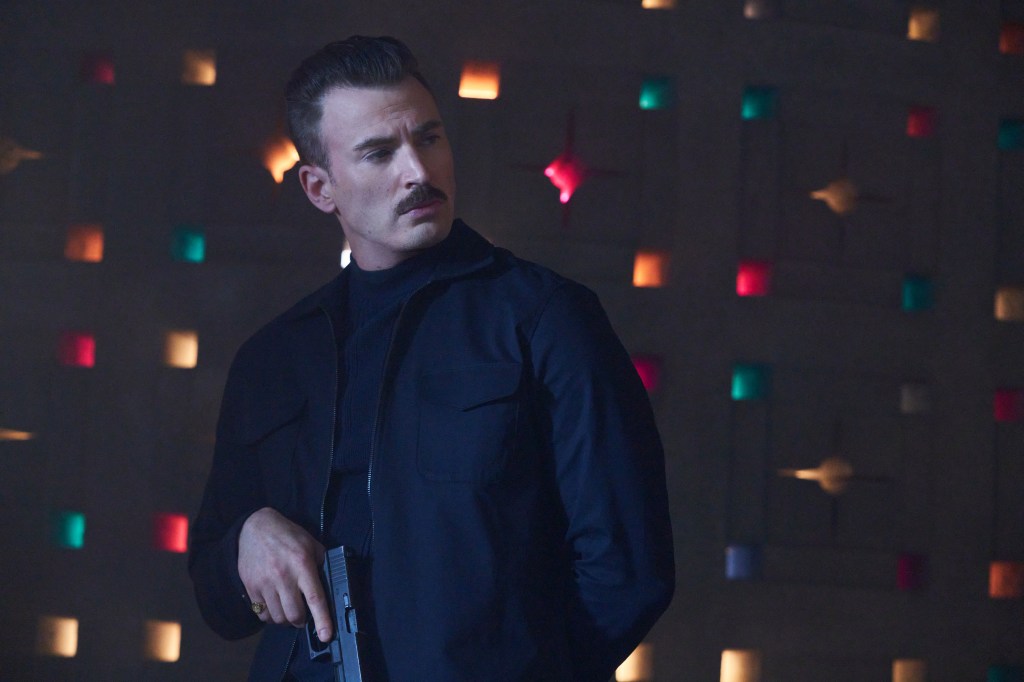
Speaking of action, as I mentioned before, The Gray Man has quite a lot of it, and it’s not necessarily that great. Choppy editing makes it hard to focus on the action sequences, especially when some of them move at a million miles an hour already, but I wouldn’t be surprised if it was an attempt to cover up the painfully over-orchestrated choreography, especially with the hand-to-hand fights feeling more fluid and dance-like than realistic and gritty. The shootouts don’t fare much better, they demonstrate what I’ll call a “videogame” level understanding of firearms and tactics, as opposed to something like The Terminal List which felt highly researched and authentic in its portrayal of a special operator in action. Many of the action sequences also feel stitched together from two different versions of the film aiming for two different age ratings – some encounters are bloody and brutal, with hands impaled on blades or fingers being shot off, where others will have bloodless gunshots and an over-reliance on people being knocked out, presumably to appear less violent in nature. There’s not much to say in the way of cinematography, the film is colourful and there’s a few eye-catching setpieces in there, but much like the rest of the film it’s generally quite bland, and the jarring visual effects certainly denote the direct-to-streaming budget that the Russos had to work with.
The Gray Man certainly demonstrates the toll that living in the comfort and guaranteed success of the comic book movie industry can take on filmmakers, with its many flaws exacerbated by the overall insipidness of the plot and character writing. It cannibalises individual elements from a number of its superiors, and mashes them together in a familiar shape to give you yet another serving of factory-produced entertainment that at best you’ll forget about in a week or so, but for me, the movie was already whittled away under the weight of its own mediocrity by the time it was over.
4/10


 A.J. Slater
Leave a comment