Soulless, unimaginative, and uninspiring – The Rings of Power is not only the antithesis of Tolkien’s work, but even more so an exemplification of the sterile climate of modern Hollywood. Laden with condescending storytelling, vacuous messaging and wanton disregard for its source material, the most expensive series ever put to screen is left feeling no different than any other production-line reboot of the past decade.
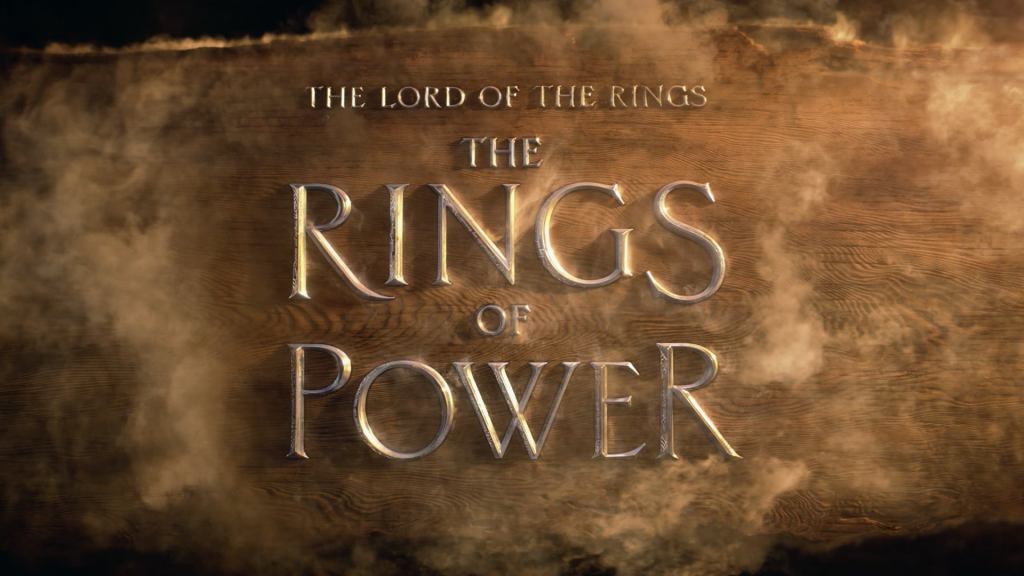
My journey with Lord of the Rings began all the way back at the age of about nine or ten with a copy of Fellowship of the Ring I’d picked up from the school library, and despite my investment in the story and continued persistence in reading it, I only made it about halfway through The Two Towers before realising it was probably beyond my ability to understand at the time. I was however delighted to discover the Peter Jackson trilogy of movies – a far more digestible format for a young lad to understand Tolkien’s story – and since then they’ve remained some of my most treasured cinematic experiences of all time; not just well-made, but full of heart and soul beyond measure, and serving as a tool of great moral instruction too. Revisiting the literature at a matured age has only reaffirmed my appreciation for the story, and although I might not be the most dedicated fan in the world (being largely unfamiliar with the rich histories and lore that Professor Tolkien dedicated his life to constructing) I’ve certainly kept Middle-Earth close to my heart over the years.
However, knowing the popularity of the series, and the all-too-predictable practices of contemporary Hollywood, I figured it wouldn’t be long before the metaphorical Eye of Sauron would fall upon Lord of the Rings for some form of reimagining, and sure enough it started to come to fruition in the form of The Rings of Power, an Amazon produced prequel series based on Tolkien’s extended lore. However, it seemed that Tolkien fans would not be so easily pushed over as those of other franchises that Hollywood has cannibalised this past decade, and the subsequent emergence of the show’s premise, subversive castings, and early promotional materials brought with them increasingly negative reactions, culminating in the first trailer for the show being bombarded with downvotes and critical comments – probably not what Amazon was hoping to achieve with a show that cost over one billion dollars to produce. Nevertheless, Rings of Power wrapped up its eight-episode premiere season today, and well, let’s just say that fans’ concerns were not unfounded.
Spoilers ahead!
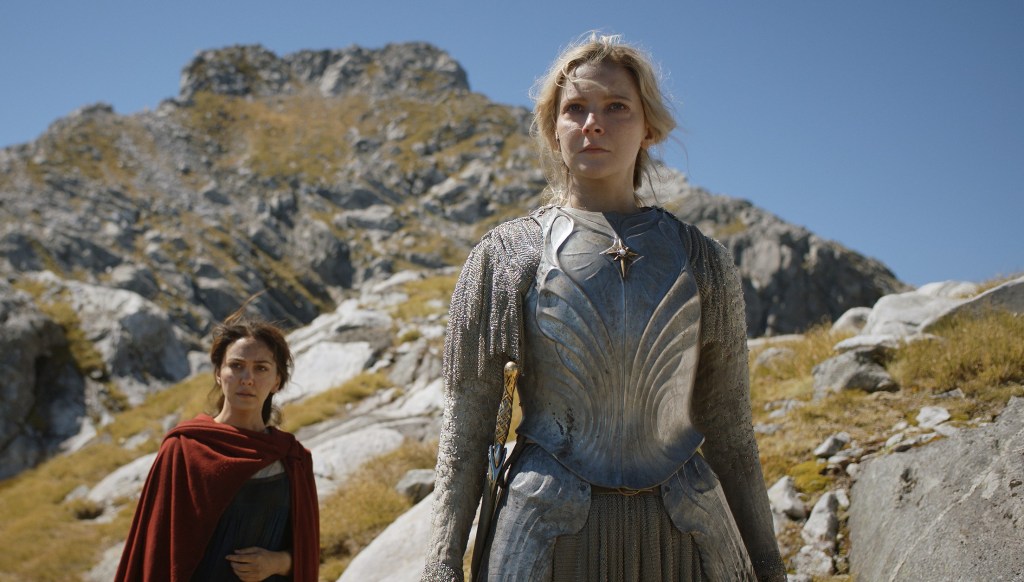
Set during the Second Age of Middle-Earth, The Rings of Power takes place in a relatively unexplored era of Tolkien’s lore, but it chooses to bundle together many key events from across the fictional histories and incorporate them into its storyline, which is fundamentally structured as a variety of interconnected subplots that mostly feed into one another at various stages. There’s about four key storylines that take up the majority of the show’s runtime: being Galadriel’s quest to find Sauron, the building of Celebrimbor’s forge, the Orc invasion of the Southlands, and the Harfoot people’s adventures with a mysterious stranger. It becomes ever clearer over the course of the show that the foundation of these plotlines was an aggressive intent to capitalise on aspects of The Lord of the Rings that could be most easily folded into the story – from the origin of Mithril, Mordor and the Rings, to the appearances of Isildur, the Balrog, and even a young Gandalf, every single beat of the story is permeated with this innate desire to make you drop your mouth agape and point at the television, crying out “I know that thing, I know that thing!”. It’s an easy and superficial form of entertainment, and even then the writers fail to utilise the material in a way that feels exciting or moving, instead choosing to smugly inject their own story into the fibre of The Lord of the Rings timeline, insisting that things are the way they are because of what happened in The Rings of Power.
The same egotism tinges what the writers came up with on their own – straight away you’ll notice this series is absolutely rammed with overly flowery dialogue and blatantly empty platitudes that serve as a poor imitation of Tolkien’s writing. The story is totally lacking for any of that thematic depth you can glean from Tolkien’s work and the Jackson trilogy, instead choosing to deliver blatant allegories for racism and contemporary politics at every turn, which heavily negates any lasting relevance this show hoped to have. Many of the groups of characters also seem to live by odd sayings like the Numenoreans’ “the sea is always right” mantra, but worst of all is the nomadic Harfoots with “nobody walks alone” and “we wait for you”, despite the fact the show explicitly states that it’s their custom to leave behind anyone who is sick or injured to die on their own, making those little knock-off Hobbits seem utterly psychotic! The fact is these aren’t just goofy blunders I’m jumping on to make a point; the writing is just bad across the board. The plot relies on mysteries and cliffhangers, despite its twists being wildly predictable, and by the end you realise just how much of the story is dragged out beyond its means, and with constant logical errors like the complete lack of accounting for travelling time, or the masses of characters who survive being caught in the centre of a volcanic eruption, I genuinely began to suspect the series was penned by a group of people sharing a developmental handicap.

Unfortunately The Rings of Power doesn’t fare much better when it comes to its characters, especially those that appear elsewhere in Tolkien’s lore. Chief among these is Galadriel, who you might remember as the fair, wise and mystic Queen of the Lothlorien Elves in The Lord of the Rings, but has now been fundamentally hammered into the mold of the strong and infinitely capable leading lady, or the “Mary-Sue” type of character as online discourse may characterise her. What really hurts her character the most is just how unpleasant she comes across as. Arrogant and egotistical; this Galadriel is a far cry from how she is depicted in the source material, and with the writer’s insistence that she never loses, nor is wrong about anything, she becomes flat out unlikeable. In fact, the one character in this show you might expect to have Galadriel’s brash temperament is Elrond, but despite being destined to lead the Elven armies against the forces of Mordor, The Rings of Power finds the young Elven lord as a soft-natured writer and diplomat. It is possible that the show intends to demonstrate how these characters change and grow into their Lord of the Rings counterparts across the next few seasons, but given the way these deconstructive approaches to the characters echo what has been happening across a number of huge Hollywood IPs in the last few years, I severely doubt it. Still, none of this can be as bad as the fate laid upon poor Sauron, who once the representation of pure evil and malice, has now been retconned as some sort of spurned lover who turns back to his villainous ways after being rejected by Galadriel in one of the most ridiculous, fan-fiction level subplots I’ve ever had the displeasure of enduring.
You might be pleased to know that the show does actually feature some original characters too, but don’t expect the relentless carpet bombing of fruitless nostalgia bait to end with them, considering many of them are clearly direct parallels to characters from The Lord of the Rings too. The two Harfoot friends Elanor and Poppy are unmistakably the show’s cheap imitation of cinema’s greatest friendship between Frodo and Sam, and Elven archer Arondir has a deeply Legolas quality about him. Even the banter between Durin and Elrond evokes the kinship between Gimli and Legolas throughout the Lord of the Rings trilogy, and it just hammers home how desperate the show’s creators are to harvest what little goodwill they can from a far superior body of work. With that said, I will give credit where it’s due, because Durin, and even surprisingly his wife Disa (who drew much ire from fans as the somewhat comical looking black dwarf princess) prove to be the show’s most endearing characters thanks to their chemistry and solid performances from Owain Arthur and Sophia Nomvete respectively, and it also serves to make the dwarf-centric plotline The Rings of Power‘s most enjoyable component. Still, that’s about as good as it gets, with the show’s remaining original characters being forgettable at best and entirely irritating at their worst, amounting to yet another facet of this series that fails to deliver.
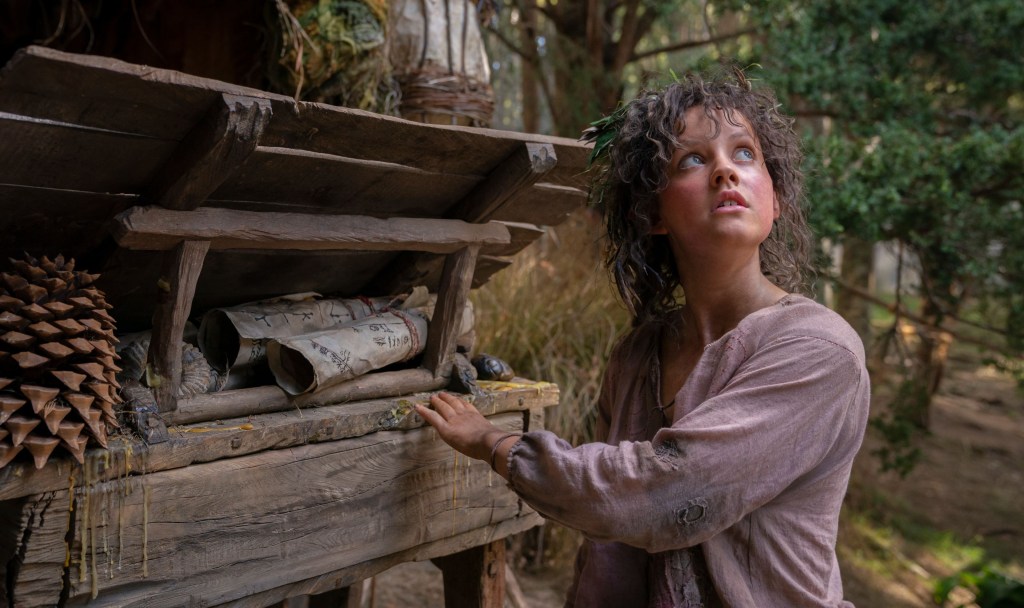
Perhaps, in my seemingly limitless folly, I expected that despite a total lack of writing talent attached to it, the most expensive television show ever made might at least look really nice, but somehow even that was too much to expect. That’s not to say it’s the worst thing I’ve ever seen, with vibrant colours, elaborate sets, excellent makeup work, and Bear McCreary’s surprisingly solid soundtrack giving it an extra edge, but the fact is The Rings of Power disappoints more often than not when it comes to visuals and design thanks to poor special effects and uninspired cinematography. The majority of the costumes feel cheap, particularly with regards to armour; at its worst it looks like it’s been made out of silver-painted cardboard, or it hardly covers up printed pieces of clothing meant to be passed off as scale mail. When it isn’t being propped up with blatant CGI use, the fight choreography feels wooden and unnecessarily complicated, and like most everything in this show, it fails to live up to the bar set by the Jackson films. This feels especially prevalent seeing how the show actively strays away from that original aesthetic, with short-haired elves and distinctly feminine dwarves that directly contradict the descriptions set out by Tolkien’s writing. It can’t go without mentioning that there’s also a clear effort to implement a diversity mandate into the show despite clear accounting for people of various races and appearances in the source material, which is blatantly ignored here to ensure that there’s enough minorities on the screen as to not hurt anyone’s precious feelings.
In the end, the only thing The Rings of Power really hurts is itself. It manages to be predictably poor enough in quality to be disliked, but not disliked enough that it will remain sour in the minds of Middle-Earth aficionados for years to come; instead resigned to a fate far worse – total apathy. With viewing figures suggesting a quickly declining interest, I severely doubt it’ll make that full five season run should it turn out to be a bottomless money pit for Amazon Studios. Popular or not, there’s no masking that the premiere season was a sordid affair from start to finish; demonstrating all of the worst facets of entertainment today with its shameless nostalgia-baiting, conceited attitude towards writing, and injection of contemporary politics into its timeless source material. Without a major overhaul of the show’s creative direction, I’m hardly eager for the second season, but for now I am happy to wipe my hands of this experience, and enjoy the last couple of episodes of a far superior fantasy show – HBO’s House of the Dragon – airing over the next couple weeks.
3/10


 A.J. Slater
Leave a comment