In a truly surprising turn for Disney’s Star Wars, Andor’s first season wields an unrivalled thematic depth and intensely human characters to deliver a rich, intelligent and beautifully moving story that tugs on the heartstrings at every turn. What it may lack in the usual trappings of Star Wars storytelling, the series more than makes up for by amplifying the heart of George Lucas’ original works to its fullest – not only proving that Star Wars can always thrive in the right hands, but also that by reinventing the property, Andor has grown beyond its source material in all the right ways. With this ethos echoing through every facet of its production, Andor hasn’t just given us the best season of television of the last few years, but in my humble opinion, the very best of Star Wars in its entirety.

It’s not been a good year for Star Wars. Things were already off to a bad start with the laughably bad Book of Boba Fett, but the brand hit new lows with Obi-Wan Kenobi – the limited series squandered its immense potential by virtue of being one of the most disastrous productions I’ve ever had the displeasure of viewing (you can read my review here!), and by its end I’d honestly come to the conclusion that Star Wars was beyond saving, and there certainly hasn’t been much spawned from the franchise’s tenure under Disney to prove me otherwise. Nevertheless, chief among the few saving graces from the post-Lucas era was 2016’s Rogue One, offering a compelling story – laden with fan-service in all the right ways – focused on unsung heroes of the Rebellion looking to capture the plans for the Death Star leading into 1977’s A New Hope. However, as much as I enjoyed the film, the initial announcement of a prequel series focused on the it’s co-lead Cassian Andor (Diego Luna) wasn’t the most thrilling prospect on the horizon, and with how Lucasfilm has treated its flagship characters as of late, I couldn’t fathom what they would do with a lesser-known protagonist. That has, in an unexpected way, held true – as the weeks have come and gone, Andor has not only exceeded my every expectation and then some, but has ultimately gifted me with one of the best shows I’ve ever seen, so settle in dear reader, because I have a lot to say about it.
Spoilers ahead!
Going into Andor, I really didn’t know what to expect, but straight off the bat it certainly isn’t the Star Wars you’re used to, as our titular character runs afoul of two corporate security guards in a brothel, before an ambush gone wrong causes Cassian to kill one of the men by accident and the other out of desperation. It’s worth noting that this all stems from Cassian’s search for his missing sister – an unnecessary plot point that barely resurfaces again for the rest of the season, which was really the only major problem I had with the show’s writing, but it can’t be understated how far this first sequence goes in setting the plot in motion. Cassian returns his home on the planet Ferrix, and the show puts a noticeable effort into familiarising us with the setting and its inhabitants, and it does an incredible job at bringing the location to life, especially when it comes to the supporting characters as they go about their day to day. Trouble soon upturns the community as Deputy Inspector Syril Karn (Kyle Soller) leads an investigation into the murder of his fellow employees, and as Cassian scrambles to make a getaway, we see him take advantage of the goodwill of those around him to serve his own needs and escape the consequences of his actions, which gives him a solid characterisation as a self-centred scoundrel and plenty of room to set him on an arc leading into Rogue One. After Cassian makes an explosive escape with the help of the mysterious Rebel agent Luthen Rael (Stellan Skarsgård), it becomes clear that the first three episodes serve as a self-contained story, but more importantly they’re an excellent vehicle for delivering that introduction to Cassian as a character and Ferrix as a setting, which in turn is an incredibly strong foundation for the rest of the plot moving forward.

The next three episodes also operate as their own subplot for the most part, as Luthen drops Cassian in the midst of a small Rebel cell preparing to rob an Imperial Garrison for a fortune in credits. By putting the self-serving Cassian in a situation where working cohesively with others is an absolute necessity, the heist arc is an excellent crucible for his character development, and it works as such on the back of its eclectic cast of Rebel fighters. Each one presents a different skill, a different personality, and above all a different viewpoint on the Rebellion – their motivations allow this arc to contemplate the disparate values and reasonings behind their acts of defiance and expand that into a broader conversation about the Rebellion itself and what it means to not only those characters, but others outside of the heist crew too as those themes reverberate across the rest of the story. We see this firsthand as these episodes take us back to the city-planet of Coruscant, where first of all we’re treated to one of the most brilliantly subtle scenes ever put to television, as Luthen undergoes a sort of ritual to get into character as an extravagant antique dealer – his cover for his Rebel operations. It’s from here that we see the return of a younger Mon Mothma (Genevieve O’Reilley), who leads her own rebellion from inside the halls of power as she works to divert funds to Luthen’s rebel operations, while we also get to know the inner workings of the Imperial Security Bureau as they respond to the incident on Ferrix and unknowingly set out on the hunt for Cassian and Luthen. These subplots are not only a treasure trove of worldbuilding that provide a fantastic level of insight into life under the Empire, but they turn the gears for the plot and characters as they work towards their conclusion at the end of the season.
Episode Seven brings these subplots to the forefront in the wake of Cassian’s success during the Aldhani heist, despite the tragic loss of the majority of his compatriots, and it shows how the wider galaxy responds to those events while acting as a buffer between the heist arc and the next three episode chapter for Cassian, as he’s shipped away to an Imperial prison complex in the wake of an Imperial security crackdown. This arc was undeniably the highlight of the season – the prison is a brilliantly designed setting in every way; exuding the thematic subtext of the season at large and proving to be a fantastic environment to temper Cassian’s self-preservation mentality and his newfound capability for cooperation into a unified spirit of Rebellion as he leads his fellow prisoners to escape. However, it’s Andy Serkis who steals the spotlight as Kino Loy, a fellow prisoner who leads Cassian’s work shift, as the unravelling truth behind the prison turns him from a stern, cold taskmaster to the man who gives his all to helping the other prisoners escape in spite of knowing he would be left behind. Serkis is certainly put to better use here than during his stint as Snoke in the Sequel Trilogy, especially on the back of Kino’s soul-stirring, inspirational speech to the other prisoners which almost had me shouting “One Way Out!” at the television. The bittersweet ending is equally as moving as the rest of the prison break sequence is rousing, and the careful build-up beforehand makes the whole conclusion feel so earned and emotionally weighted. Still, it proves to be a perfect primer for Cassian’s characterisation leading into the finale that also keeps him far enough removed from the other subplots for them to move along unencumbered, as Luthen, Syril and the ISB continue to hunt him down in the wake of the Aldhani heist.

Andor comes to a head at last with a two-part finale, as the death of Cassian’s mother, Maarva (Fiona Shaw) prompts the majority of the characters to converge on Ferrix with the expectation that they might catch him at last. Maarva’s funeral is the focal point that brings every character together, as the ISB look to capture Cassian, Luthen and his associates plan to assassinate him, and Andor himself uses the funeral as cover to rescue his friend from the town’s newly established Imperial stronghold. However, things take an unexpected turn when Maarva’s hologram message at her funeral procession turns to a call for rebellion, and every moment building up to this echoes in the faces of the characters as they listen on to her speech. The whole scene is nothing short of beautiful, and every deliberation on the show’s themes throughout the season bounces around your head as the sequence reaches its climax, which of course comes in the form of Maarva’s rallying cry to “Fight the Empire!”; sparking a brutal riot in the streets of Ferrix that left me somewhere between utterly awe-stricken and ready to physically cheer at my TV. Even amongst the chaos of the riot every character comes through authentically and every loss is given weight, even when the deaths are consigned pretty much exclusively to minor supporting characters. A frequent notion touted by the show is that tyrants, here being the Empire, are too blind in their self-satisfaction to notice insurrection before it’s too late, and that comes through most of all as they are caught so off-guard by the uprising in Ferrix that Cassian is able to escape, and with the events of the season stoking his rebellious spirit, the season ends on a satisfying high note as he surprises Luthen with his commitment to joining the blossoming Rebellion.
Cassian’s arc isn’t always the most outwardly projected aspect of the story, but as is the case with the show at large, the more attention and thought you put into it, the more you get out, and as such you can begin to see the effect that the plot has on his characterisation, and his development is most often defined by the show’s thematic undertones. You might be a little turned off by some of the flowery platitudes and extensive monologues conjured up amongst the script – but fear not – this is no Rings of Power. Every contemplation on tyranny, power, defiance and freedom are not just vacuous exercises in linguistics, but the very essence of the story to the extent that you can pinpoint the exact moments they look to frame or foreshadow. When you begin to notice this, the story feels infinitely richer, and that depth proves to be the show’s biggest strength, and in the current climate of entertainment it’s a rare thing to see a work that manages to be political in principle, as opposed to a wanton show of meaningless talking points or the obtuse enforcement of corporate diversity mandates. By staying true to the world of Star Wars as opposed to burdening it with thinly veiled allegory for our own harsh reality, Andor manages to create a subtext that is pristinely timeless and undeniably universal; evidenced no more so than by both sides of the political discourse claiming its stance as a reflection of their own worldview. This approach also spares Cassian from becoming buried under a singular focus, and it affords him a depth hitherto unseen in Star Wars – he’s no moral absolute; he makes no qualms about killing his enemies, and his initially self-serving characterisation is what allows him to have such a satisfying and engaging progression across the story.

Unlike other Star Wars shows of late, Andor doesn’t neglect to provide for its supporting characters, and in truth, it treats them as protagonists in their own right. Mon Mothma’s subplot is the furthest removed from the more prominent events of the story, but it still manages to find its place amongst the narrative’s many moving parts. As she struggles under the watchful eye of Imperial rule, surrounded by enemies and informants, it calls into question just how far she is willing to compromise on her values and integrity to further the Rebel cause, to the extent where she puts her husband in the crosshairs of the ISB and brokers a marriage agreement between her daughter and the son of a wealthy criminal all to avoid Imperial scrutiny of her finances. It’s incredible to think that such a minor character from elsewhere in Star Wars media could become far more interesting than the once-legendary Boba Fett, but her arc speaks to another of the show’s deeply rooted ideas; that everyone will lose something in the pursuit of a better future. This is said no better than in the brilliant monologue from the end of Episode Ten, as Luthen laments the loss of his humanity in his drive for revolution, and you see in his every action that the years of deceit and subversion have weighed heavy on him; leaving him isolated, paranoid, and zealously bound to his belief that accelerationism is the only path forward. It can’t go without saying that Skarsgård’s performance goes a long way in bringing the character to life, allowing us to glean so much out of his body language and facial expressions, to the point where even the slight smile and look around as he watches Maarva’s speech tells you everything you need to know about what he’s thinking in that moment.
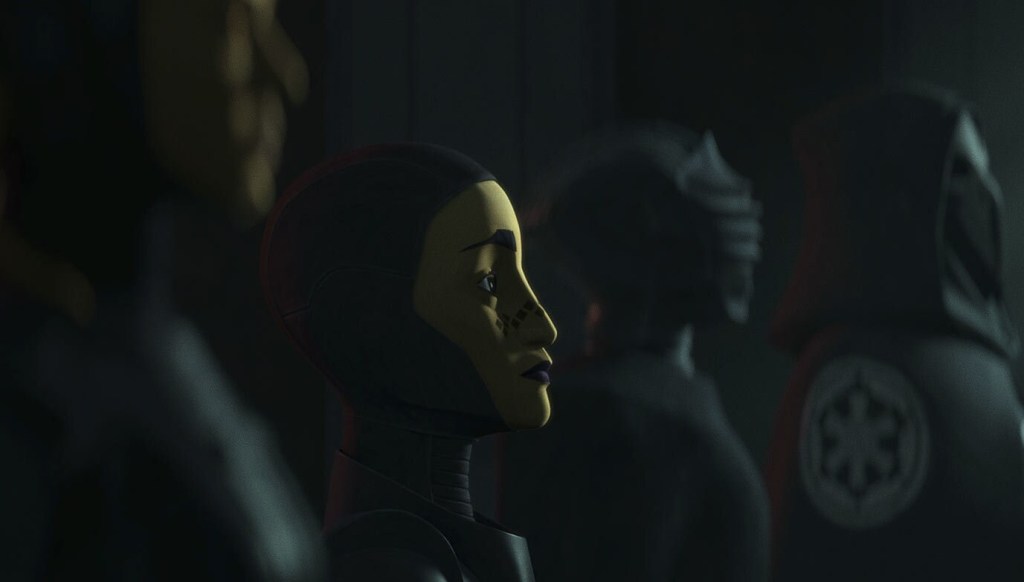
Even amongst the outstanding performances of Serkis and Skarsgård, I don’t think I’ve ever seen a show that boasts such talent at every level of its cast – every actor gives it their all, and fantastic direction marries that skill with the mastery of the writing, meaning that every character, from the lead stars to the smallest of supporting characters, feels so intensely grounded in reality with a distinct personality and tangible motivations. Andor certainly doesn’t skimp on its antagonists either; amongst the sterile halls of the Imperial Security Bureau, distinct personalities clash over career prospects and differing approaches, but chief among them is Dedra Meero (Denise Gough), a visionary Supervisor who seeks to rise through the ranks by spearheading the investigation into the emerging Rebellion. She feels undoubtedly more complex when she too feels like the hero of her own story, but no character exemplifies this approach more than Syril Karn. After being outplayed by Cassian and Luthen, Syril’s world falls apart; he loses his position, is dismissed by his Imperial superiors, and is forced to return home to live with his mother whilst Cassian quickly becomes an obsession for him. However, what makes him such an engaging character is the fact that by all accounts, he’s not at all a bad person. Time and time again he seeks out justice for the murder of two fellow employees in a hierarchical system that would rather cut corners and play political games than flatly pursue justice, and it’s that noble worldview that affords Syril the chance to feel like more than just a nemesis for our titular hero, even if he may seem misguided in his zealous support of Imperial rule, but that complexity is what makes him, and by extension the rest of Andor‘s characters so engaging.
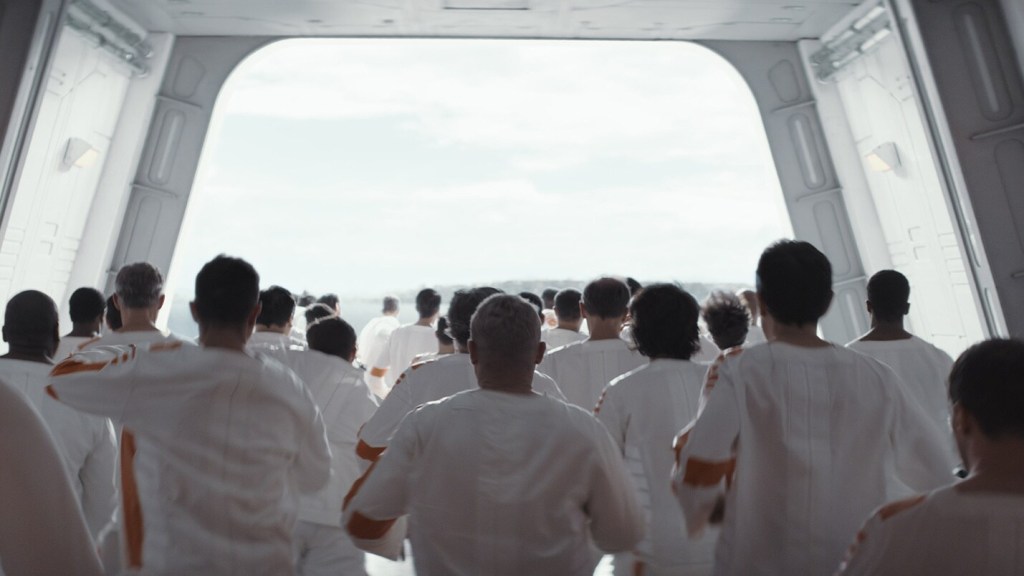
As much as I could whittle on for days about every brilliant stroke of Andor‘s writing, or the masterful nuances of its talented cast, I can’t go without levying praise against the many other facets of its production in which it also excels. Despite the fact it cost five million dollars less per episode than Obi-Wan Kenobi, Andor far surpasses the meagre production quality of that show and then some; instead offering a standard of filmmaking that equals the proficiency of its scripts. Although it doesn’t rely all that heavily on special effects, it certainly puts its best foot forwards regardless, and I of course have to say that the “Eye of Aldhani” at the end of Episode Six was one of the most visually striking sequences in Star Wars history, which all things considered is really saying something. I was interested to learn that showrunner Tony Gilroy also declined to use The Volume soundstage in favour of more traditional location shoots and large, sprawling sets, but the added realism proves to be a major benefit for the show’s visual quality, and with all the fantastic locales and interiors the show conjures up, there’s certainly no lack of creative energy put into the show’s production design. Andor‘s soundtrack might not be the most memorable score you’ve ever heard, nor is it particularly reminiscent of Rogue One or the Original Trilogy, but it manages to be suitably electrifying at all the moments that really need it, especially when it comes down to those key speeches and monologues throughout the story. With all that said, at the end of the day what really ties the show together is an astronomically high standard of direction, and it’s clear that where Deborah Chow ran Obi-Wan Kenobi into the ground, Tony Gilroy has worked hard to make Andor soar, and that effort has without a doubt paid off.
With it all said and done, I’m still struggling to come to terms with just how excellent this show is – a Disney Star Wars production of all things! Whether the lower profile of its lead character afforded it some freedom from studio interference, or it’s just a plain old happy accident, I do recognise the simple truth that Andor probably isn’t anything more than lightning in a bottle, and the planned second season will be the closest chance of anything from Disney Star Wars‘ future coming anywhere close to this level of quality. All the same, that won’t stop me from enjoying Andor in its own right – between its carefully structured plot, refreshingly serious tone, intelligent thematic core, emotionally charged payoffs, multi-layered characters and incredibly skilled production, I could pick apart this show frame by frame and still never run out of good things to say. It’s not perfect by any means, but I’ll be damned if it isn’t close, and it manages all that without a single lightsaber or major cameo, which just goes to show how far out of touch Lucasfilm is these days, and unfortunately I doubt they’ll ever appreciate what they have on their hands with this series. Nevertheless, if you’ve made it all the way to the end of this review, I appreciate your dedication and thank you for your patronage, but if you haven’t immediately sat down to watch Andor yet – what the fuck are you doing?
9/10


 A.J. Slater
Leave a comment