Although character focused episodes and a more structured approach to its overarching plot come as a welcome change, the second season of The Bear struggles to utilise many of its subplots effectively while overindulging in a number of its storytelling tools, some of which were the very things that made it work in the first place. Nevertheless, it manages to maintain some sense of its appeal beyond its more superficial elements, and the show’s renewed approach to story and character ultimately elevates Season 2 beyond its predecessor.

I was pleasantly surprised by my discovery of last year’s FX comedy-drama series The Bear; a punchy little show that delivered decent characters and an intense insight into the stressful realm of restaurant service. Despite some noticeable growing pains in its writing, it more or less found its rhythm, and it was certainly elevated by its creative editing and distinctive atmosphere. For more on Season 1 you can read my review here, but given how quickly it amassed a cult following in the weeks following its release, it’s no surprise that The Bear is back in business for a second season.
Spoilers ahead!
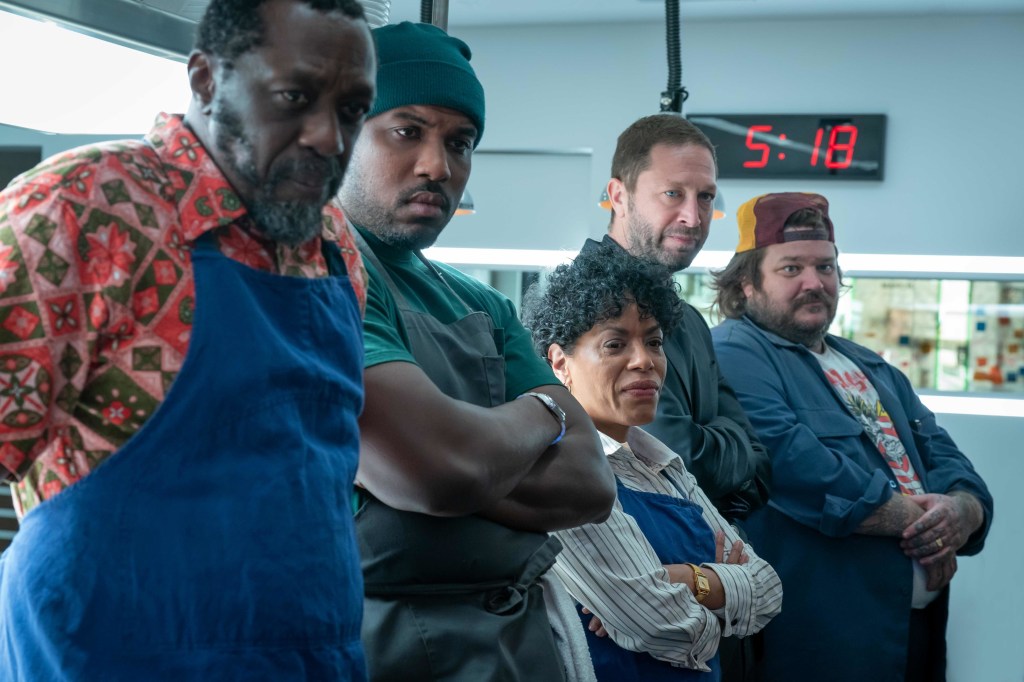
Following on from the end of Season One, The Bear picks up with the staff of the former “Original Beef of Chicagoland” knuckling down as they prepare to relaunch their restaurant as a fine dining establishment named “The Bear”, giving this season a solid throughline and excellent plot structure from which the rest of the story is derived as each episode counts down the weeks left until opening day. Between Carmen (Jeremy Allen White) and Sydney (Ayo Edebiri) struggling to formulate a new menu, the junior chefs being sent away to refine their culinary skills, and everybody else scrambling to renovate the not-at-all up to scratch premises and deal with constant financial woes, you certainly feel that urgency and stress bearing down on the characters as the time continues to tick away. This is only bolstered by The Bear‘s continued excellence in its editing, and although it can feel a little oversaturated at points, the creatives behind the show have a near-perfect grasp of how to make the cuts and pacing of this show reflect the atmosphere of the story. Some of the season’s best storylines stem from the conflict felt between Carmen’s vision of a fine dining establishment and his desire to stay true to his roots and his friends, and Episodes Four and Seven respectively deliver brilliant character development in this regard. Honeydew sees pastry chef Marcus (Lionel Boyce) travel to Copenhagen to study under an old colleague of Carmen’s, Luca (guest star Will Poulter), who helps to further temper Marcus’ creative energy, which follows on nicely from his arc in Season One, as well as showing him learn the skills needed for that more intricate approach of fine dining.

Similarly, Forks focuses in on Richie (Ebon Moss-Bacharach), who after clashing with Carmen repeatedly over their difference in opinion over the appeal of fine dining, is sent to a prestigious restaurant where Carmen used to work in order to gain a better understanding of what is expected of him. It proves to be the best episode of the show in its entirety; providing a moving character arc for Richie as he matures through the process and gains an appreciation for fine dining that carries forwards into the finale, where he’s able to commandeer the kitchen at the height of the opening night crunch in a fantastic conclusion to his progression throughout the season. The finale itself far exceeds Season One’s paltry closing episode, instead offering a satisfying yet bittersweet ending that sees the restaurant’s opening night prove to be a success in spite of a hectic barrage of problems that crop up throughout the evening. However, this success comes at a heavy cost, as many of the relationships between characters begin to crack -and even break – under the stress of The Bear’s launch, leaving Carmen at odds with just about everybody, Sydney unable to cope with the pressure, and even one of the new hires fired in the midst of the chaos for smoking crack on the job! It’s a suitably anxiety-inducing affair, as you would expect from the show at this point, but beyond that it still manages to nicely tie together many of the season’s subplots and cap off a number of character arcs. It also leaves plenty of story left to tell for an all-but-guaranteed third season, where it can explore the fallout of that opening night and how The Bear will continue to streamline its system as it hopes to stay in business.
Still, The Bear‘s second season isn’t without fault. For most of the characters, the writers put in solid work building the foundations of solid character arcs, but it’s sad to say that for a lot of them those arcs are not given befitting conclusions to drive them home. Line cooks Tina (Liza Colón-Zayas) and Ebraheim (Edwin Lee Gibson) are sent to culinary school early on in the season to prepare them for the restaurant’s overhaul, but as Tina embraces her education – building on that openness to change she learned through Season One – Ebraheim becomes isolated and conflicted over his place in the restaurant’s future. While it has the beginnings of a great subplot, that potential is squandered as it quickly becomes a handful of redundant scenes sprinkled across the next few episodes, before deus-ex-sandwich-window proves to be an easy cop-out for Ebraheim, finding him a place in the restaurant without needing him to change his ways. Speaking of redundant, Episode Six breaks up the season with an extended flashback episode that takes place about five years prior to the present storyline. Set at Christmastime, Fishes works well enough as a self-contained story, but it offers little more to the greater narrative than regurgitated context about the inherent dysfunction of the Berzatto family that we’d already heard from other characters. I suspect the true purpose of the episode was for an exercise in dick-swinging about how many cameos could be fit into one episode, counting stars like Bob Odenkirk, Jaime Lee Curtis and John Mulaney amongst its regular cast.
It’s nice to know that the show could afford to devote time to a near-pointless endeavour for the sake of showing off how many famous friends the creatives have, even when it fails to deliver on satisfying character arcs for both of its main characters. Much like every other character, Sydney’s arc has strong roots as her father’s doubts about her chosen career and her insecurity over her position in the restaurant and it’s future tenability begin to manifest in everything she sees. By the finale, she’s overcome with anxiety that causes her to step out during the opening night, but where it likely would’ve been best to leave it as a sort of cliffhanger, we instead see a half-hearted resolution thrown in at the last moment as her father comes to offer an apology and words of comfort, which unfortunately seems to be poised as a conclusion for her arc this season. Similarly, Carmen’s arc gets off to a good start when he unexpectedly finds himself caught up in a romantic relationship with an old girlfriend Claire (Molly Gordon), which distracts him from the hectic restaurant revamp and inflames tensions between him and his team. The deeper subtext of many of his scenes speaks to that struggle to maintain a work-life balance, and the use of his embroidered chef’s uniform as a visual embodiment of his desire to earn the prestige of his restaurant is a clever reoccurring motif, but much like Sydney’s arc it becomes tied up very sporadically during the finale. Carmen doesn’t even play much of a role in the finale, being quite literally locked away in a freezer, but with his relationship with Claire being cut short with a rather lacklustre amount of set-up, it feels like a disappointing place to leave the show’s main character all around.
Nevertheless, in spite of its flaws, The Bear‘s second season works, and more than that it works well. Even though many of the character arcs are left on shaky conclusions, there is material there to draw you in and keep you invested, and those subplots that do reach a satisfying conclusion are all the better for it, delivering the best storylines across the season and the show as a whole. So with that said, as much as I could live without the constant barrage of cameos, it’s certainly become clear as I’ve reached the end of Season Two that it outranks its predecessor in almost every regard.
7/10


 A.J. Slater
Leave a comment