Come one, come all, and witness the greatest adventure hero of all time whimper away into obscurity as Indiana Jones and The Dial of Destiny sees a geriatric Harrison Ford hobble through a soullessly patchwork plot comprised of itemised “Indiana Jones things” that the filmmakers mashed together with a cookie cutter “aged hero goes for one last adventure” storyline; complete with the particularly insufferable sort of female protagonist one can expect from contemporary Hollywood. Barring a fun 20 or so minutes at the beginning of the film, Indy 5 is nothing more than a depressing addendum to a once-great series that was dug up at the last possible moment with all the wrong intentions.
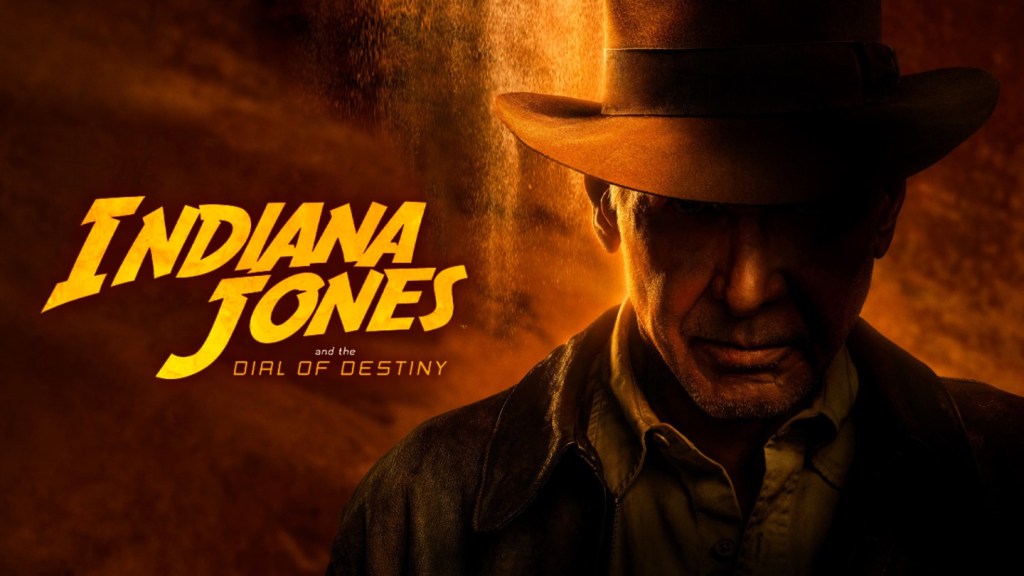
It’s not very often that you’ll find a genre defined by a single IP – Star Wars and Star Trek vie for science fiction dominance, Marvel and DC battle it out for the best of the comic book adaptations, and there’s more fantasy franchises swinging their swords around than I care to count. But adventure movies? Adventure movies will forever be defined by one man, and his name is Indiana Jones. To say I love Indiana Jones is an understatement – between countless rewatches, a bounty of toys, and even my own little Indy outfit, I was God-damn raised on it, and as an adult it still holds a special place in my heart – having it seen it more times than I can count, The Last Crusade is without a doubt my favourite movie of all time. I touched on this more than enough with an article I wrote at the end of last year in response to the first trailer for this film (which you can read here), as well as going in-depth on my fears with regards to how this movie might turn out – of which there were many, given that despite any good intentions, this beloved franchise was dug up solely to make a quick buck for the studio that had already driven Star Wars into the ground. Nevertheless, Indiana Jones‘ day of reckoning came around quickly with the release of The Dial of Destiny, and my morbid curiosity had me in the first possible screening I could get my hands on – so, saddle up dear reader, because it’s left me with plenty to talk about.
Spoilers ahead!
Things get off to a surprisingly good start with a twenty-or-so minute long adventure in the beginning that features a young Indy brought to life by an artificially de-aged Harrison Ford. It’s not exactly a flawless process – there’s a recognisable element of the uncanny valley in his visage (much like The Mandalorian‘s young Luke Skywalker), the CGI doesn’t hold up well under the pressure of fast movements and busy lighting, and the fact that there’s very clearly an older Ford behind the visage kind of gives up the ghost – but it’s not half bad either; delivering a believable replication of the character for the vast majority of this sequence. Taking place against the backdrop of the final days of World War Two, the opening sets the stage for the rest of the film as it introduces us to our main villain, Doctor Jürgen Voller (Mads Mikkelsen), a physicist who for some reason takes a special interest in historical antiquities, as well as bringing in the film’s titular MacGuffin – Archimedes’ Antikythera. Although you’re at first mislead into believing that the centrepiece of this sequence is the Lance of Longinus (which, arguably would’ve been a better focal point for the whole movie), Indy’s pursuit of the artifact lands him in a perilous predicament with Nazi soldiers, but after he escapes in classic Indiana Jones fashion, he sneaks aboard a train – which makes for a fun action set piece to round out this self-contained adventure. Also joining him on this mission is Toby Jones’ Basil Shaw; a kindly and adorably helpless Englishman who actually made for a fantastic sidekick thanks to his chemistry with Indy – so much so that I think the movie would’ve been far better had he taken the role of the deuteragonist. Nevertheless, despite what the rest of the movie delivers – or doesn’t – the opening was a reverently fun and highly enjoyable throwback to the better days of Indy adventures, and in retrospect was undoubtedly the peak of the film for me.
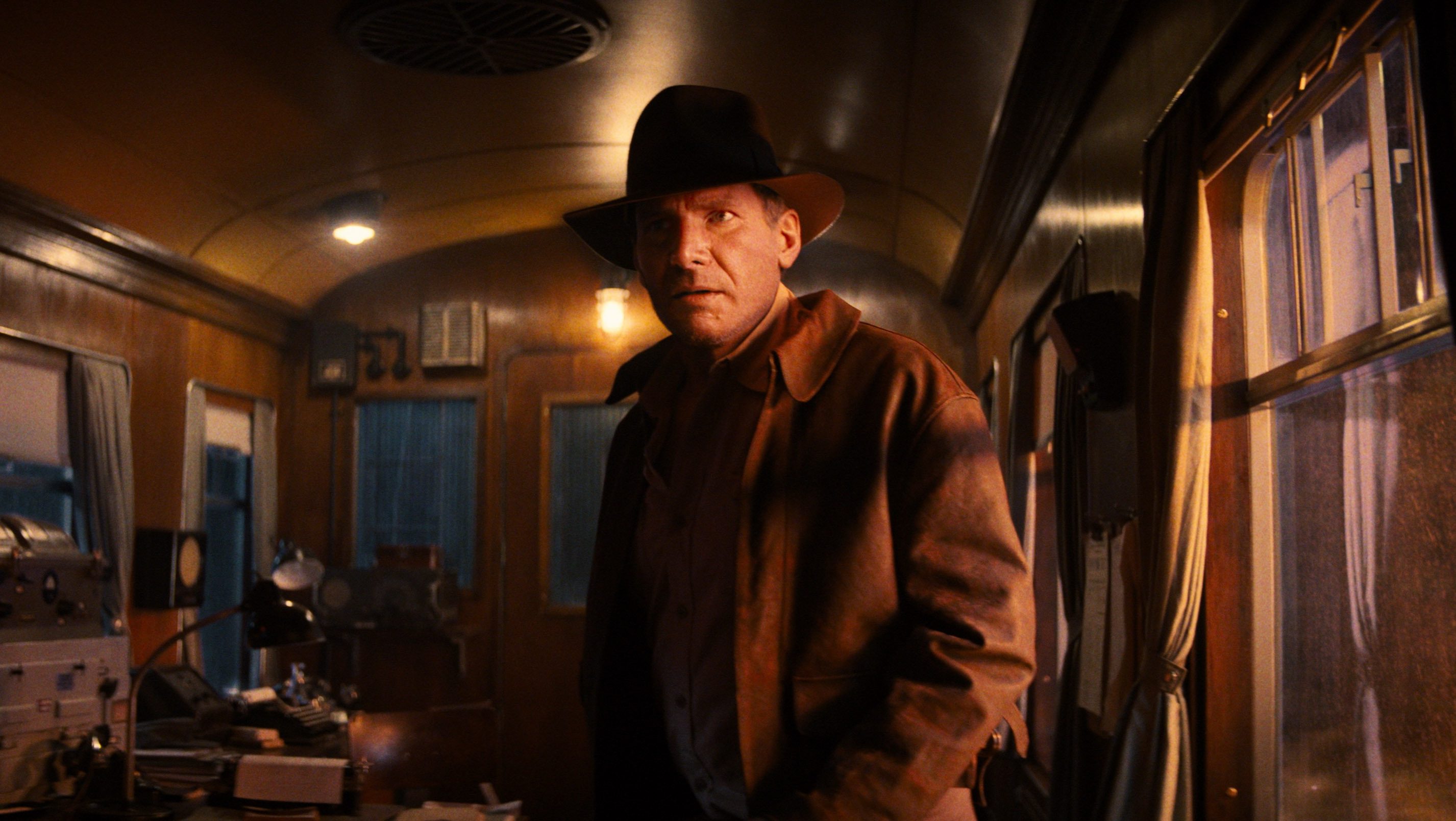
Unfortunately it all comes to a screeching halt as we check back in twenty-five years later to find a grouchy, decrepit Indy hobbling around his apartment building in his underwear; shouting at hippies and eschewing the “Moon Day” celebrations taking place that day. That is of course in reference to the 1969 Moon Landing, which despite making for a nice pick as a backdrop to set against the story, in actuality has very little bearing on the plot beyond some cursory references to Operation Paperclip – the integration of Nazi scientists into the ranks of NASA – through the film’s antagonists. For some reason, the writers also decide that this day of all days marks Indy’s retirement – again, a plot point that has virtually no bearing on the wider script – but his perfunctory exit from university teaching is soon upended when Basil’s daughter Helena (Phoebe Waller-Bridge) turns up out of the blue, trying to enlist him into one last adventure to seek out the supposedly missing Dial. This petition for help turns out to be under false pretences, as Helena, knowing that Indy was still in possession of the device, steals the artifact from under his nose and escapes, while the aged professor is left to deal with the henchmen and CIA agents on her tail, who are inevitably revealed to be under the command of Doctor Voller; now going under the alias of Schmidt in his work for the US Government. A fairly chunky chase sequence proves that Indy can still certainly handle himself in all manner of situations, especially with Ford seeming so nimble in spite of his age, but in hindsight the extended escapade feels like an unnecessarily drawn out affair for an already lengthy feature film. After making his escape, Indy discovers he has been framed for the murders of two of his colleagues by Voller’s lackeys, but once again the writers set up an interesting plot point only to completely forget about it for the rest of the movie.
Still, with a little help and a hefty amount of exposition from one of his oldest friends, John Rhys-Davies’ Sallah, Indy gets on his way to Morocco in pursuit of Helena, who as it turns out only wants to auction off the Dial to pay off her debts, whilst Voller and his subordinates do the same. The story starts to settle into the classic globetrotting Indiana Jones adventure blueprint, although it feels far from organic – between punch-ups, shootouts, chase sequences, puzzle-solving, archaeological exploration, lucky escapes and a constant back-and-forth between our heroes and villains as they travel from Tangier to Athens and at last Sicily, it gives the impression that the writers broke the old films down into their component parts and crassly reassembled them into a formulaic, by-the-numbers take on an Indy adventure that, while not inherently awful, still lacks any of the charm of its predecessors. As for the Antikythera itself, it of course turns out to be a mechanism designed to assist in time travel – with The Dial of Destiny now throwing giant time portals in the middle of the sky into the world of Indiana Jones, the film strays even further from the absurdity of Crystal Skull‘s interdimensional aliens; hardly touching on the historical aspect of the Dial and certainly not offering much of a mythological mystery around it, which was the one thing I was hoping the movie would take inspiration from in the original trilogy. It all comes to a head when, much to their surprise, the Dial takes heroes and villains alike back in time to the Siege of Syracuse in 214 BC, thanks to the “continental drift” plot point that quite literally comes out of nowhere. In classic Indiana Jones fashion, the villains perish as a result of their own foolishness when their plane is shot down by the warring Greek and Roman armies alike, but the whole farce of the time travelling finale feels about as far from the classic movies as you could get.

To top it all off, the script fails to prescribe Indy with any real motivation to partake in this whole ordeal – he says himself that his treasure-hunting days have long passed, he clearly doesn’t care all that much about Helena, and although he makes a passing comment about it, he doesn’t seek to use the Dial for his own ends, so he’s left feeling like a marketable accessory to a story primarily driven by the movie’s original characters. You might hope that despite his lack of relevance to the plot, The Dial of Destiny might provide Indy with some redeeming qualities in his character to make up for it, but you’d be sorely mistaken – Doctor Jones’ doddering and dour disposition is only exacerbated by the writers’ relentless attempts to beat him down even further, and although he might not reach the dismal depths of Luke Skywalker in The Last Jedi, the decision to write the death of his son Mutt and subsequent divorce from his wife Marion into the script feels like an intensely depressing appendage to the character’s story that comes as a misguided attempt to retroactively negate Kingdom of the Crystal Skull. This choice is made all the more baffling when it fails to inform any sort of arc or deeper introspection for Indy’s character; there’s no connection to be drawn between the quest and his personal life, nor in his interactions with other characters, as easy as it would’ve been to work that into the narrative. The real kicker comes when Indy is adamant that with no reason to go on, he should just give up and die when he’s injured in the past, and it comes down to Helena to forcibly rescue him before the film finally closes out on his reunion with Marion (Karen Allen), that much like the appearance of Sallah earlier, is surprisingly almost as heartwarming as it is a glaringly obvious attempt to bank on the nostalgia of including characters from the older movies.
As much as it may have failed to deliver when it comes to its legacy characters, I wouldn’t advise going into The Dial of Destiny hoping to glean something from its debutants either; the film forgoes the long-running love interest trope to pair Indy up with his goddaughter Helena Shaw, and if you thought The Temple of Doom‘s Willie Scott was annoying, you’ve not seen anything yet! Waller-Bridge’s hustling heroine borders on the insufferable thanks to her relentlessly biting commentary; whether it’s tearing down Indy at every turn or moaning about capitalism, her unbearable screen presence is the only thing masking the gaping abyss of characterisation that comes as part and parcel of her role. I could hardly grasp a sense of her identity beyond a self-serving and money-minded nature, especially when the door was wide open to provide a strong link between her motivations and her relationship with her father and by extension Indy himself, but nothing really materialises, and she’s left feeling just as hollow as she is annoying. Her monobrowed, Short Round knock-off sidekick Teddy is equally devoid of character, sparing his remorseless murder of a man about three times his size and the sudden revelation that it’s within his capability to fly planes, and overall the pair manage to quickly secure their position as the worst of Indy’s companions to date. Don’t expect much from the film’s villains either – while his henchmen do offer a little dash of screen presence here and there, Voller himself loses some of the more interesting nuances of his character found in the opening sequence, and the movie fails to sufficiently explore the most interesting aspect of his character when it comes to light that he aims to reshape history by killing Hitler himself, and in the end he’s left feeling extraordinarily bland amongst others in Indy’s rogues gallery, which is quite the let-down given Mads Mikkelsen’s immense acting ability.

Although it certainly may not be up to snuff when it comes to its script, The Dial of Destiny also had some big shoes to fill when it came to its stylistic choices – after all, the Indy movies have often led the way with revolutionary special effects, not to mention an enticing visual flair reminiscent of classic Hollywood present in the original trilogy, and even the prior entry delivered a unique, if not a little strange aesthetic with its bright glowing colours and dreamy bloom effects. However, the latest adventure doesn’t quite reach the same heights – as much as James Mangold and his crew might have tried to replicate the look of the originals, there’s an undeniably “flat” look to the movie which I’ll chalk up to it being shot on digital; a strange choice given that the Star Wars Sequel Trilogy was shot on film, and certainly looked all the better for it. It was certainly a competent effort, and The Dial of Destiny isn’t a bad looking film by any stretch of the imagination, but nor is it particularly striking, especially with many scenes feeling a little washed out and drably coloured. Similarly, the special effects are pretty good, asides from a few instances of Harrison Ford’s face being awkwardly pasted onto stunt doubles during some of the action scenes, but I can’t say they particularly blew me away either; instead feeling pretty indistinguishable from any other ILM-led blockbuster over the last couple of years. Speaking of action scenes, they can dip into the more implausible side of things from time to time, but nevertheless feel closer to the originals than the outright insanity of some of Crystal Skull‘s setpieces, and I thought the film’s chase scenes were actually pretty good in their own right, and while I did worry that it would adhere very closely to the sort of sequences set out by its predecessors, moments like the ocean diving scene proved that The Dial of Destiny at least had a little bit of originality to offer.
By its end, the fifth Indiana Jones movie had certainly come to surprise me – while in many ways it was more or less what I was expecting, it also proved to surpass some of my expectations whilst failing miserably to meet others, and altogether I can definitely appreciate that it could have easily been much worse. Still, that’s no excuse for the movie’s shortcomings – an unengaging story is far too preoccupied with ticking off a list of what the writers believed made for a good Indy adventure to notice that it has all but neglected to imbue it with the heart that truly brought the original trilogy its success, while uninspiring to downright irritating characters vacant of depth only exacerbate the film’s increasingly drab complexion, and the consistently mediocre production values certainly won’t prove to be its saving grace. However, more than anything this movie fails to deliver what it needed most – as the endmost outing of it’s titular character, Indy’s latest adventure should’ve been nothing short of a celebration of this cinematic icon, but instead we’re left with a grovelling, antiquated shell of the once-great hero as he’s put down time and time again by a script that’s just as dismissive of him as his new sidekick. It just barely skims away from the offensively bad, but for the final big-screen adventure of the legendary Indiana Jones, The Dial of Destiny‘s unrelenting blandness is perhaps even more egregious.
4/10


 A.J. Slater
Leave a comment