A nightmarish New York and Jeffrey Dean Morgan’s return to the fan favourite role of Negan makes Dead City’s first season an alluring prospect for fans of The Walking Dead, but the sequel series ultimately fails to justify its own existence as it delivers a largely unengaging storyline accompanied by equally underutilised debut characters. While the script does remain serviceable for the majority of its six-part run, its failure to give its lead characters suitably interesting material to work with in lieu of retreading old ground only leaves the show feeling all the more forgettable.

I got suckered into The Walking Dead in the midst of my teenage years, and it was a pretty good time for it too, as I caught up with the show as it was airing just on the cusp of the Season Six finale, Last Day On Earth. That of course was the episode that introduced audiences to the show’s most acclaimed villain, Jeffrey Dean Morgan’s Negan, as well as leaving us on an infuriating cliffhanger as he brutally murdered one of the protagonists off-screen; the result of which wasn’t revealed until the beginning of Season Seven. I stuck by the series through the entirety of the heroes’ battle against Negan and his Saviours, but as it entered its ninth season, the show had certainly begun to wear on me, and with lead star Andrew Lincoln making his exit after the fifth episode, I too decided to drop The Walking Dead before my indifference turned to animosity. However, when the series came to an end last year after a whopping eleven seasons, and with the news of multiple sequel shows on the way (including an Andrew Lincoln-led Rick Grimes miniseries), I decided to power through the entirety of the main show – and a variety of spin-offs that ranged from mediocre to downright terrible – to prepare, and with the first of the bunch, Dead City, now having aired in its entirety, I figured it’d be suitable enough for a review.
Spoilers ahead!
Dead City gets going at breakneck speed, as we catch up with Lauren Cohan’s Maggie Rhee (one of the leading cast members from the main show) and she’s a woman on a mission as she gets to tracking down Negan; her once-mortal foe and the man who murdered her husband Glenn back in Season Seven of The Walking Dead. Maggie had seemingly put revenge behind her after the two became reluctant allies at the tail end of that show, and as it turns out, she now needs his help to locate her son Hershel after he was kidnapped by one of Negan’s former lieutenants; a savage warlord called The Croat (Željko Ivanek), who has made the heavily zombie-infested island of Manhattan his dominion. As for Negan, he’s taken a young mute girl called Ginny (Mahina Napoleon) under his wing whilst on the run from the Marshalls of a survivor settlement called New Babylon, with his wife Annie and his infant son now mysteriously absent from his life, and he agrees to help Maggie on the condition that she provide Ginny with a safe home. On paper, it sounds like a pretty interesting place to pick up with our characters, but in execution it feels eye-wateringly rushed, and much of this backstory is delivered through expositional dialogue as opposed to lending some time at the beginning of the show to set the scene a little better. Nevertheless, the pair arrive in New York, and Dead City starts to flex one of its biggest strengths as it delivers a uniquely chilling aesthetic through its Manhattan setting by intensifying the horror undertones in the story and cinematography. The gloomy abandoned streets of the island are eerie enough at first, but matters quickly escalate as walkers begin to rain down onto the street from the tops of skyscrapers and insect infestations terrorise our protagonists, and the show maintains this added streak of the macabre throughout with its dark atmosphere, gruesome violence, and increasingly disturbing walker designs – including a giant, mutated amalgamation of the undead living in the sewers, that while clearly a homage to The Last Of Us 2, does feel a little fantastical for the as-yet tame take that the series has generally had on zombies.

The duo find themselves up against a number of obstacles in their search for Hershel, from the ever-present dead to the steadfast New Babylon Marshall Perlie Armstrong (Gaius Charles), who remains relentless in his hunt for Negan, but the biggest threat that they face comes in the form of the Burazi; The Croat’s Mad-Max-esque post-apocalyptic warband. Luckily for them, they soon find themselves allied with a small group of survivors in hiding from the Burazi, and they hatch a plan to raid The Croat’s stronghold at Madison Square Garden and rescue Hershel. Naturally, given that this only happens just past the midway point of the season, you shouldn’t be surprised to learn that things quickly go awry – both when Ginny turns up out of the blue having run away from Maggie’s settlement, and when it turns out that The Croat has sprung a trap on the survivors after turning one of them to his side. In the ensuing chaos, Maggie, Ginny and the remaining survivors are forced to flee through the sewers, whilst Negan makes his escape with an injured, yet ever-determined Marshall Armstrong, but our characters inevitably reunite, and whilst the softened Armstrong delivers Ginny back to safety, Maggie betrays Negan and turns him over to The Croat in exchange for Hershel; leaving the season on a somewhat unfulfilling endpoint as Negan finds himself the unwilling puppet of the mysterious Dama (Lisa Emery), who seeks to use him as a figurehead in her goal to consolidate power across New York. In truth, it feels like the meat of the story has been held back for a second season, and that’s left this first batch of six episodes feeling awfully sparse as it tends to follow relatively uninspired story beats and setpieces that wouldn’t have gone amiss in the mainline Walking Dead show either, and in retrospect I can acknowledge that it’s given me so little to chew on that I’ve practically recounted the plot of the season hit-for-hit as opposed to any tangible critique or praise. It is… fine, I suppose – it’s straightforward and watchable, but in the kind of way that makes you want to switch your brain off as opposed to enjoying it on the back of its simplicity.
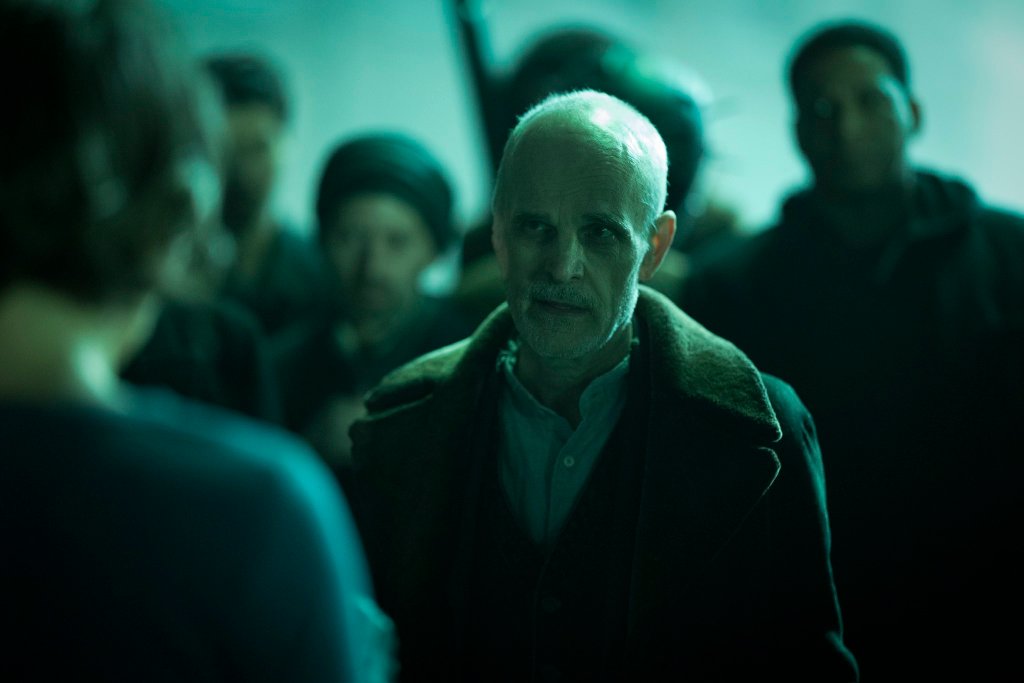
Where a series may not deliver on its plot, you certainly hope that it might make up for those shortcomings through superior character writing, and while Dead City does lend a lot of weight to its heroes and villains, in execution they do tend to come up short. Maggie is more or less consistent with her characterisation leading on from The Walking Dead, but there were a couple of things that bugged me – for one, the show rather haphazardly glosses over the fact that she left her home and her friends to start a new community elsewhere, and for another, her renewed hatred of Negan feels like quite the walk-back, even if the writers do explain it in a semi-logical (if not overly expositional) manner. However, regurgitating those grievances between the pair does open the door for a little more development of their relationship, as Maggie begins to understand Negan a little better, and the two even begin to find some common ground in their worldviews at certain points. Speaking of, it shouldn’t come as any surprise that Jeffrey Dean Morgan absolutely steals the show as Negan; bringing every ounce of devilish charisma to the role as he first did seven years prior, whilst continuing to expound the former villain with a more sincere side as well that follows on nicely from his character arc in the later seasons of the main show. It did seem to me that beyond her odd habit of refusing to speak, Negan’s ward Ginny did seem to act as a mechanic to emphasise his redeeming qualities more so than a character in her own right, and although he felt a little more realised, the same can easily be said of Marshall Armstrong. Dead City‘s villains don’t fare much better – for a maniac who is supposedly frightening to even Negan himself, The Croat isn’t all that intimidating, nor do the writers seem to fully commit to their decision to try and draw parallels between he and Negan’s way of leadership, and while I did say earlier that The Dama was mysterious, I do wonder whether that was by design or simply as a consequence of introducing a larger villain so late into the season with so little screen-time or exploration of the role she plays in the narrative.
By its conclusion, I couldn’t help but find that my response to Dead City was not all that dissimilar to the same indifference that first put me off the original Walking Dead series, and I think that it could perhaps be emblematic of a wider problem across the world’s most popular zombie-based media franchise. With a staggering twenty-two seasons of television readily available, not to mention the as-yet unreleased entries in the franchise, and an innumerate number of comics and videogames that differ from the show’s adaptation of Robert Kirkman’s work, there’s no question that The Walking Dead has been stretched thin over the years. That’s more than evident in Dead City‘s uninspired narrative and character work, and while it doesn’t lack some small traces of creativity, without the calibre of writing to bring that out of the show it’s left feeling adequate at best. Although it’s primed to have a little more substance to its story, I’m not chomping at the bit for the seemingly inevitable second season, nor do I think that this bodes well for the upcoming Daryl Dixon series releasing in only a couple of months, but I’ll reserve judgement until that gets its own review. With that said, I’ll bring this one to a close; whilst I think Dead City could’ve comfortably achieved a higher rating, between its many flaws and my general apathy for it, I’m quite happy to leave it here.
4/10


 A.J. Slater
Leave a comment