Dressed as it is in cameos and callbacks, Ahsoka’s ceaseless and superficial attempts to tug on your heartstrings fail to mask its contrived, overinflated plotline, uninteresting characters, and shockingly incompetent writing all around. Add in the emotionless, wooden performances of its stars, bland action scenes, and some of the poorest editing I’ve seen, and the show’s lack of redeeming qualities becomes painfully apparent.
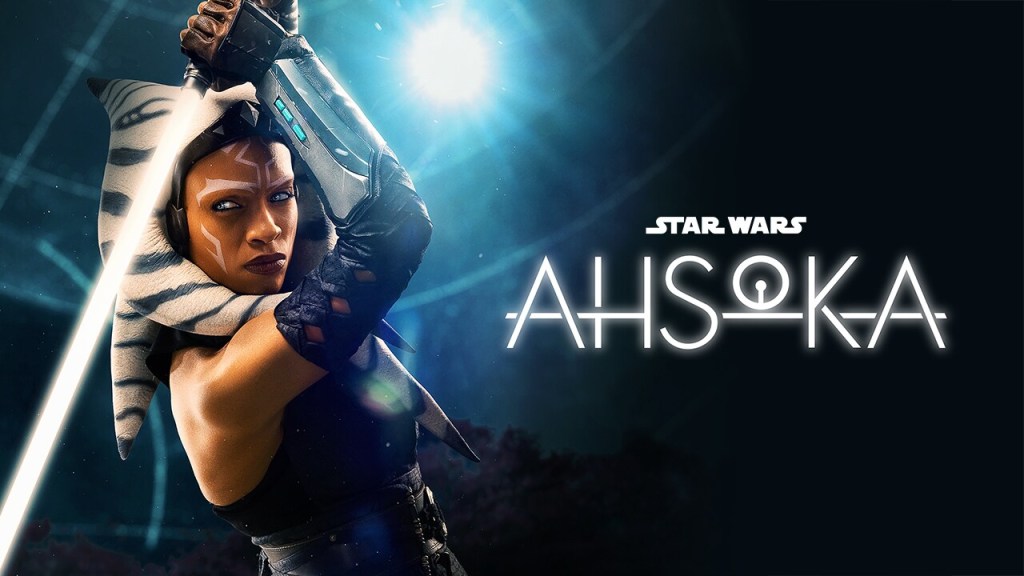
It’s safe to say my faith in Star Wars as a brand has been eroded into near-oblivion over the last few years, and with the exception of last year’s surprise treat in Andor, anything that wasn’t outright terrible sort of just served as a stay of execution, preventing me from giving up on the IP entirely. So naturally, I’ve kept my expectations very low, but ever since it was announced I allowed a twinge of hope that Ahsoka might have a better chance at quality than any of the other upcoming Disney Plus Star Wars shows to live on in my heart. After all, the titular character is, aside from wolves, the fanatical obsession of showrunner and Star Wars veteran Dave Filoni, being featured in every show he’s worked on so far, so why wouldn’t he want to try his best for a show featuring not just one, but a whole team of characters that were all his original creations? Well dear reader, I’m still pondering the answer to that question, but I can assure you – he most certainly did not try his best here.
Spoilers ahead!
Building on the story of the decidedly underrated Star Wars: Rebels animated show, and following on from her cameo appearance in Season 2 of The Mandalorian, Ahsoka picks up with the titular Togruta as she continues her search for Grand Admiral Thrawn, and by extension the missing Jedi apprentice Ezra Bridger, who were last seen being whisked away by the hyperspace whale creatures, Purgill, at the end of Rebels‘ final season. After finding a hidden artifact, Ahsoka seeks out Sabine Wren, another Rebels mainstay, to help her decipher it, and here we learn that Sabine had previously been training as a Jedi Padawan under Ahsoka. Dave Filoni clearly lets nothing stop him from engaging in his favourite pastime – retconning continuity that he created – as for one, there was not once any inference to Sabine becoming a Jedi in any previous appearance, and for another, Ahsoka specifically renounced the Jedi ways in both Rebels and The Mandalorian, so why would she be taking on an apprentice? Anyhow, we’re told that they broke off from one another, and some very artificial tension is placed between the two as they race to uncover the path to Thrawn, which is only exacerbated by the painfully unemotional performances their actors give. I know for a fact that Rosario Dawson is not a bad actor, so whether it’s down to the boring dialogue or Filoni’s direction, it feels like she’s actively restrained from displaying any sort of emotion. It’s even worse when it comes to Natasha Liu Bordizzo as Sabine – her wholly unlikeable characterisation and devoid-of-life dialogue delivery makes her scenes painful to watch, especially when there’s so many of them I was starting to think the show might as well be named after her character instead. A slight hint of complexity seeps in when Sabine betrays Ahsoka and travels with the enemy to find Thrawn and Ezra, but it isn’t built up very well, nor does it have any lasting implications, so any hint of meaningful character development vanishes as fast as it appears.
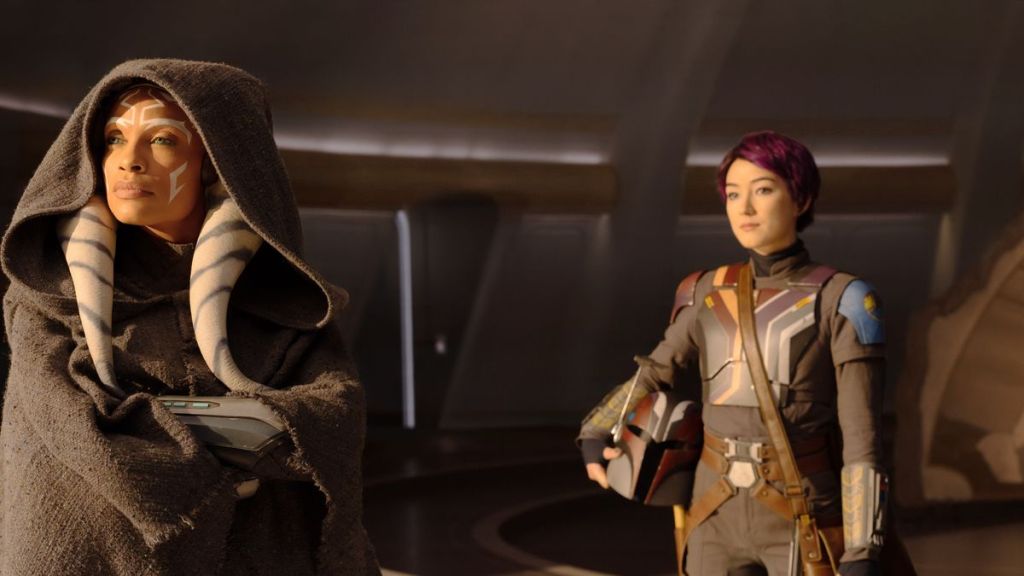
The pair are intermittently joined by yet another Rebels character, the Twi’lek General Hera Syndulla, here played by Mary Elizabeth Winstead, who seems to be included literally just for the sake of it as she offers practically nothing to the story except a hamfisted attempt to excuse why Ahsoka and Sabine are going it alone trying to prevent Thrawn’s return. Somehow, this isn’t even the worst case of a wasted character, with Episode 5 seeing the return of Prequel Trilogy star Hayden Christensen as Anakin Skywalker himself as a vision (?) appearing to a defeated Ahsoka. The episode is thinly veiled as a character study on Ahsoka, but there just isn’t any character to study – instead, you’re treated to a relentless barrage of vapid references and callbacks that judging by social media reactions have suckered in fanboys in exactly the way the episode was intended for. There was no real cause for Ahsoka to doubt herself prior to this, and no meaningful change comes after, providing only a direct rip-off of Lord of the Rings as Ahsoka comes back to life wearing an all-white outfit. Thankfully, even with a C-3P0 cameo of all things, the series does actually feature some original characters, as our heroes face off against various mercenaries hired by Diana Lee Inosanto’s Morgan Elsbeth, an ally of Thrawn who has been retconned to be one of the mystical Nightsisters – directly contradicting the Star Wars: Jedi game series that explicitly states that only one Nightsister remained, and proving once again that Lucasfilm has no care for maintaining a congruent continuity for Star Wars. Chief among these mercenaries are the Dark Jedi duo of Baylan Skoll, played the late great Ray Stevenson, and Shin Hati (Ivanna Sakhno), that while proving to be the series’ most intriguing characters, are let down by a lack of backstory, and motivations that are hinted at but never fully explored, leaving them to be just as forgettable as the rest of the cast.
After six episodes of treasure hunting and cat-and-mouse between hero and villain, the series finally delivers on its core storyline as our characters, for the first time in Star Wars history, travel to another galaxy, where Thrawn and Ezra await. For such a monumental and unique concept it proves to be practically irrelevant – there’s no weight to it and nothing interesting really stems from this plot development. The not-so-strange world they arrive at, Peridea, is a barren wasteland that would be perfectly at home in the existing Star Wars galaxy, especially considering that of the two sentient alien species that live there, one of them is just more Nightsisters – retconning them as extragalactic travellers. The final few episodes see our characters arrive there, with Sabine and Ahsoka finally reuniting with Ezra Bridger (Eman Esfandi), who after spending a decade in isolation on a hostile world acts precisely the same as he did towards the end of Rebels, making it feel like yet another aspect of the story that after being built up for so long is ultimately a creative letdown. Lars Mikkelsen also makes an equally underwhelming live-action debut as Grand Admiral Thrawn, who after being hyped up for the whole season as this nearly God-like threat to the New Republic essentially loses every battle he oversees against our heroes, only narrowly escaping at the conclusion of the finale. This cliffhanger ending also sees Ahsoka, Sabine (who after the bare minimum character development is now a fully fledged Jedi), Baylan and Shin stranded in the new galaxy, whilst Ezra stows away on Thrawn’s ship and escapes to the New Republic, making it clear this story was intended to be finished elsewhere, and the series is ultimately left feeling very unsatisfying in a vacuum, with a multitude of questions remaining unanswered.
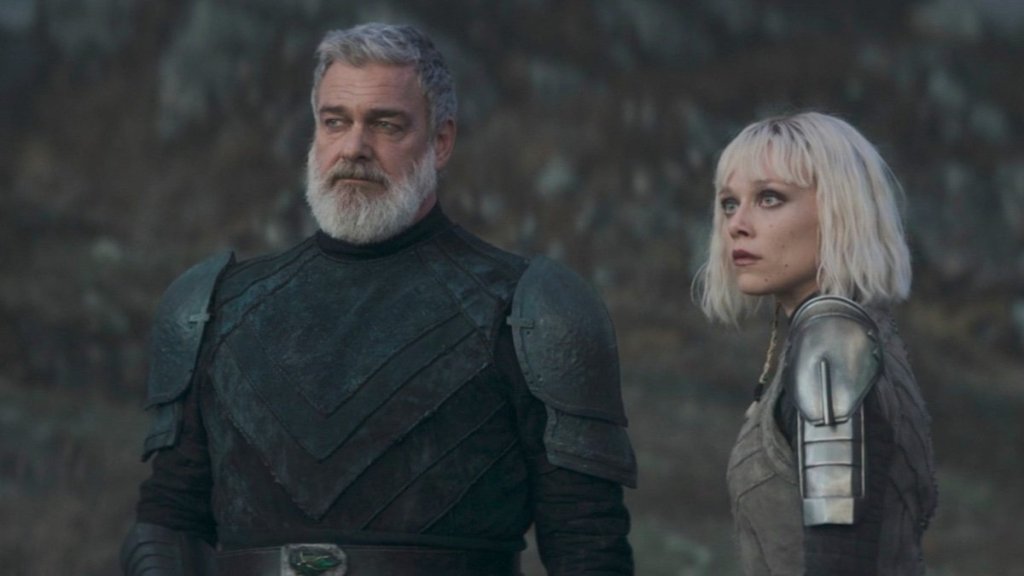
One of the very few things Ahsoka has going for it is a noticeably higher production value than most of the other Disney Plus Star Wars shows, but even then it seems to have failed to leverage that effectively. Most of the sets feel like just that – artificially created locations with nothing existing outside of them except the endless digital landscapes of The Volume soundstage, and the CGI seems to fall into the camp of either very well made or strikingly janky. Speaking of, the editing in this series sticks out like a sore thumb, with numerous choppy cuts and failures to line up shots that make the production feel decidedly amateur. The same can be said of the fight choreography, which is a far cry from the acrobatic showmanship of the prequels, the emotionally charged duels of the original trilogy, or the violent and weighty combat of the sequels; instead feeling overchoreographed and sluggish most of the time, with the exception of the work of Ray Stevenson and his stunt performers, and whatever held over muscle memory Hayden Christensen had from Episode II and III. That said, there are some areas where it’s clear that at least some passion went into the making of this series, with one notable example being the costuming, whether it’s the military-chic outfits of the New Republic, Ahsoka’s Japanese-inspired robes, or the medieval armour of Baylan, Shin and Marrok. There’s certainly something to be said of the show’s various aesthetics in general, especially when some of the more disparate elements are effectively blended together, and it harkens back to the visual language of the Original Trilogy in a variety of ways – the same goes for Kevin Kiner’s soundtrack, which harmonises a variety of sounds both original and reminiscent of other Star Wars scores to give the series a bit more of an edge.
It is a shame that Ahsoka proves to be yet another disappointment on the part of Disney’s Lucasfilm, but at this point it isn’t all that surprising. It’s clear that with errors both large and small cropping up frequently in the writing, Dave Filoni cares more about jampacking his projects with as many jangling keys as possible than writing a competent and moving story – and it’s sad to say that he will likely continue this way when enabled by so many fans who are so easily swayed into believing this is good storytelling by the mere presence of a character they recognise on their screens. Filoni’s incompetence doesn’t stop at writing either, as the series demonstrates that his talent for direction is equally non-existent, with unemotive performances on the part of the actors and lacklustre work from much of the crew. Nevertheless, I can’t say I feel particularly strongly about the show, and nor will I be rushing to watch it again anytime soon, so with that I believe my review is concluded.
3/10


 A.J. Slater
Leave a comment