Despite existing in a similarly nebulous world of high class hitmen, The Killer is certainly not making a pass at John Wick – nor does it need to. Instead, it offers a tempered and methodical story framed by the inner machinations of its enigmatic titular character, whose quirks and no-nonsense attitude are as engaging as his deeply masked humanism. Brought to life by Michael Fassbender’s subtly brilliant performance, it makes him a remarkably memorable protagonist who holds up an otherwise flavourless main plot.

It’s not often that I find myself struggling to wrap my head around a film, but after seeing David Fincher’s latest movie The Killer during its limited theatrical release, I wasn’t sure to what to make of it. Sure, I could point to aspects of it I liked, or that I didn’t, but I felt like I was missing something; that I wasn’t really “getting it”. Thankfully, I didn’t have to wait very long to see it again, given that it dropped on Netflix today, and I’m glad to say that a second look has proven most beneficial.
Spoilers ahead!
The Killer styles itself as a six-Chapter story, and it opens on its titular character as he prepares for an assassination, which – if his monologues and incredibly calculated preparations are to be believed – seems to be just another day at the office for the outwardly cold hitman. However, that professional demeanor and analytical precision lull you into a false sense of security; in spite of how little time we’ve spent with the character, we already start to believe that The Killer is infallible, and that’s what makes the opening twist so effective as he mistakenly kills a bystander in place of his target; shattering your perception of his abilities and creating built-in stakes for the story when it becomes clear that despite his disposition, our protagonist is not at all perfect – nor is he the super-human, gun-toting hitman extraordinaire you might have grown accustomed to from films such as John Wick. Further differentiating itself from the realm of high-octane, action-hero assassins, The Killer opts for something a little more tangible than a revolving door of overchoreographed fight scenes; instead setting its protagonist off from the inciting incident as he scrambles to evade the authorities and escape to his secluded home in the Dominican Republic so he might lay low. However, after his former employers target both The Killer’s home and his girlfriend as punishment for his failure, he sets out on a globe-trotting mission seeking retaliation, and one by one, he meticulously plans and executes the assassinations of his handler and the two hitmen sent after him before coming face to face at last with the Client who ordered his death – or so he thinks (more on that later!). It’s not the most exciting storyline in the world; there’s frankly not that much to it, but it’s straightforward, it’s very much grounded in reality, and more than anything it takes its time; knowing that it works just fine in propping up the other elements of the script without the need for copious amounts of filler.
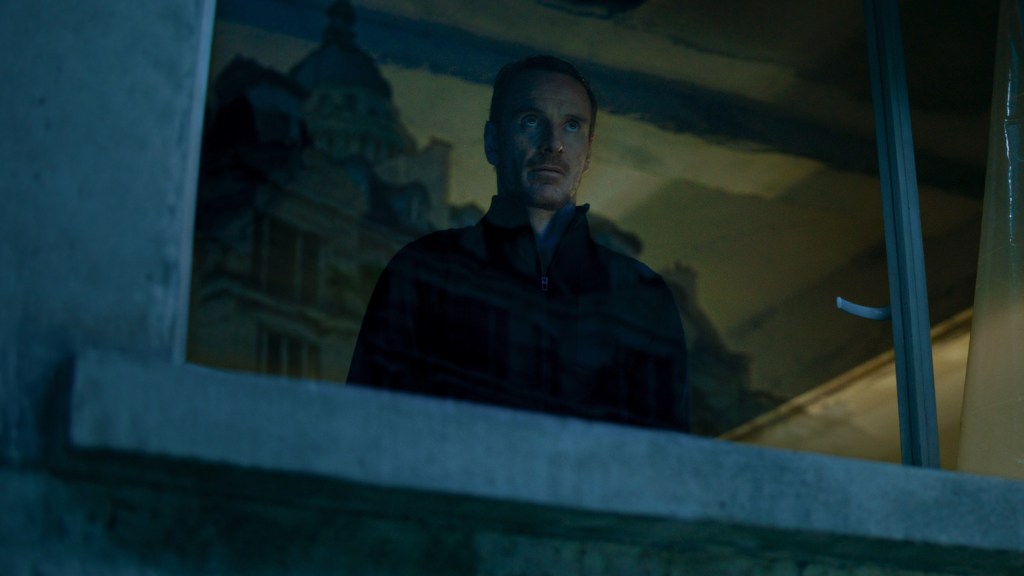
Now, you may be wondering, without a complex plot, or a constant barrage of over-the-top action scenes, what does The Killer actually have to offer? Well, the clue is really in the name – the film, more than anything, is a character study of its protagonist. The Killer’s preparations are often accompanied with monologues that relay his inner thoughts to the audience; covering a broad range of topics from the method of his assassinations and the nature of his work, to his general observations of the world around him, and various unrelated musings and anecdotes that spring to his mind as he sets about his tasks. You get a fantastic sense of his modus operandi as he goes from one carefully calculated step of his plan to the next, and it’s extremely satisfying set-up and payoff to see every detail and preparation made crop up as he enacts his assassinations. Even when things don’t always unfold as he intended, his “anticipate, don’t improvise” ethos not only makes him seem all the more competent, but also contributes to the idea that the character has a rich and experienced history from which he derives his skills, which is shown twofold with his depth of resources and expertise in evading the detection of the authorities. What really nails home The Killer’s practical disposition is his seemingly detached attitude to those that have crossed him – he kills only when necessary, but does so with absolutely zero hesitation, and he certainly doesn’t take chances on his most dangerous foes as they appeal to his evidently non-existent humanity. As much as he might seem like a remorseless and robotic murdering machine, it’s clear that there’s more to The Killer than just his work; after all, he obviously cares for his girlfriend, and some of the more acute details of the story – like his singular obsession with The Smiths, or the seemingly random tangents amongst his monologuing – betray a more human character under the surface, but just what the film was trying to say about its protagonist didn’t quite land for me on my first viewing.
That missing piece of the puzzle was elucidated by a second go-around with The Killer – while his interactions with other characters lay out his outward persona clear as day, and the monologue sequences peel back a layer of his psyche for the audience to see, it’s only through subtle cues in Fassbender’s performance and some of the purely visual moments that you’re able to understand the hidden depths to The Killer as a character, and by extension the film itself. Take this for example; where he may seem to take a blasé attitude to killing, you can actually deduce from many of the scenes that he uses his mantras against empathy and emotion to repress his own humanity and remain detached from his actions, and it manages to completely recontextualise his characterisation across the entire film. More than this however, with every moment of fear, doubt, anger and confusion plastered across The Killer’s face from start to end; you’re rewarded you the more you pay attention, and when you start to think about Fassbender’s portrayal of the character in the context of both the plot and the monologues, many of the questions the film leaves you with begin to answer themselves. The key takeaway here is that in the beginning of the film, The Killer believes himself to be “apart” from the rest of humanity; gifted with the skills to take life and shape the world – but as his mistake causes his world to come crashing down, he realises that he was nothing but a tool to be used and cast aside at the behest of the rich and powerful. It’s in this that the ending proves to be wholly unsatisfying for the character; his execution order was the afterthought of a clueless billionaire, and he begrudgingly comes to terms with the reality that he is ultimately unimportant, or in his words – “one of the many”. Sadly, I think its subtlety may leave it easily overlooked, but I found The Killer’s character arc to be the most rewarding facet of the writing by far once I’d gotten my head around it, and it certainly gives the film some longevity with the potential to go back and re-dissect it for more details.
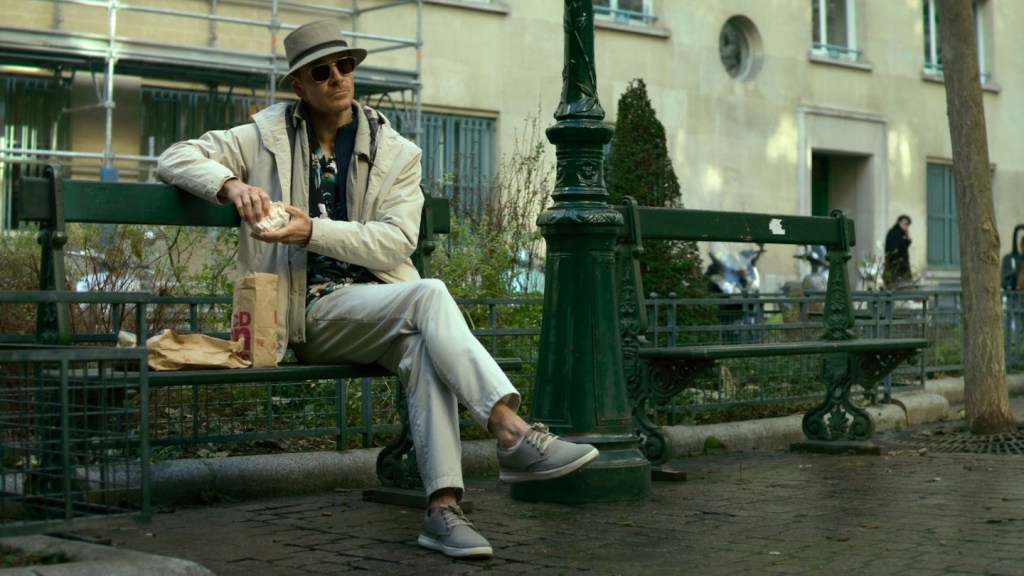
There’s plenty to divulge from The Killer outside of its writing too – between the unnamed characters, use of monologuing, and the shadowy, brooding cinematography, it’s clear that it takes heavy inspiration from the film noir genre, but given that the film was based on a graphic novel, it would’ve been nice to see a little more visual inspiration borrowed from its source material too. Nevertheless, David Fincher certainly hasn’t failed to utilise the visual medium in telling The Killer‘s story – as I’ve already mentioned, there’s as much to glean from paying attention to the many quiet moments across the film as there is in breaking down every line of dialogue, but even details in the camera work and sound design are able to speak from the context of the script. Still, drawn-out shots in near silence do well to reflect The Killer’s tranquil demeanor, but that calm atmosphere quickly disappears as things go awry and the scenes are flooded with shaky, handheld captures and blaring noise. The Killer even manages to weave in some subtle visual comedy here and there without undercutting the film’s generally serious tone, which is both a nice touch and quite the forgotten art these days. As I said beforehand, there isn’t much in the way of action, but by God if The Killer doesn’t make the most out of its one big fight scene; lavishing the audience with five straight minutes of a brilliantly visceral punch-up. Between the grounded choreography and the fact that The Killer is left impaired and in pain afterwards, you get a satisfying sense of realism from the fight scene, and I think the sparsity of the action goes a long way in making it feel appreciated too. However, at the end of the day, it’s undoubtedly Michael Fassbender who ties this film together, with a fully-fledged performance under the difficult pretext of a character who displays very little outward emotion, and ultimately I think there was a lot riding on the actor behind The Killer to make the film work.
It’s with that said that I’m more than happy to give The Killer my full recommendation, albeit on the condition that you put your phone down and pay attention – because barring the film’s subtler details, you’re more often than not left picking through its bare-bones plot and a simplified characterisation that will, unfortunately, more than likely obfuscate the better elements of this film from the general audience.
7/10


 A.J. Slater
Leave a comment