Boasting visceral recreations of his most famous battles, and a well-paced examination of his rise and fall from power, Napoleon does well to portray its titular character’s history through the lens of the French Revolution and the Revolutionary Wars, but a concerted effort to paint him as a snivelling, socially inept oddball tears the film in two as it dedicates far too much of its runtime to exploring his relationship with Joséphine de Beauharnais. This awkwardly tacked-on humiliation ritual detracts heavily from the film’s more impressive elements, and when combined with a frustratingly lax attitude to historical accuracy, the movie is reduced to nothing more than a case of squandered potential.

As much as history might be a small passion of mine, I’m by no means an expert, and certainly not when it comes to the Napoleonic histories, but when talking films, I do love a good historical epic, So, with acclaimed director Ridley Scott at the helm, and the exceptionally talented Joaquin Phoenix taking up the lead role as France’s infamous Emperor, Napoleon had been on my radar for some time, even if I didn’t see much at all from it in terms of promotional material. Still, I’d been intending to watch it for a while now, and ahead of arriving on the Apple TV+ streaming service next year alongside a four hour director’s cut, it had it’s theatrical release in the UK today, so I found myself eagerly seated in the cinema this afternoon – even if I was worryingly the only person in there.
Spoilers ahead!
Napoleon‘s opening takes place in the midst of the French Revolution, with the execution of the last Queen of France, Marie Antoinette, at the guillotine, as a young Napoleon Bonaparte (Joaquin Phoenix) watches from the sidelines. It’s a pretty good primer to set the stage for the political turmoil in France that serves as the backdrop for the film’s story, and it’s from here that it begins to chart the course of Napoleon’s ambitious rise to power. Much of this is shown through the lens of Napoleon’s military career, and a number of battles play pivotal roles in the script for both Napoleon’s character and for examining the historical context of the story. The battle sequences are visceral and violent, but more than that they have a more considered and strategic feel compared to other films, and it does well to reflect the nature of warfare during this period of history, as well as Napoleon’s skill as a commander. The film’s first battle shows command as a stressful endeavour, with an anxious Napoleon drenched in sweat and wearing a consistently doubtful look on his face as he oversees the conflict, and the fear in his body language increases tenfold as he enters the fray of battle himself; a testament to Phoenix’s performance. However, with each battle along the course of the story, Napoleon grows far more confident and composed as he pulls off increasingly daring strategies, which culminates in a satisfying conclusion as his victories elicit an overconfidence in him that proves to be his undoing in the invasion of Moscow and the Battle of Waterloo. It’s a simple yet highly effective character arc that utilises the subtext of each battle scene and Phoenix’s performance to the highest degree, and proves to be the best facet of the film in its entirety; ironic, considering that the ending frames the film as taking a stance against Napoleon’s military career and the losses that it incurred.
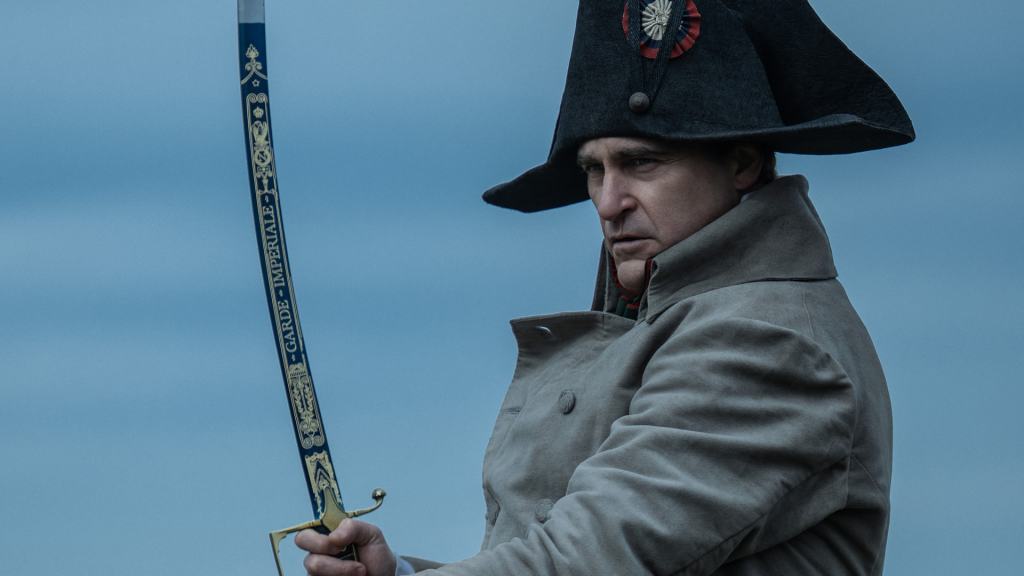
It’s in the other key elements of its story that Napoleon doesn’t quite hold up. Away from the frontiers of war, the titular figure undergoes a meteoric ascension through the ranks of the military and into the halls of power, with a burning ambition that fuels his every move. At least, it would, were any of the major advancements he makes orchestrated by Napoleon himself. Instead, the film portrays these promotions as being things that sort of just happen to him at the whim of others, and with no sense of scheming or political machination, it makes for a pretty dull take on the “rise to power” story, especially when what little I know about Napoleon indicates that he was far more intelligent and calculated than the film lets on. I started to doubt the historical accuracy of the film even further as it began to lean into widely disproved stereotypes about Napoleon being short in stature, or disliked by his people. Research I did straight out of the cinema has revealed to me that Napoleon has a lot of issues with historical accuracy, and that it’s been a big point of contention leading up to its release; namely the controversy over a scene in the film where Napoleon fires cannons at the Pyramids, which never took place. As it turns out, many events in the film were entirely fabricated, including Napoleon’s presence at Marie Antoinette’s execution, and even the timing of Joséphine’s death is drastically altered; taking place during Napoleon’s first exile in the film, rather than beforehand as it actually happened. I’m all for taking creative liberties here and there when it comes to stories based on real events – even being able to forgive the film for having its actors speak in their native accents – but Napoleon takes this alarmingly far, and it ultimately hurts its credibility as a historically based movie.
Somehow, that doesn’t even prove to be the worst aspect of Napoleon‘s script – another part of the titular Frenchman’s life the movie strives to explore is his relationship with Joséphine de Beauharnais (Vanessa Kirby), his long-time wife and the former Empress of France. The way this subplot treats Napoleon is absolutely vindictive in execution; right from his first meeting with Joséphine, he is portrayed as strange and awkward, in a way that doesn’t at all reflect his character elsewhere in the film. From there, the script flitters between portraying him as a jealous and controlling husband, and making him out to be some sort of spineless cuckold with a childish demeanour and mummy issues, and the film even seems to make passes at comedic moments at Napoleon’s expense – but they end up sitting in some grey area between being too embarrassing to be funny, or embarrassingly funny for what could well have been intended as a serious scene. Don’t even get me started on the painfully cringe-inducing sex scenes that portray him as an inept and unimpressive lover, and while I can’t deny Ridley Scott has excelled at creating an atmosphere of discomfort throughout these portions of Napoleon, they absolutely obliterate any consistency in the tone of the film, which is made all the worse by the lack of any meaningful connection between the Napoleon seen at home, and the Napoleon seen on the battlefield and as a ruler. As for Joséphine herself, even with a very impressive performance on the part of Vanessa Kirby, it’s hard to say that she amounts to anything more than a tool for the writers to batter Napoleon’s image with, and despite treating her husband with disdain for pretty much the entire movie, the audience is supposed to find pity in their hearts for her when she becomes upset over their divorce and separation, and in the end, most all of what her character touches proves to be the worst elements of the story by far.
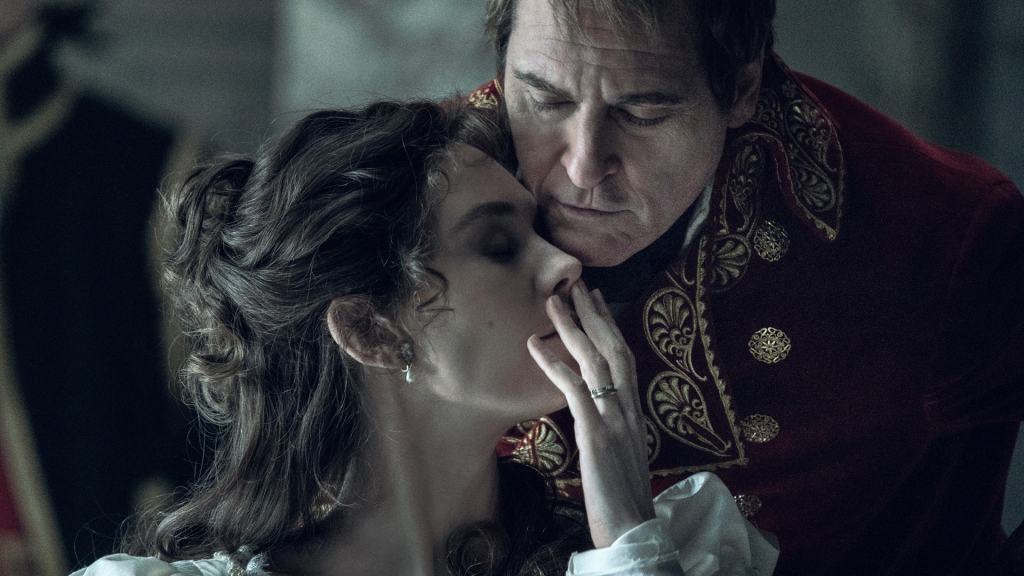
While its script might let it down, there is still something to be said for other facets of Napoleon‘s production. I’ve already sang the praises for the film’s battle sequences, and I’ll add to that with saying they certainly boast some impressive practical effects and pyrotechnics, as well as either high quality or cleverly masked CGI that keeps you absorbed in the realism of the battles from start to finish. Still, the biggest contribution to this is without a doubt Ridley Scott’s talent for direction, as he manages to compose the countless moving parts of the battles near-perfectly, which is only supplemented by capable editing. From the blaring horns of battle to the gentler sounds of Napoleon’s home life, a befitting soundtrack from the mind of British composer Martin Phipps also accompanies the film in its entirety. Fantastic set design and location scouting bring Napoleon‘s locales to life; from the streets of France and its elegant halls of power to the barren Moscow and scorching deserts of Egypt, you feel well and truly absorbed in the historic world it aims to recreate, and there’s so many fine details in the background of many scenes that effortlessly speak to the cultures and context of the film’s setting. Even the costumes feel grounded in this world in spite of their oversized collars and humungous hats, and some of the outfits for Napoleon and Joséphine feel like spectacles within themselves with their intricate and decorous designs. Unfortunately, what detracts from much of the film’s visual accomplishments is some absolutely horrendous colour grading that keeps it feeling washed out in various shades of grey, blue and brown from beginning to end; turning the rich, bright colours of Revolutionary France bland and monotonous, and undermining all the fantastic work the production had put into its visuals elsewhere.
By the end of its near-three hour ordeal, Napoleon certainly fell short of what I was expecting thanks to a conflicted script, poor decisions in its production, and an obtusely resentful attitude towards its titular character, and even beyond that my distaste has been compounded as I’ve uncovered the film’s blasé attitude towards its representation of history. Nevertheless, with a solid character arc at its core, consistently impressive performances and the backing of a clearly talented production crew, Napoleon still proves it has something to offer, but unfortunately it just isn’t enough when weighed down by it’s flaws. “Conflicted” is one way to describe the film, and it certainly reflects how I feel as I reach my final judgement, but unfortunately, without a little pre-existing determination, it’s probably best to give Napoleon a pass until it hits streaming.
5/10


 A.J. Slater
Leave a comment