Unnecessary as it might seem on paper, in execution Wonka is a surprisingly enjoyable adventure that takes you back to the whimsical world of Roald Dahl’s fictional chocolatier through its kooky characters and theatrical feel. Still, a disappointing third act and an unfulfilling take on the titular character means it doesn’t always hit the mark, but between its catchy musical numbers and endearing humour, it comes out on top as a wholesome family film for over the Christmas season.
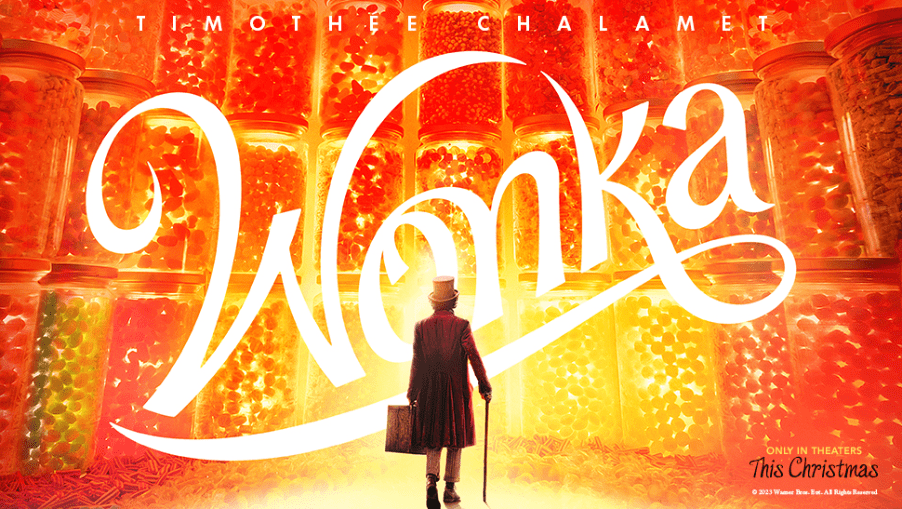
It’s been a hot minute (or, I don’t know, over a decade?) since I’ve read a Roald Dahl book, but stories like The BFG, James and the Giant Peach, and of course Charlie and the Chocolate Factory were all favourites of mine as a child. While I didn’t much care for them, it’s also hard to ignore the popularity both of the latter’s big-screen adaptations, so while it wasn’t surprising that some sort of remake or reimagining was on the way, I wasn’t particularly excited at the prospect of Wonka when it came to fruition. A Willy Wonka origin story didn’t seem at all necessary, and when the first trailer landed back in July, its stereotypical “grounded prequel to a well-beloved franchise shat out by a major studio” atmosphere was a major turn-off. Regardless, it seemed like a good opportunity for a review, but surprisingly Wonka was a far cry from what I was expecting.
Spoilers ahead!
So, Wonka opens with a catchy musical number as the titular chocolatier arrives by boat in a non-descript European city, and it proves to be a surprisingly effective method of delivery for exposition, as the down-on-his-luck Wonka (Timothée Chalamet) has come to fulfil his mother’s dream of opening a chocolate shop in the city’s “Galeries Gourmet”; an affluent food court known first and foremost for its chocolate shops. However, as Wonka takes the city by storm with his extravagant chocolates, rival chocolatiers known as the “Chocolate Cartel” conspire with other locals to put him out of business in a fun twist on a noir-like crime story. It ends up feeling a little more Disney than Dahl, but the story is pretty engaging, and the script can be downright hilarious at times, with many of the jokes and visual gags catching me off-guard throughout. Unfortunately, things to begin to fall apart in the third act, as it loses the momentum offered by the film’s setups and mysteries, instead taking the form of a by-the-books kids movie finale that sees Wonka and his friends dismantle the Chocolate Cartel for a big old happy ending that even includes a noticeably tacked on Chocolate Factory scene – just in case you forget what this is a prequel to! As predictable and unimaginative as it is, Wonka‘s conclusion caps off every storyline in a more or less satisfying manner, and a lot of its plot points come back around in the finale in pretty inventive ways, making the script feel concise and considered in spite of its flaws.
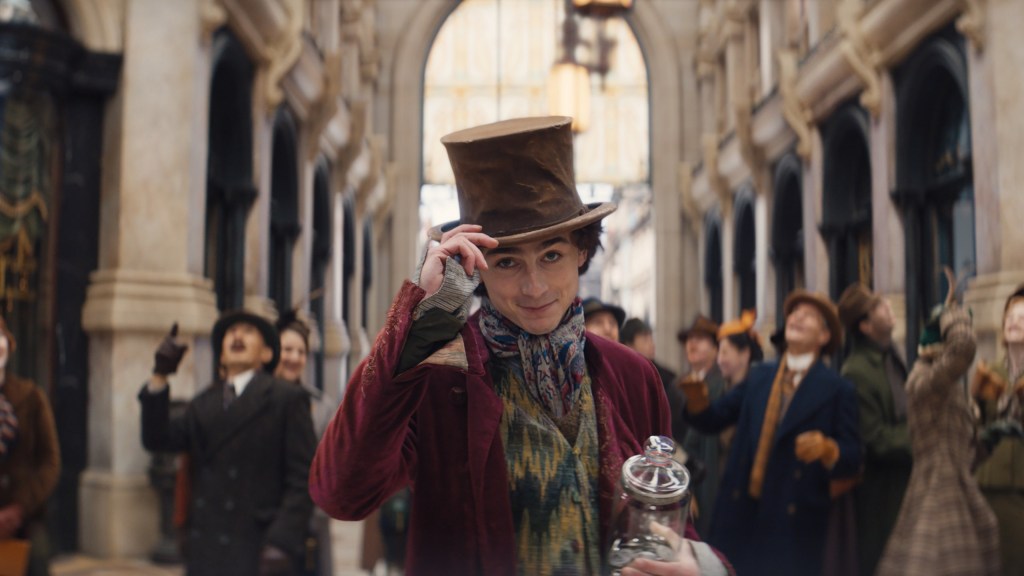
Wonka is joined in his escapades by a colourful cast of supporting characters, and although most of them aren’t exactly the deepest or most serious of characters, their personalities and backstories feel like they could be taken straight from the pages of Dahl’s writing, and are brought to life by passionate, bombastic performances from the film’s cast. The same can be said of the movie’s villains, especially when counting comedy stars like Rowan Atkinson and Matt Lucas amongst the roster, who bring their uniquely hilarious baddies to life from start to finish. Still, it’s not all positive in terms of characters; Wonka himself proves to be one of the film’s biggest letdowns. In spite of solid motivations and backstory, there’s very little complexity to his character, which undercuts the unnerving and erratic behaviour he displays in Charlie and the Chocolate Factory, and while Chalamet brings a great physicality to the role, he doesn’t quite live up to the gravitas of Gene Wilder and Johnny Depp. The weakest character of all is Noodle (Calah Lane); Wonka’s orphan sidekick who joins him on his adventures, while conversely roping him into a dull subplot about uncovering her origins that sucks up an unnecessary amount of screentime. Although I’m sure the filmmakers couldn’t resist the virtue-signalling potential of having a witty black teenage girl be instrumental to Wonka’s origins, she ends up the most lacklustre in an otherwise eclectic cast.
Still, with that aside, Wonka proves to be a breath of fresh air, with a refreshing wholesomeness about it that isn’t subverted by some sort of lecture on morality, or – God forbid – politics; haphazardly stuffed into the script by talentless writers, as is often the case with so many movies of this calibre that adapt or reimagine an existing story. In fact, it seems the film might actively take a stance against this, with many moments in the film referencing a yearning to return to the innocence and fond memories of one’s childhood, which in the context of this film could be seen as a response to the current state of the entertainment industry. Whether or not this is the case, Wonka sets itself apart from others in the same vein regardless, with simple themes of friendship and co-operation, and a wholly fun and whimsical nature about it. This is due in large part to the theatrical nature of the story, reminiscent of a good old school pantomime, especially considering the unexpectedly musical nature of the film after how it was portrayed in its marketing. As frustrating as it has been having the songs stuck in my head since I left the cinema, it can’t be denied they’re certainly well produced and extremely catchy. Altogether, Wonka not only makes a solid pick for the whole family to enjoy this Christmas, but it also carries a far more timeless quality to it than many other films released in the last few years.
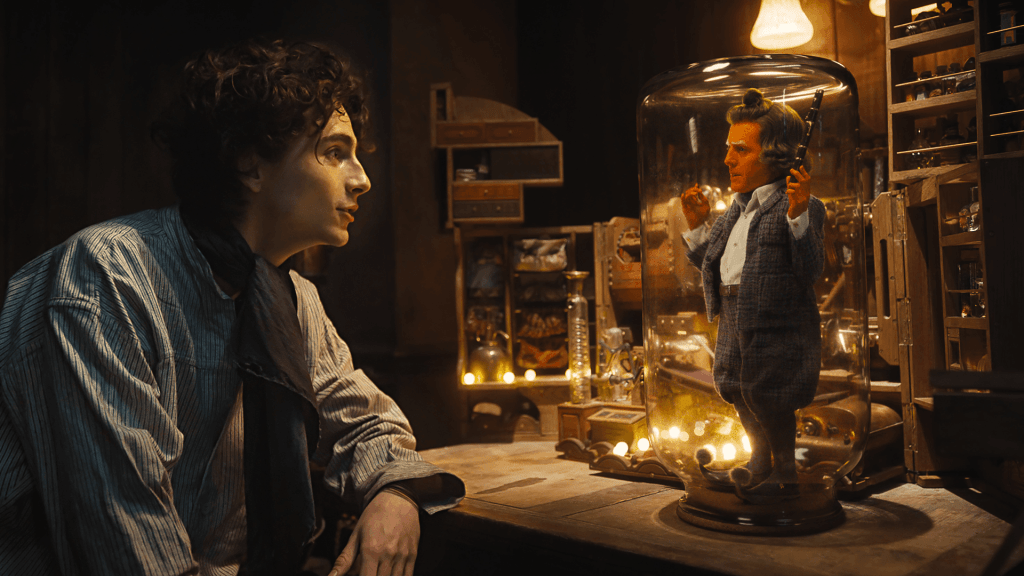
This potential for longevity is only complemented by Wonka‘s stellar production values – for one, hidden behind the flashy musical numbers is a lot of hard work and careful planning around the sets and choreography that absolutely pays off with how clean it all looks, and the cast certainly surprise with their vocal talent that accompanies all this. Although the score is nothing special otherwise, it serves its purpose well enough, and gets away with hiding behind the movie’s original songs – which I’m definitely not listening to as I write this! Costuming and set design are also two of the film’s biggest strengths; contributing to it’s uniquely quaint aesthetic, even if better colour grading might have made the scenes pop a little more on-screen. From what I was seeing, it certainly feels like the production crew behind this film have derived their expertise from musical theatre in all the right ways. That’s not to say that Wonka doesn’t also prove its worth in the cinematic medium – it doesn’t have the most amazing cinematography in the world, but it’s consistently engaging, the film is neatly edited, and I’m even surprised to say that it delivers some remarkably good CGI for a film that probably could have gotten away with fudging it – even if seeing Hugh Grant’s face uncannily pasted onto the computer-generated body of an Oompa Loompa was one of the most uncomfortable experiences of my life!
Although at times its plot may feel uninspired, and its characters shallow; Wonka offers a script that is serviceable at its worst, and as much as it won’t blow you away, it remains sprinkled with the odd moment of brilliance here and there. A solid production behind it only elevates the story, and its resplendent, theatrical atmosphere makes it memorable beyond its means, especially taking into account the film’s catchy musical sequences. Above all else however, Wonka‘s refreshingly wholesome approach to story and filmmaking is what really makes it tick, and will likely keep it alive in the minds of families (and asocial movie reviewers viewing it in a near-empty cinema) who give it a go this Christmas season. I’ll certainly say it wasn’t what I was expecting prior to its release, but it’s been a nice surprise as we close out another year of entertainment.
6/10


 A.J. Slater
Leave a comment