The superficial novelty of its setting and a few fancy fight scenes can’t save The Acolyte from its lacklustre dialogue and slew of half-hearted performances which only continue to drag down an already unimpressive script, and as the series meanders on it becomes clear that it is little more than a vehicle for its showrunner to push her narcissistic revisonism and self-therapising indulgences onto the Star Wars universe.
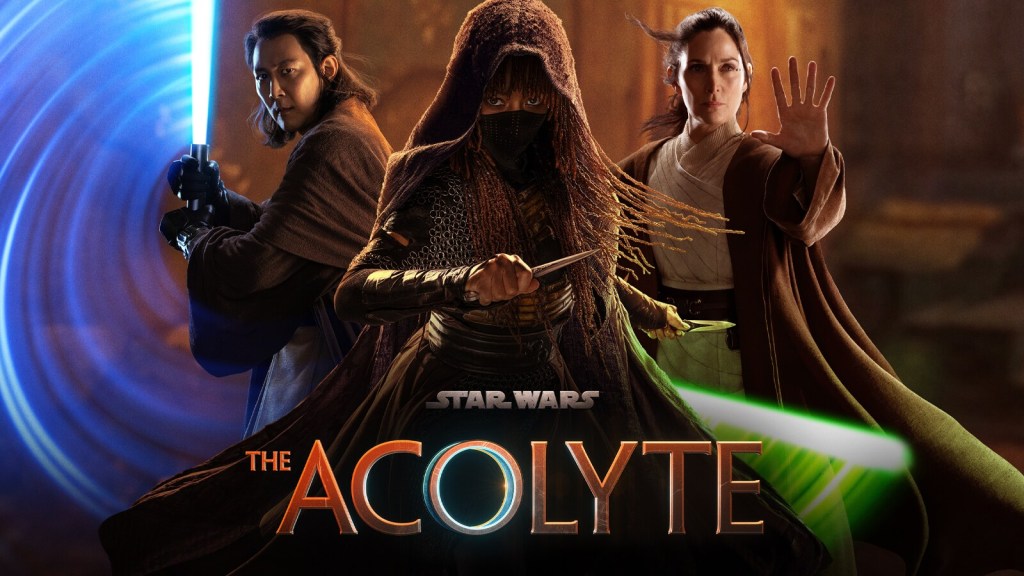
On some level, I was actually rather intrigued by The Acolyte in the runup to it’s release – at face value, a series that both explores an untapped era of Star Wars (at least on-screen) while also offering a story told from the perspective of the traditionally villainous Dark Side of the Force seemed like a novel concept, and in the right hands could easily be the sort of thing to breathe new life into the struggling franchise. Unfortunately, “the right hands” isn’t really the kind of phrase that came to mind when it was announced that Leslye Headland – a writer who got her breakthrough working as a personal assistant to notorious Hollywood sexual abuser Harvey Weinstein – was to serve as showrunner for the project. Ironically, Headland has been very keen to sell the series on the promise that it “showcases women and people of colour”, which in all honesty just sounds to me like a death knell for the quality of a production – especially one based on a popular, pre-existing franchise – after seeing so many instances of the entertainment industry scrambling to use identity politics as a shield against legitimate criticism over the last few years. Nevertheless, in spite of certain extenuating circumstances, it’s not all dire – with some strong names amongst the cast and some half-decent promotional material, I’m at least heading into The Acolyte willing to give it a fair shake.
Spoilers ahead!
Set a hundred or so years prior to The Phantom Menace, during the era of the so-called High Republic (a thus-far fruitless multimedia project pushed by Lucasfilm to serve as a contemporary replacement for the vastly more popular Old Republic-focused stories of the past), The Acolyte opens with the arrival of a mysterious Force-wielding assassin upending the long-standing peace as she challenges and ultimately defeats the Jedi Master Indara (Carrie-Anne Moss) in a clearly vendetta-fuelled bout of combat. Though it initially seemed a waste to bump off a character backed by a talent such as Moss, the bold introduction to the series sets the plot running as a small circle of Jedi scramble to try and capture the assassin as she sets her sights on further targets – a decent starting point at any rate, but it doesn’t last all that long considering that anyone with two brain cells to rub together would quickly be able to figure out that their prime suspect, a former Jedi apprentice named Osha (Amandla Stenberg), is being wrongly accused of the crime committed by her long-lost twin sister Mae (also played by Stenberg), and even then the show seems to think that this is some sort of shocking revelation when it decides to spell it out clear as day for the audience. Enduring the ceaseless drivel of the show’s painfully cringeworthy dialogue across the first two episodes enlightens you to the crux of the story as it becomes clear that Mae is intent on killing the four Jedi who were present when her family died years prior; the first account of which is delivered through a plodding flashback episode about the woes of – get this – a coven of lesbian Force-wielding witches, complete with a heavily embarrassing interpretative dance number that probably should have been cut anyway given that it takes an entire second flashback episode to fully establish the backstory for The Acolyte‘s main plotline and capitalise on the relentless ham-fisted allusions to past events sprinkled throughout the script.
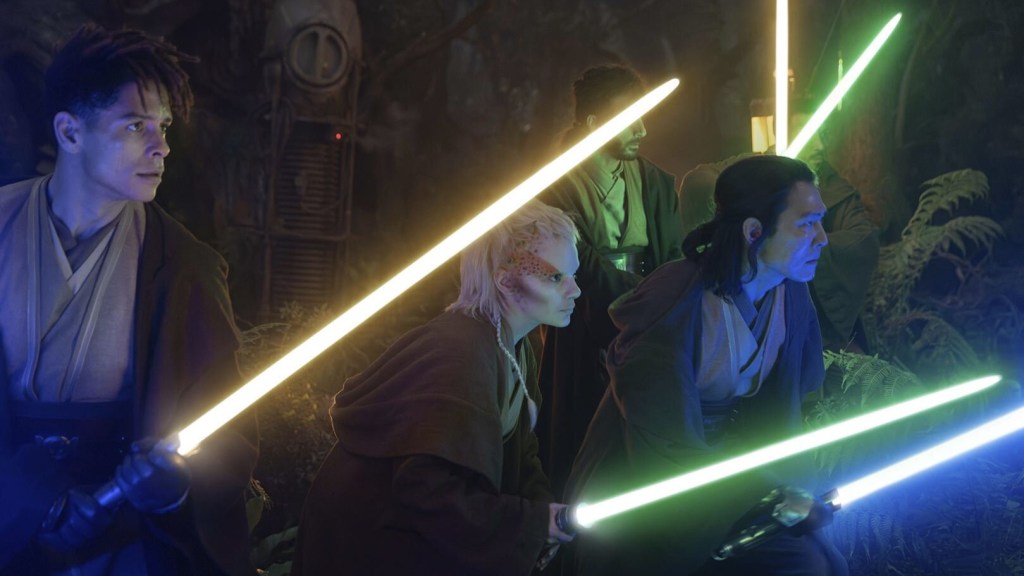
Episode Seven really hammers home the cynical, if not malicious, ethos behind The Acolyte‘s narrative, as its retelling of the events preceding the main plot very forcefully attempts to paint the Jedi as invasive and intolerant bullies responsible for the unprovoked massacre of a group with different beliefs while attempting to kidnap their children. That’s no exaggeration either – even in spite of the objective on-screen depiction that the witches’ coven were quite openly the aggressors in the conflict (with their leader at one point turning into a literal shadow demon and starting to disintegrate a young Mae while the others mind-control the Wookie Jedi Kelnacca into attacking his friends) – characters in the present, even the Jedi themselves who lived through those events, conform to this jaded assertion that they were guilty of some heinous crime. Where a show like Andor (a far superior show from this IP, my review for which you can read here) is able to humanise its antagonists while still demonstrating their complicity in acts of evil, The Acolyte lazily throws out the idea over and over again that wielders of the Dark Side are misunderstood and oppressed, but it just comes across as a poorly-fashioned pass at turning the tables on the traditional narrative structure of Star Wars as a whole. The show in its entirety reeks of the kind of contemptuous revisionism that creator Headland has openly spoke about bringing to the franchise through this project in interviews – the flashback episodes also reveal that Osha and Mae were artificially created through the Force by their mothers, and with a meaningless key-jangling Darth Plagueis cameo injected into the finale, it doesn’t seem far fetched that this series isn’t satisfied with only trying to paint the Jedi as evil bigots, but fully intends to inflict its own sense of self-importance onto George Lucas’ Prequel Trilogy by entirely rewriting the backstory of Anakin Skywalker’s mysterious creation.
Thankfully, The Acolyte struggles far too much trying to keep its own story coherent for anybody to take its attempts to undermine the wider Star Wars franchise very seriously – especially when it fails to even place itself correctly on a pre-established timeline with erroneous character inclusions and plot points that directly contradict those from other stories; a key one being Mae’s master Qimir (Manny Jacinto), a self-proclaimed Sith Lord, revealing himself to the Jedi during the never-ending poorly-paced fight scene that takes up near enough the entirety of Episode 5. Sparing that episode and the second round of flashback content, the latter half of the season is a slog through a mire of drawn-out dialogue exchanges that serve as a vehicle for some of the worst character work I’ve ever seen as the writers violently stuff their characters into pre-determined positions in the story as needed ahead of the next season with virtually zero precedent, with the finale being the worst example of characters being railroaded into alarmingly fast conclusions to their arcs without sufficient setup or payoff. By time the season is over it becomes clear that many of the story elements that are introduced aren’t even actualised in a meaningful way – for one, constant allusions are made to a political dimension to the story exploring the relationship between the Jedi and the Republic, yet beyond a couple of out-of-place scenes in the finale it has no real bearing on the plot, and I suspect a large part of that subplot was cut back for a future season. Either way it frankly speaks to a wider problem with the show’s use of The High Republic as a setting – while it brings with it a fresh aesthetic and a new opportunities for storytelling, The Acolyte fails to capitalise on that whatsoever; instead offering a watered-down take on the Star Wars galaxy that amounts to little more than a poor facsimile of Prequel Trilogy worldbuilding.

Despite being two of the least engaging characters in the entire cast, Mae and Osha are essentially the cornerstone of The Acolyte‘s ill-conceived narrative, but it becomes clear as to why when you factor in that showrunner Headland has (attesting to this herself) constructed the series around her desire to express her feelings about her strained relationship with her younger sister; essentially landing Star Wars fans crying out for high quality stories with a 230 million dollar therapy session as its architect tepidly explores the idea of a familial relationship between two siblings who see each other as objectively evil. Of course, it’s not unheard of for fiction to draw on the life experience of its authors, in fact more often than not that will be the case, but it only works insofar as the story comes first; a reality that The Acolyte has clearly failed to understand when there is zero depth to the perceived ideological differences between the twins; making it all the more baffling when Mae makes a complete U-turn on her position and lets go of her lifelong convictions just because she found out her sister was still alive, which only serves to instantaneously erase what little intrigue her unique morality gave the character. If that wasn’t bad enough, Osha too switches her entire worldview based on a similarly flimsy revelation, and while I understand the very on-the-nose thematic point that seeing each other’s point of view allows the sisters to somewhat heal the rift between them, in practice it manifests as little more than horrendously executed character development that certainly isn’t sold by Stenberg’s emotionally void performance, and ultimately after a series of frankly ridiculous and unnecessary decisions on the part of both characters, the plot is more or less catapulted back to square one as it leaves the dynamic of the protagonists in much the same position that it started in.
Don’t expect much better from the rest of The Acolyte‘s characters – our main villain Qimir may have been set up for an interesting backstory in stories yet untold, but for what the show is currently he’s little more than a predictable twist in the making and a walking, talking hotbed of unbridled cringe; dispensing an endless stream of insubstantial edgelord rhetoric intended to make the audience think twice about the traditionally heroic light that the Jedi are portrayed in – a truly daring synthesis given that this level of revisionism isn’t just a staple of most mainstream adaptations these days, but isn’t even the first time that such a thing has been attempted in Star Wars. That intention is exemplified fully in how the narrative utilises the character of Sol (Lee Jung-Jae) – despite being the most objectively moral character in the story, as the show hurtles towards its conclusion it fails to suitably develop him to the point that it wants him to reach, instead opting to push the idea onto you that he was a terrible person all along by painting his actions (most notably saving a child from her shadow demon mother) as unprovoked aggression, and then upending his entire character even further when he turns borderline evil and tries to murder Mae, so it feels almost insulting when the show forces him into that role only to humiliate him and promptly kill him off despite the fact that he was probably the only character in the entire show that was in any way endearing. Of course, that clearly wasn’t the intention when you factor in the ensemble cast of Jedi throughout the story, but whatever dwindling elements of personality or narrative potential were present in those characters soon flies out the window when they’re almost entirely killed off for shock value, and it’s pretty clear that the actors seemed to care just about as much as I did given that aside from Lee they more or less entirely phoned in the entirety of their performances.
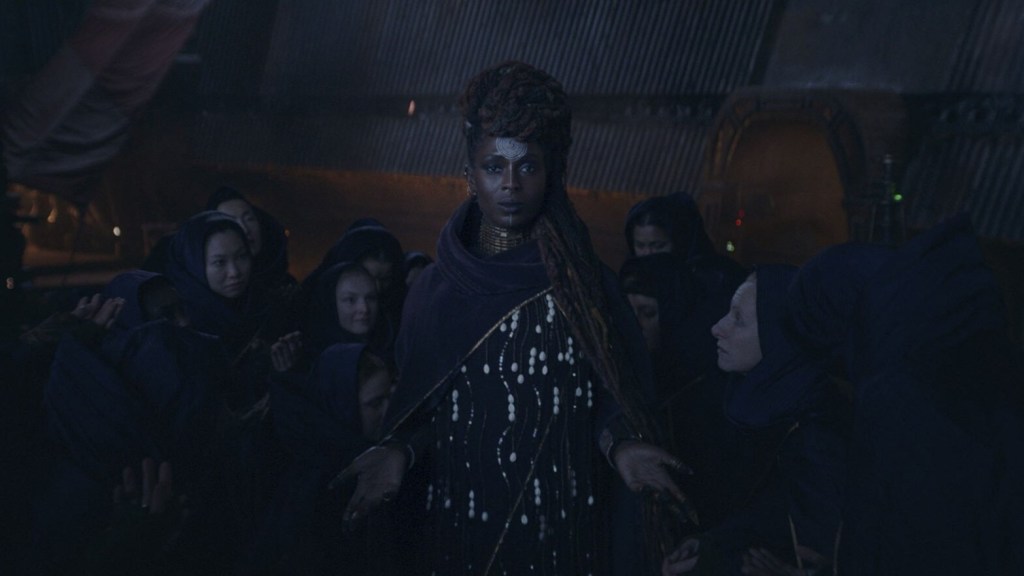
Nevertheless, where pen and performance may have failed to bring The Acolyte to life, it’s at the very least apparent that there was a production team behind this that did care about making the show look its best – even if the old idiom “you can’t polish a turd” remains evergreen in this case. Given that it takes place in an as-yet unseen era of Star Wars, there’s plenty of fun new ship and droid designs found throughout the show, but with a fair number of visual references to the Prequel Trilogy too, and I personally enjoyed seeing the more ornate and clean look in the architecture of the Jedi Temple which serves as a nice visual cue that the series of course takes place further back in the timeline. In fact, the set design is pretty solid across the board, especially in busier scenes that are well dressed with aliens walking around in the background and a sense of permanence to the environments that doesn’t often exist in many of the other Star Wars shows rolled out on Disney Plus that only seem to bother popping actors in front of Volume soundstages with barren backdrops and hoping for the best. Obviously taking inspiration from the likes of The Matrix and similarly high-octane action films from East Asia, the fight choreography in The Acolyte is impressively complex, albeit at times feeling a little stiff with some very obvious wire work or CGI enhancements taking you out of the action here and there, but broadly speaking the show is well-composed at a visual level which at the very least puts it a step above many of the Filoni-led projects at Lucasfilm as of late. Still, the direction is by no means perfect – although the soundtrack is by-and-large serviceable (if not a little forgettable), the strange decision to have a rap music needle-drop at the end of an episode totally obliterates any sense of tonal consistency with the rest of the Star Wars brand, and frankly just reminds me that in spite of the positives, fun visuals won’t fix a rotten script from an undisciplined showrunner.
Unfortunately as far as I’m concerned, that is the be-all and end-all for The Acolyte – being far too occupied with inflicting her worldview and personal woes on the audience has left Leslye Headland unable to construct an even halfway decent narrative for her series; instead packing in poorly paced sequences of events driven by bland characters that failed to even enthuse their respective performers, and any sense of creativity or even novelty that the show tries to bring to the table is far overshadowed by the blatant revisionism directed towards the source material. I imagine even casual viewers will struggle to grasp anything positive in the show given that it’s so devoid of substance, so while it might have the benefit of some solid cinematography, as a whole the series is no more memorable than any of the other relentlessly disappointing endeavours dropped in the laps of audiences by Disney-Lucasfilm over the last few years – I wish I could say that I had any sort of strong feelings left to offer in that regard, but frankly being let down just seems to be part and parcel of being a Star Wars fan these days, and with nothing but an overwhelming sense of apathy surrounding the franchise for me nowadays I feel that I could quite easily wait around for the final season of Andor before giving up on it for good.
3/10

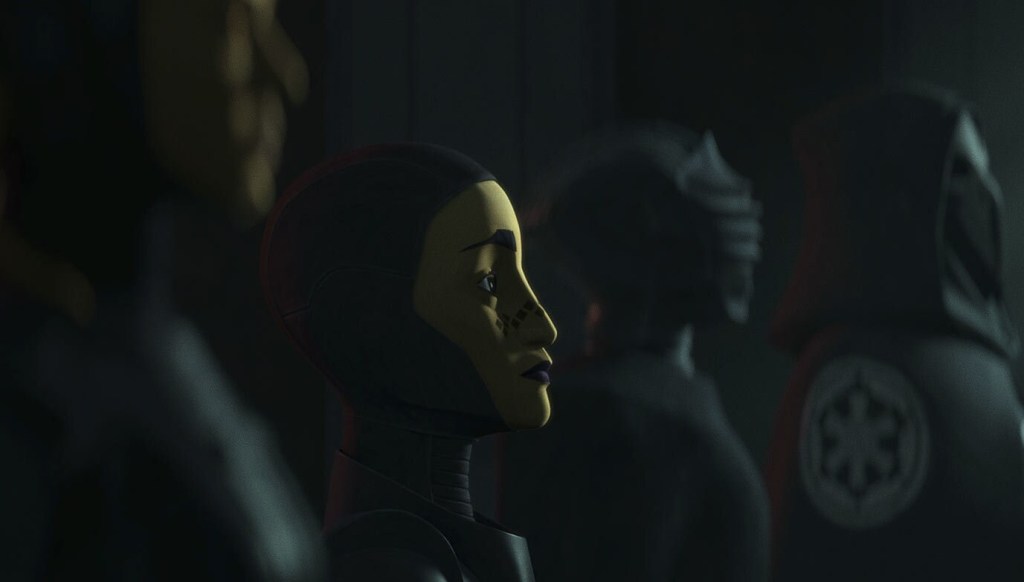
 A.J. Slater
Leave a comment