The hit Game of Thrones spin-off returns for a solid second season, boasting a streamlined plot and a far more expansive look at certain characters that keeps the show feeling fresh and engaging. However, House of the Dragon continues to become tangled in the web of its own complexities as some characters are left feeling misused and the story struggles to find a balanced pace, while the tangible presence of real-world issues and influences starts to bleed the fantastical from this fledgling high fantasy.
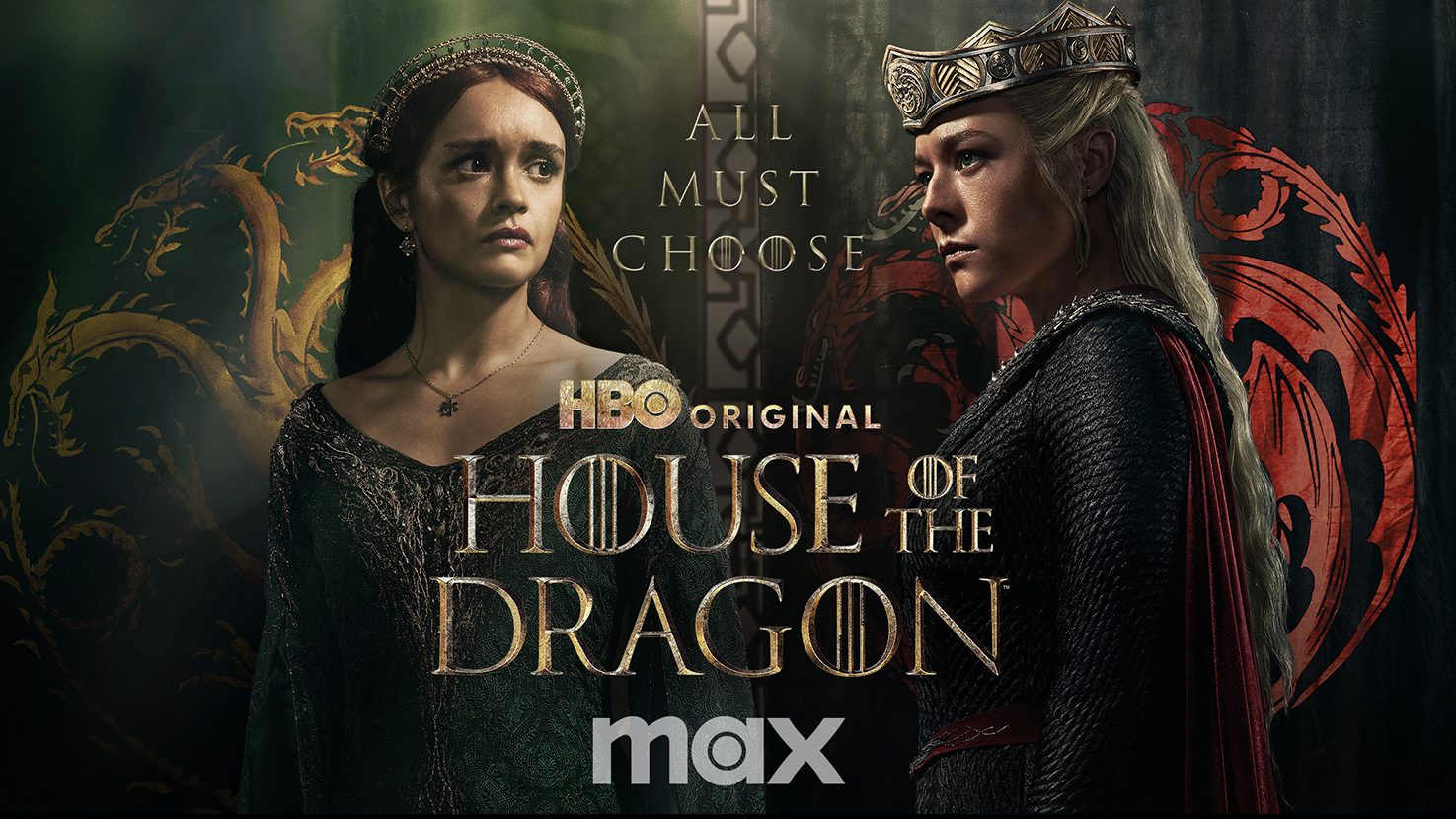
I was highly impressed by the premiere season of House of the Dragon when it released in 2022 – so much so it almost managed to wash the taste of Game of Thrones‘ infamously shite eight season out of my mouth in one go. The spin-off series managed to pack in fantastic characters, engaging political intrigue, masterfully emotional payoffs and cool fucking dragons all in one slightly messy package, and regardless of its flaws I thought it was a truly great return to form for HBO’s flagship fantasy universe (for more on Season One, you can read my review here), and I was chomping at the bit for more. Two years down the line, and that certainly hadn’t changed as the inevitable follow-up drew closer – though rumblings from behind the scenes may have forecast trouble amidst a departing showrunner, a writers’ strike and budget readjustments. With a reduced episode count heading into Season Two it’s clear that it hasn’t been entirely smooth sailing as far as production was concerned, and having now finished the eight episode run it’s safe to say that it doesn’t escape unscathed – but nor has it let me down.
Spoilers ahead!
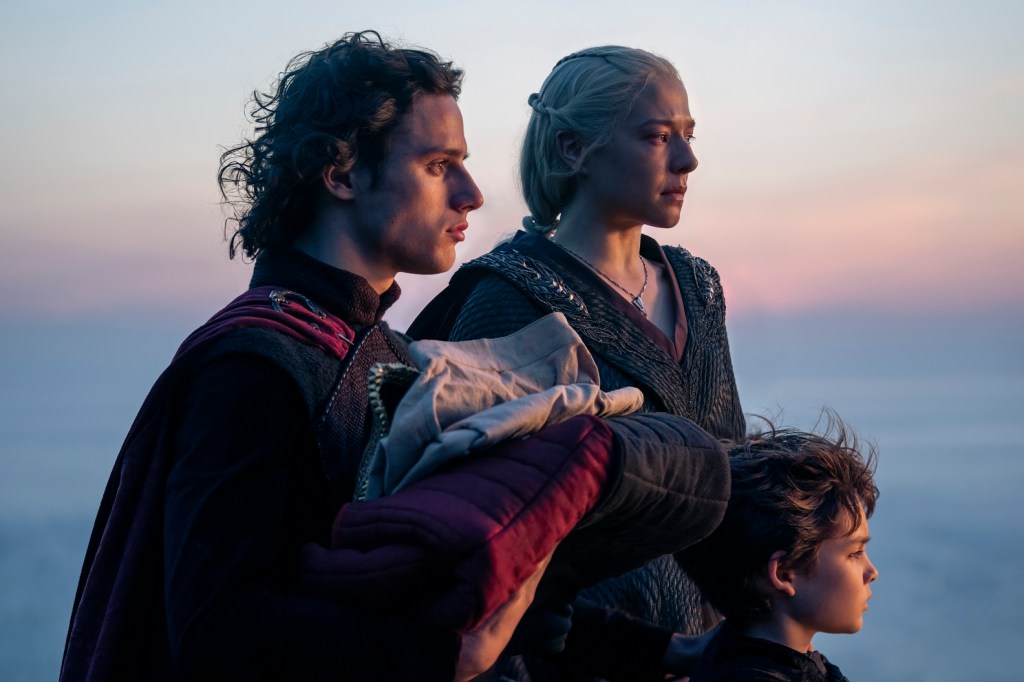
While the premiere opens with some heavy-handed Thrones nostalgia as Prince Jacaerys (Harry Collett) travels to Winterfell to gather soldiers from House Stark for his mother’s cause, there’s only so long the show can delay for before addressing the grisly cliffhanger at the end of Season One. Both the “Black” and “Green” factions of House Targaryen are left reeling in the wake of Prince Lucerys’ death at the hands of Prince Aemond (Ewan Mitchell), and it serves as a very strong story beat to kick off the second season, especially at this crucial turning point in the story as family infighting descends into all-out war, while demonstrating real stakes in the cost that Rhaenyra (Emma D’Arcy) must pay in her pursuit of the Iron Throne. The first episode ends up feeling a little packed as it also deigns to throw in the infamous “Blood and Cheese” storyline, with Daemon (Matt Smith) hiring a ratcatcher and City Watch guard to enact his retribution against Aemond. The scheme goes awry however, and the assassins opt to kill the infant Prince Jaehaerys instead, which only spurs the conflict into further chaos as anger boils over and deceit runs deeper between the two warring factions heading into the bulk of the second season. The cycle of revenge continues on while each side of the family comes to terms with their losses – or in many cases, acting out as a result – but it does feel in many ways like the fully realised culmination of Season One’s story as the disastrous consequences of the succession and family feuding begin to materialise in the ever-increasing levels of violence and death.
Though each faction takes and cedes ground across the first half of the season, the conflict hits the ceiling by Episode Four when the Greens attack the Black-allied stronghold of Rook’s Rest; resulting in a three-dragon skirmish and devastating losses for both sides. The battle itself is tremendously entertaining purely as a matter of spectacle – the action is solid, but seeing the dragons in action was a real treat, especially with how many more we get to see this season all boasting very unique and visually satisfying designs. More than that however, the battle offers some fantastic payoffs for many of the partaking characters; the most impactful of all being the fiercely loyal Criston Cole (Fabien Frankel) seeing the unrestrained destructive power of the dragons on full display. If the harrowing scenes of Cole wandering the battlefield weren’t enough, his utterly traumatised delivery of the line “the war is given to the dragons” absolutely hammers home the terrifying power underlying this conflict. Add in his newfound tactical cunning and his growing ties to the royal family, Ser Criston feels like a much more dynamic character overall this season, and the fact that the same can be said for the majority of those in the Green camp certainly feels like one of Season Two’s greatest strengths. The standout for me had to be Tom Glynn-Carney’s Aegon, who makes a complete about-turn in terms of likability thanks to a deeply genuine and oftentimes sad streak that is folded into his characterisation across the season, especially after being betrayed and brutally burnt at the hands of his power-hungry brother Aemond.
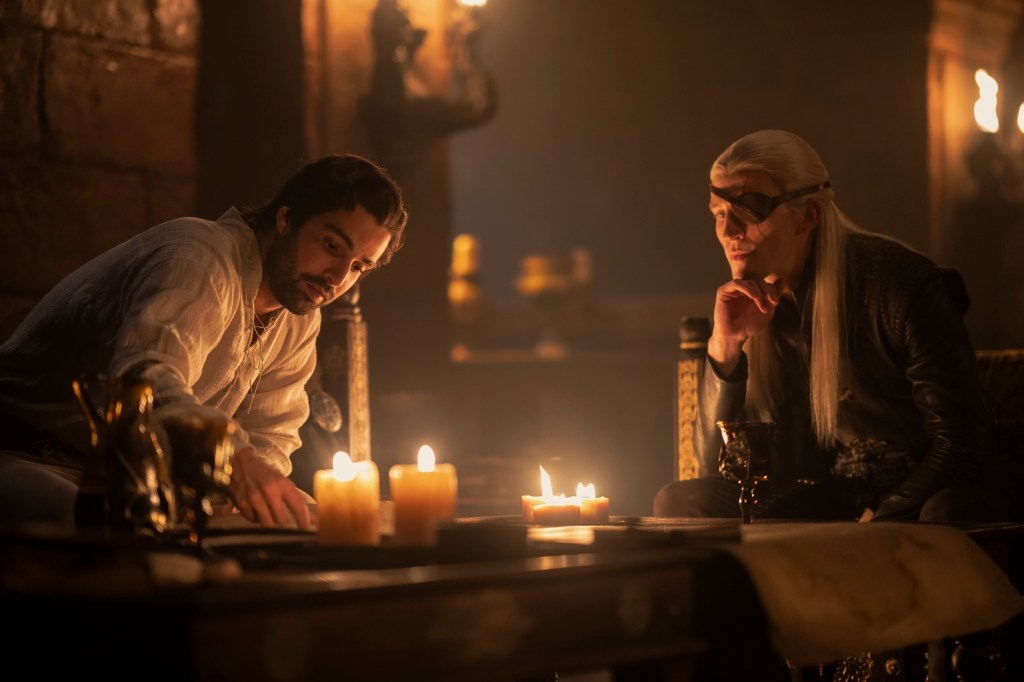
There was certainly an aspect of passing the torch as the younger characters we watched grow over the course of the first season settled into more prominent roles this time around, and it’s nicely reflected in the story itself as Alicent (Olivia Cooke) watches her own moral backbone crumble as she struggles to rein in her sons and her estimation of her own importance is shattered. That said, she still remains a central character for the entire season, while many of the cast are more forcefully sidelined to make way for others – one such example being Rhys Ifans’ Otto Hightower, who’s departure early in the season feels like a waste of a consistently fantastic character. Other characters, particularly amongst the Blacks, do feature heavily across the season, but are often frozen in place by melodramatic duologues while key events from the source material are ticked off elsewhere. Rhaenyra spends the majority of the season seething about various plot developments while other characters move the plot forwards, and it’s only at the end of the season when she makes the ridiculous choice to travel to King’s Landing in secret to negotiate with Alicent that she finally seems to do something non-passive. Daemon is similarly pigeon-holed for the entire season after being sent to capture the castle at Harrenhal, and while his scenes do give a platform for a fantastic performance by Smith as well as an entertaining deconstruction of his character, the plotline feels far too drawn out by the end – especially with a conclusion that leaves you wanting for just a little more.
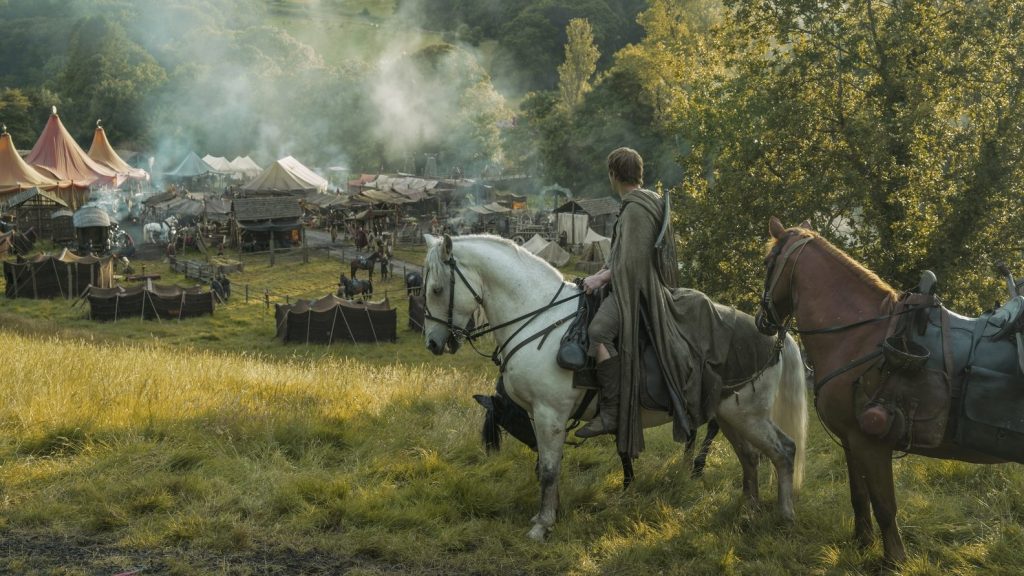
The same can probably be said of the entire season – though a lot of the story threads are poised for action-packed conclusions, the two episode cut-off compared to the previous entry very much feels like a result of whatever chaos had erupted behind the scenes, and it leaves us with a rather underwhelming conclusion to Season Two that left me wanting for more in a very different way than Season One. Still, some of the more questionable creative choices can’t all be chalked up to production difficulties – for one, as much as I thought the “Dragonseed” storyline was a neat idea, if you had no frame of reference in the source material the scenes following characters like Hugh and Ulf end up feeling quite jarring when they interrupt the flow of the story. While Season Two doesn’t beat you over the head with time jumps to the extent of its predecessor, it still struggles to find a sure pacing, and issues like this certainly don’t help. Certain, uh, “socially conscious” motivations seemed to seep into the writing this season as well, much to the detriment of the story – the obvious one being the tonally obtuse inclusion of transgender YouTuber Philosophy Tube as a supporting character in the back half of the season. I also found that Mysaria (Sonoya Mizuno) felt wildly shoehorned in this season despite being pretty universally disliked previously, but it became all the more ridiculous as she quickly climbed from being imprisoned to becoming Rhaenyra’s most trusted advisor and eventual romantic interest – which I’m sure had no bearing whatsoever on her heavy-handed implantation into the plot.
Nevertheless, in spite of a few more noticeable dents this time around, House of the Dragon‘s second season still delivers a pretty decent eight episode run and managed to keep me consistently engaged in all of its turmoil and trickery while delivering some great characterisation and seriously fun action. Granted, it never quite reaches the heights of Season One – perhaps due to behind-the-scenes turmoil, or perhaps it’s just declining standards in the writing. Perhaps a significantly smaller dose of Paddy Considine is to blame – I couldn’t say for sure. What I can say however is that the show is more than capable of picking itself back up again, and dare I say still has the potential to surpass its first season if the writers are able to pull through. Though it still has a lot to tie up from this season, with many characters poised for some interesting endings, and others beginning entirely new arcs, the presumed Season Three has a lot to work with, and when you add in the potential for a hefty helping of battles on top of that I’m certainly not inclined to say no to more.
7/10



Leave a Reply