Game of Thrones goes small and wins big with a wonderful adaptation of one of my favourite books of all time – the short yet sweet tale of a knight and his unlikely squire exalts the virtue of morality in an unfair world, with the lovable Dunk and Egg brought to life straight from the page by two generationally talented actors, and the thematic depth of the story persistently evident throughout the entire six-episode run. Though not every single change or creative decision may have landed for me personally, A Knight Of The Seven Kingdoms has started the year off right with one of the most charming and well-produced shows I have seen for a very long time.
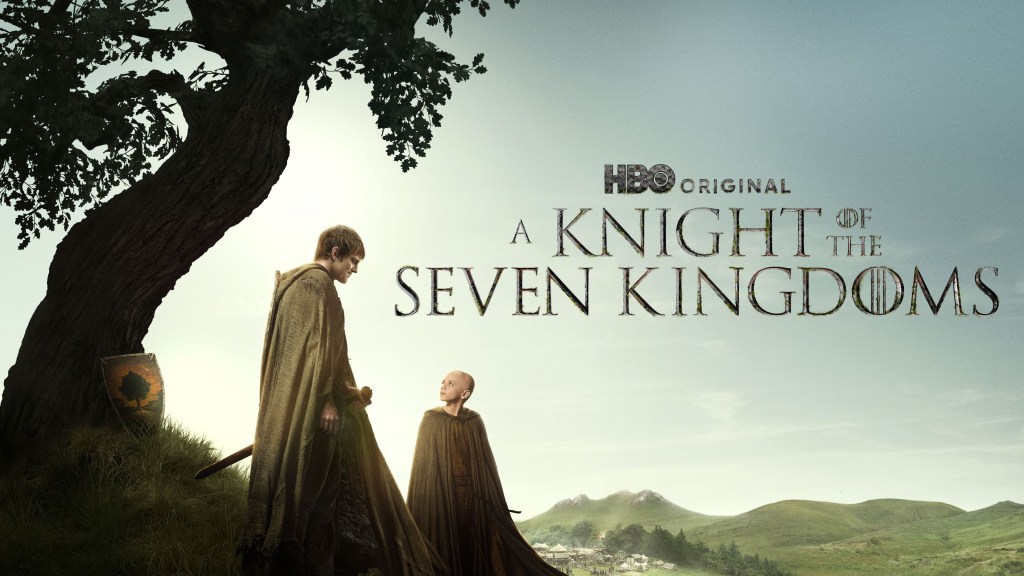
As much as HBO’s House of the Dragon initially seemed to be a big hit in the wake of the utterly disastrous eighth season of Game of Thrones, much of that renewed goodwill for the franchise seemed to evaporate as the spin-off continued (you can read my thoughts on Season Two here); no doubt exacerbated by the frustrations of A Song of Ice and Fire book fans growing more impatient with author George R.R. Martin by the day. That said, HBO didn’t let that stifle their plans to further explore the fantasy world of Westeros on-screen, as alongside third and fourth seasons of House of the Dragon, they also picked up a second spin-off adapting The Tales of Dunk and Egg, a series of novellas set roughly a century before A Game of Thrones. Though it might have been prudent to remain a little skeptical before A Knight of the Seven Kingdoms premiered, I couldn’t help but be tremendously excited for the new series – the first of the stories that it’s adapting, The Hedge Knight, is after all one of my favourite books that I’ve ever read, but even I couldn’t have predicted how much I was going to enjoy seeing it brought to life these last few weeks.
Spoilers ahead!
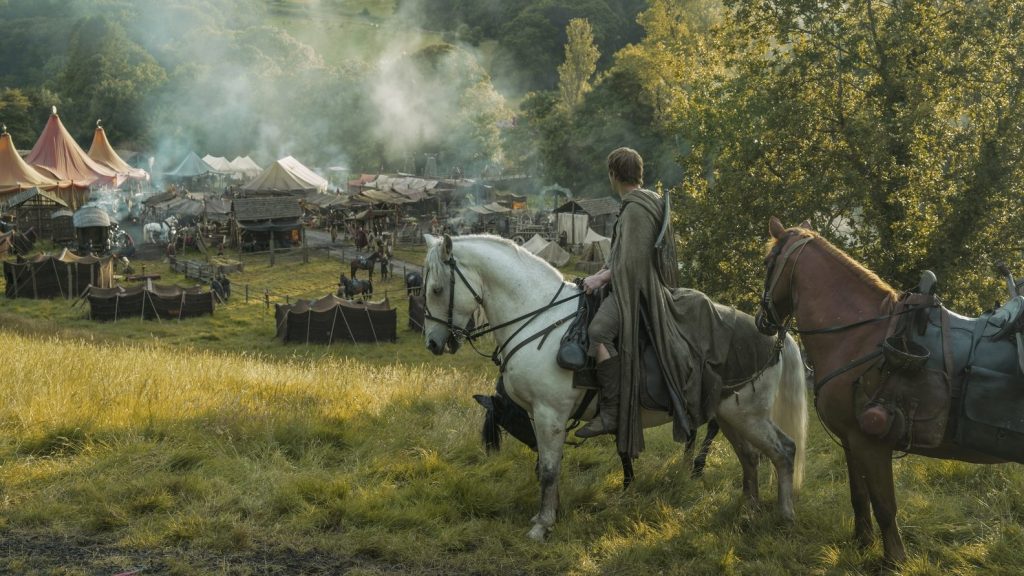
Just as the book does, the show begins on a sombre note with Dunk, a young squire, burying his mentor Ser Arlan of Pennytree in a pauper’s grave, and with no other prospects for his future, he takes up Ser Arlan’s arms and decides to carry on in his master’s footsteps as a hedge knight – a travelling knight-for-hire living a life on the road. Setting out to enter a knight’s tourney in the town of Ashford in the hopes of making a name for himself, the opening of the first episode might have you fooled into thinking you’re in for a grandstanding rags-to-riches story that’ll see Dunk win his way to glory and adoration, but there you’d be wrong. As the heroic Game of Thrones theme begins to swell, the mood is quickly upended as it cuts away to Dunk having possibly the most uncomfortable on-screen shit I’ve seen since Trainspotting, and it quickly becomes clear that A Knight of the Seven Kingdoms is going for a decidedly different tone in comparison to the other two Thrones series. That light-hearted, almost comic atmosphere really permeates the first half of the season in a really engrossing way once Dunk arrives at Ashford Meadow, where he faces a number of minor challenges he has to overcome in order to enter the lists at the tourney. While they might seem insignificant on paper, these plot points do a fantastic job at fully immersing you in the microcosmic slice of Thrones‘ world it offers through its rich supporting cast, and it makes the tourney feel lively and spirited while taking the time to help you learn about Dunk as a character, and contrary to a lot of the online discourse, I think that air of optimism works because Martin’s works are usually so dour, not in spite of it.
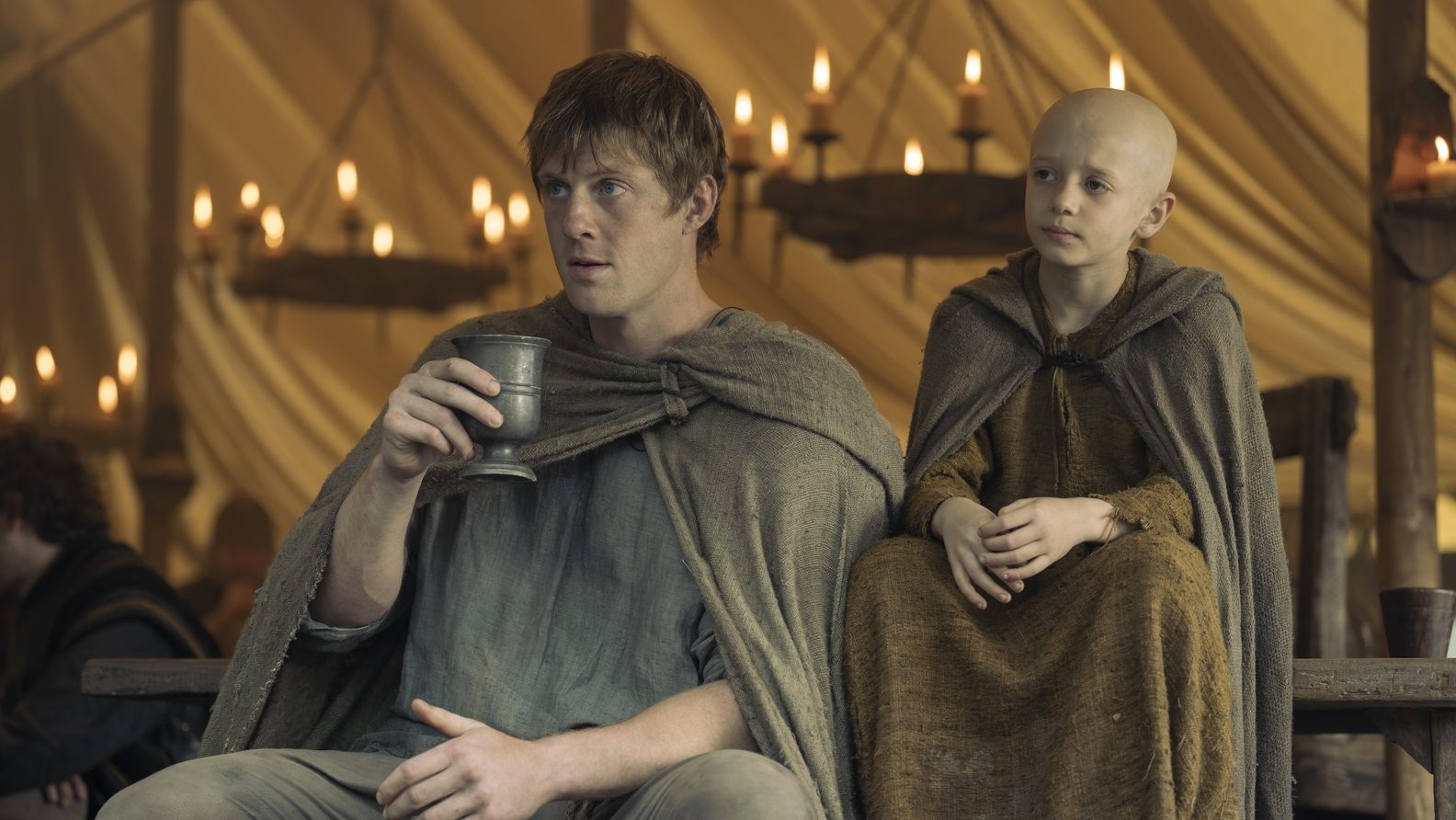
Aside from his endearing naivety, Dunk – now restyling himself as “Ser Duncan the Tall” – has an innate charm that really stems from how human and relatable he feels; at times he’s unsure of himself, and where his life is headed, and at others he’s insecure, anxious and stumbling over his own words, especially in the presence of a girl he takes a liking to. Despite his outwardly bumbling nature, he stands by the humble nature and moral principles instilled in him by Ser Arlan, and it’s nice to see how a lot of his interactions with the supporting characters are built around that, with the character truly brought to life with a flawless performance from ex-rugby player Peter Claffey, who feels like he could well have been born for this role. However, it can’t go without saying that his performance is matched, if not elevated, by the young Dexter Sol Ansell in the role of Egg, the smart-mouthed and unruly young stable-boy who stows away to the tourney to serve as Dunk’s squire, even at the hedge knight’s protests. The chemistry between the two is off the charts, and the duality of their sibling-like banter and mentor-student relationship makes their dynamic so fun and refreshing to watch, especially in a media landscape where the “wolf and cub” relationship is so strenuously overexploited (I’m looking at you, Dave Filoni). Those first three episodes are essentially built around investing you in the relationship between Dunk and Egg, and it pays off tenfold, both in adding a sense of fun and warmth to the initial plot, as well as setting you up for a shock when the whole story is turned on its head.
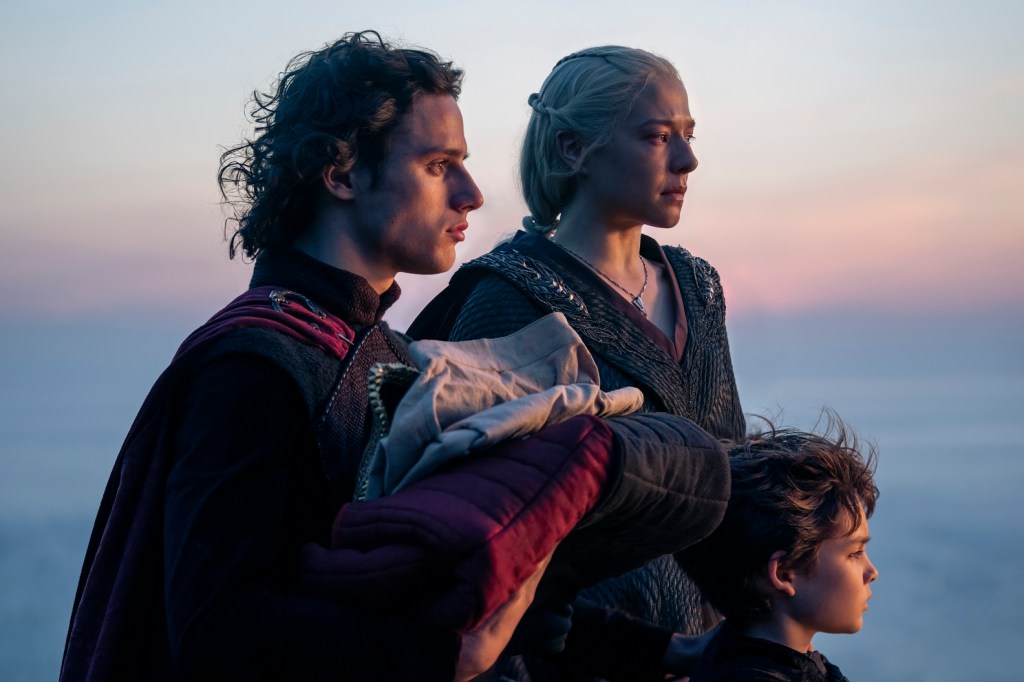
Obviously if you’re familiar with the books already, or even just have a keen ear for the hints dropped this far in the story already, you will have seen the twist at the end of Episode Three coming a mile off, when Egg reveals himself to be Aegon, the missing prince from the delegation of Targaryen royals at the tourney. The arrival of the princes at Ashford is A Knight of the Seven Kingdom‘s main tie to the wider history of Westeros, and in many ways the acknowledgement of their waning power throughout the story bridges the gap between the events of House of the Dragon and Game of Thrones. When Dunk attacks the cruel Aerion in defense of the puppeteer girl he had grown close with, he becomes irreversibly entangled with the royal family; only saved from immediate torture thanks to Egg’s intervention. With little other options to keep himself alive, Dunk is forced into an unorthodox form of trial by combat that pits two teams of seven knights against each other, which felt like a really interesting way of subverting audience expectations after constructing the story thus far around the tourney. It was also a nice payoff for the connections that Dunk made with other characters in the first half of the season to resurface as he scrambles to find allies amongst his friends and the ever-growing number of lords dissatisfied under Targaryen rule, but I did feel a little disappointed that there weren’t a few more scenes spent getting to know some of the characters that decide to fight at his side, making it all the more unceremonious when the two of them that we spend the least time with are killed off-screen.
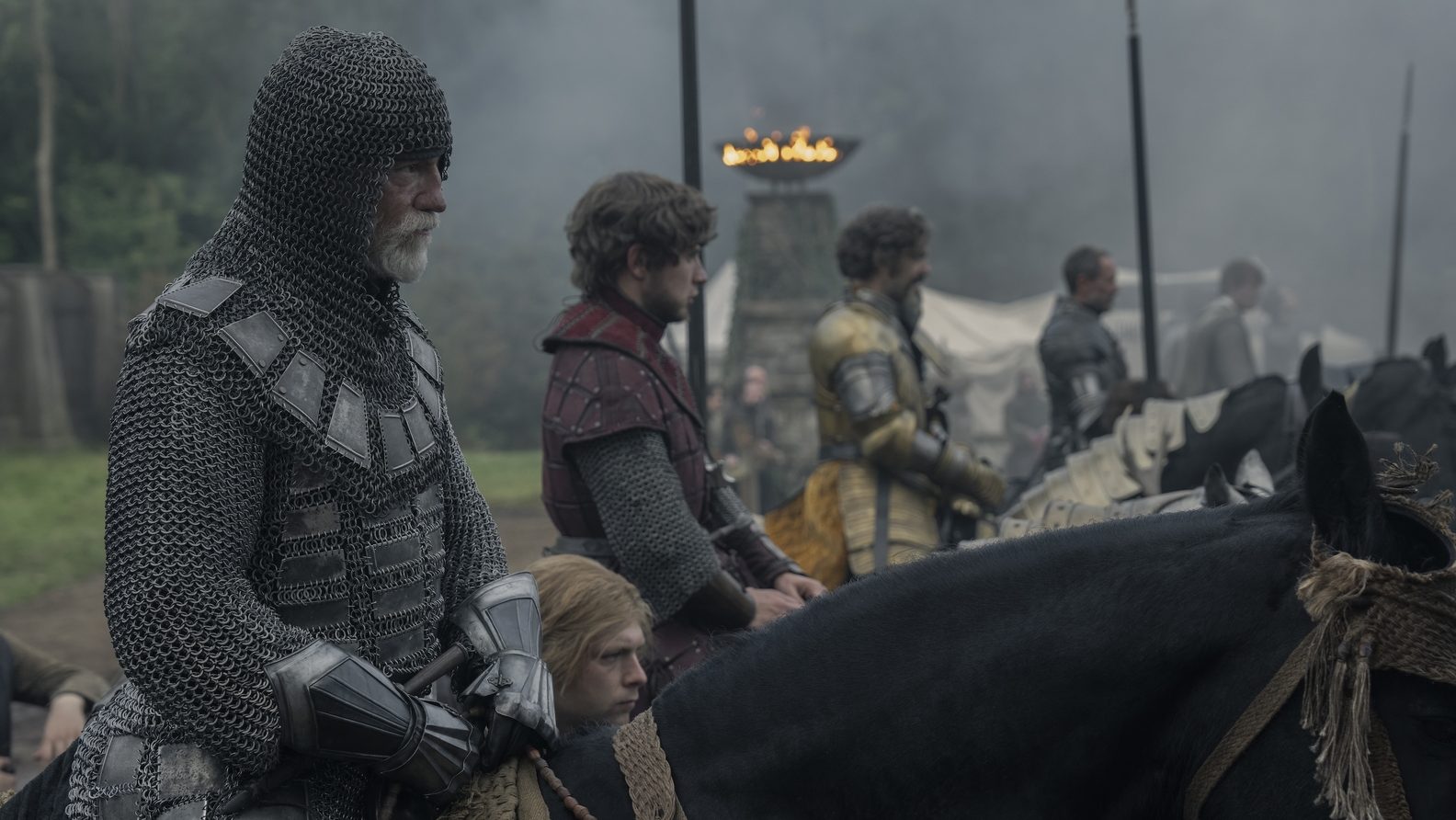
Just when the odds seem to be against him, the show absolutely knocks it out of the park with one of the most epic and inspiring scenes in the entire franchise that absolutely earns that Thrones theme song when Dunk’s seemingly hapless appeal to an unsympathetic crowd is answered when Baelor Targaryen, the heir to the throne, rides out in defense of the hedge knight’s honour. The trial itself is brutal but brief, with the majority of Episode 5 occupied by an extended flashback sequence taking us back to Dunk’s childhood in the slums of Kings Landing. I didn’t dislike these scenes by any stretch, though it was a nice addition to the story to see in detail how Dunk and Ser Arlan first met, I did feel as though most of the flashbacks lacked a strong enough thematic root to justify eating into the battle sequence for that long. Given the universe in which this story takes place, a little bit of sphincter clenching wouldn’t be amiss as Dunk and Aerion go head to head in a bloody melee, but our towering hero claims victory in the end; though not without a heavy cost, as a shock twist has Baelor succumbing to a fatal blow following the battle. The season comes to a quiet close with a short, low-stakes finale that rounds out the stories of its supporting characters with a number of well-earned payoffs and moving dialogues in the wake of the battle; elevating an otherwise uneventful conclusion while positioning Dunk and Egg to head off for their next adventure. I wasn’t a huge fan of the show’s choice to divert from the books in regards to Maekar’s decision about Egg, but I have to trust that it’ll be something that will be accounted for in future seasons with further tweaks to the story.
Underneath the basic mechanics of the plot lies a wellspring of incredibly rich thematic storytelling that truly elevates the series into greatness. I keep coming back to a key piece of dialogue from Episode Four, where Baelor repeats a question to Ser Duncan; “How good a knight are you?” – in the context of their conversation, it’s of course an evaluation of whether Dunk could withstand a trial by combat, yet to me it’s the question that ties together the entire story. Time and time again we see how it’s Ser Arlan’s example and Dunk’s kind heart that have shaped him into the man he is; the man who risks his own life to save an innocent, and the man who inspires others to do the same for him – the picture of a truly “good” knight. However, A Knight of the Seven Kingdoms, like most of Martin’s works, is not a strictly black and white affair – it leaves a lot of its most challenging questions up in the air: whether or not Dunk was actually knighted or simply lied to avoid a life of further hardship, and whether Ser Arlan was really the man he believed him to be. It also poses the idea that despite giving his life in the trial, Baelor wasn’t all that honourable himself to pit himself against family and his sworn protectors, as well as examining the question of nature versus nurture framed by the slow decline of House Targaryen and the dynamic between the princes; asking whether Egg would be better raised amongst his family or on the road with Dunk. In spite of the heavy moral questions, the season ends on a very touching, if not on-the-nose visual metaphor as Dunk watches a vision of Ser Arlan riding away while he heads down his own path with Egg; ready to pass on those values while moving on to the next chapter of his life.
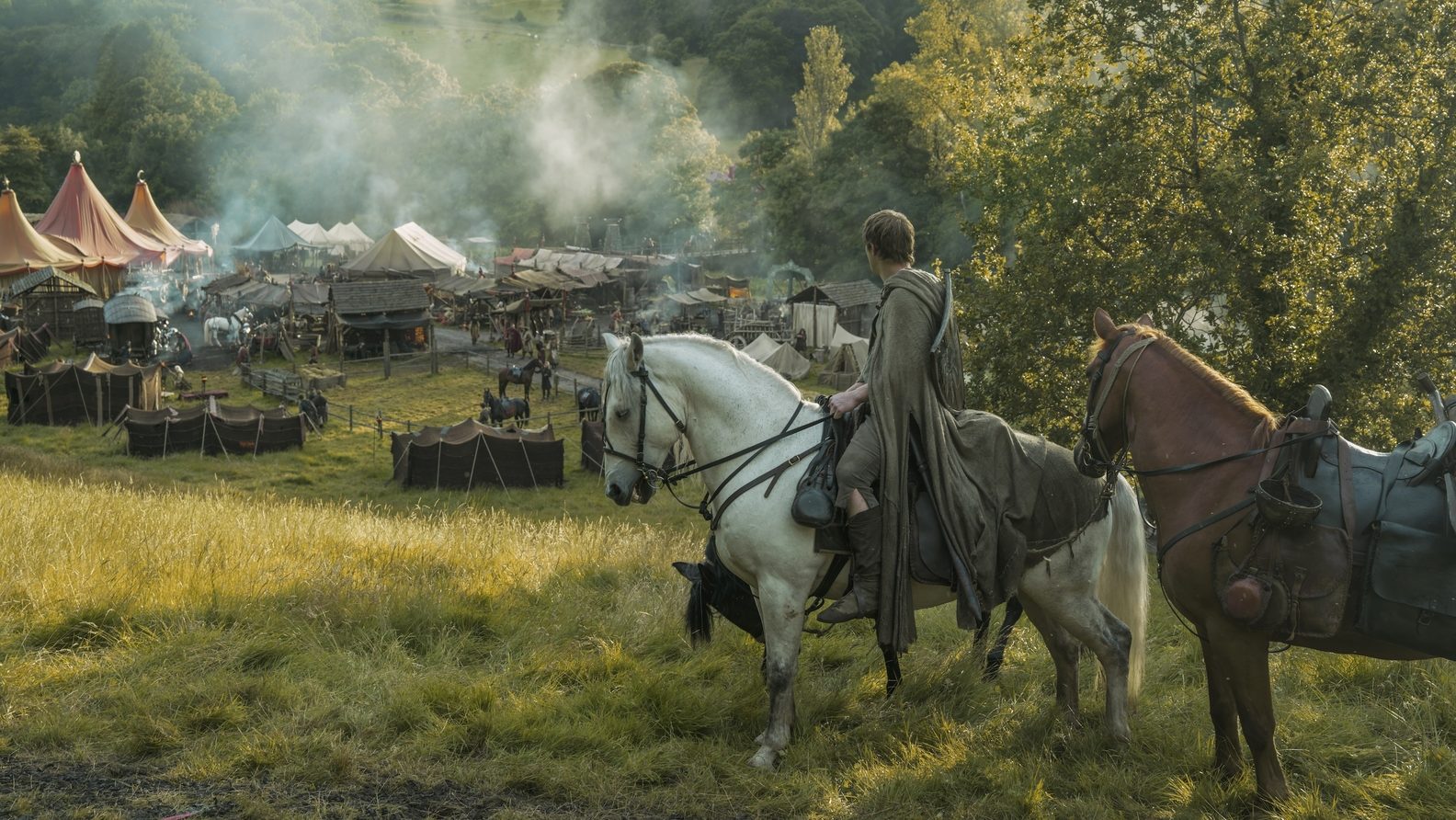
Though obviously smaller in scale (and in budget) to the likes of House of the Dragon, A Knight of the Seven Kingdoms makes the absolute most of it the whole way through. From the moment that Dunk sets foot in Ashford, both the tourney grounds and the town feel wholly alive thanks to sprawling sets bustling with people, and it feels so authentic and independent of the direct events we see on-screen in a way that really helps to sell Dunk as an outsider as he tries to navigate that environment. The first half of the plot really opens the door for a lot of creative setpieces too, such as the dance at the feast or the tug-of-war, and at every turn the cheers, boos and laughter of the crowds help to make the setting feel like a character in its own right. Of course, there are some noticeable limitations in the show’s production; the Trial of Seven being enveloped by a dense fog seemed like a deliberate choice to obfuscate a lot of the action for the sake of budgetary constraints, particularly with the number of stuntmen, horses and resources a sequence of that nature likely requires, and I do wonder if most of Episode Five was taken up by flashbacks for the same reason. It certainly feels as if there’s a splash more colour in both the design and cinematography of the season compared to Thrones and House of the Dragon – not that they were lacking for it compared to the bog standard “digital grey” nearly every major production has slapped on it these days – but it’s nice to see regardless. I also commend composer Dan Romer for providing the series with a beautiful soundtrack too, although I was a bit baffled by the use of contemporary music in the final episode which felt a little out-of-pocket, and dare I say tacky.
Though I do indeed have some objective criticisms of the show as it stands, I can’t pretend like they don’t pale in comparison to how thoroughly I enjoyed A Knight of the Seven Kingdoms, and I have no shame in adding a point onto my score for that alone. It adapts and expands on the source material brilliantly, and hits the nail on the head every single time when it comes to its characters and how they interact, thanks in large part to a cast that absolutely disappear into their roles; none more so than lead stars Peter Claffey and Dexter Sol Ansell, who have instantly become one of the most charming on-screen duos of all time. Quality aside, the show just exudes a positivity and charm that makes it one of the most enjoyable I’ve seen in years (which certainly feels like a blessing as I get back into reviewing), and despite having watched the entire season twice already I’m eager to get stuck into it all over again, so it’s probably a good job that a second season is already on the way for release next year. I can only hope that the show’s adaptation of The Sworn Sword is just as good, but after knocking it out of the park with The Hedge Knight I have a feeling they’ll do just fine.
9/10




Leave a Reply