It’s the second coming of Ubisoft’s 2013 masterpiece with Assassin’s Creed: Black Flag Resynced – a remake that largely begs the question I’m sure we’ve all asked ourselves before – “why do I even exist?”. Enough of the original experience remains intact for the game to be a fun walk down memory lane with a fresh lick of paint, but while Resynced does hold a couple of advantages over its namesake, many of the changes it makes are trivial at best and borderline detrimental at worst.
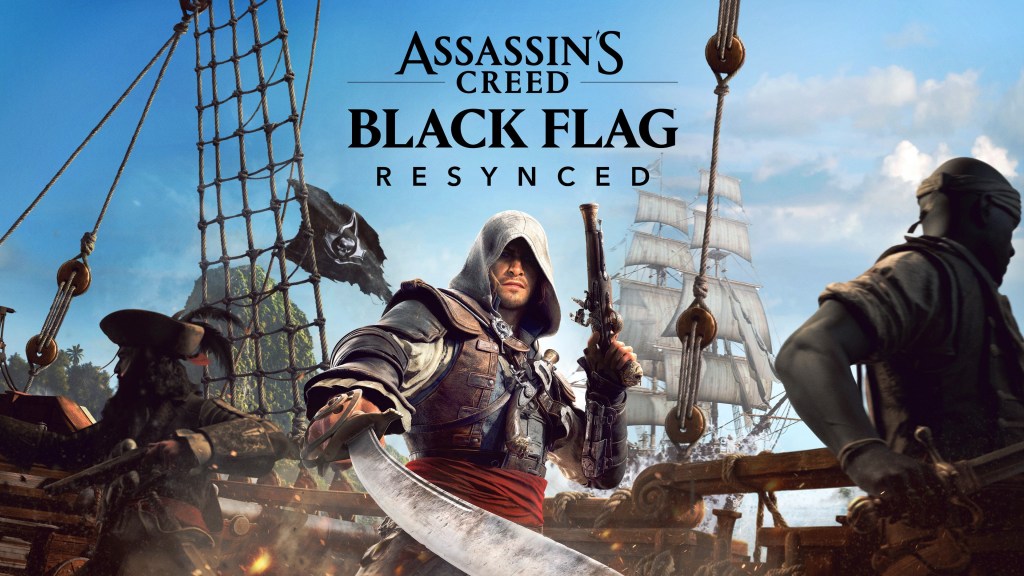
I was 11 years old when I first got my hands on Assassin’s Creed IV (age ratings be damned!) and while I had already played previous entries in the series, Black Flag absolutely captured my imagination in a way they never had – in a way that no game ever had. At the time, it was the apex of what videogames could look like: fantastic gameplay, a vast, detailed open world, and an incredibly powerful storyline; it had it all, and as such it has since remained one of my favourite games of all time. As it happens, a lot of other people feel the same – so it’s not entirely surprising that Ubisoft might look back to the title as the general perception of the franchise seems to continually nosedive into the ground, especially on the back of the controversial Assassin’s Creed: Shadows. Still, while I thought they might have just looked to Black Flag for some inspiration, Ubisoft’s best idea was to remake the game entirely – and after failing miserably to keep the project a secret for years, they finally delivered their final vision for the game with Black Flag Resynced. Me personally? I didn’t exactly think that the game needed the remake treatment, but naturally I couldn’t stay away – at the very least to discover if a game already so close to perfection could get any better…
Minor spoilers ahead!
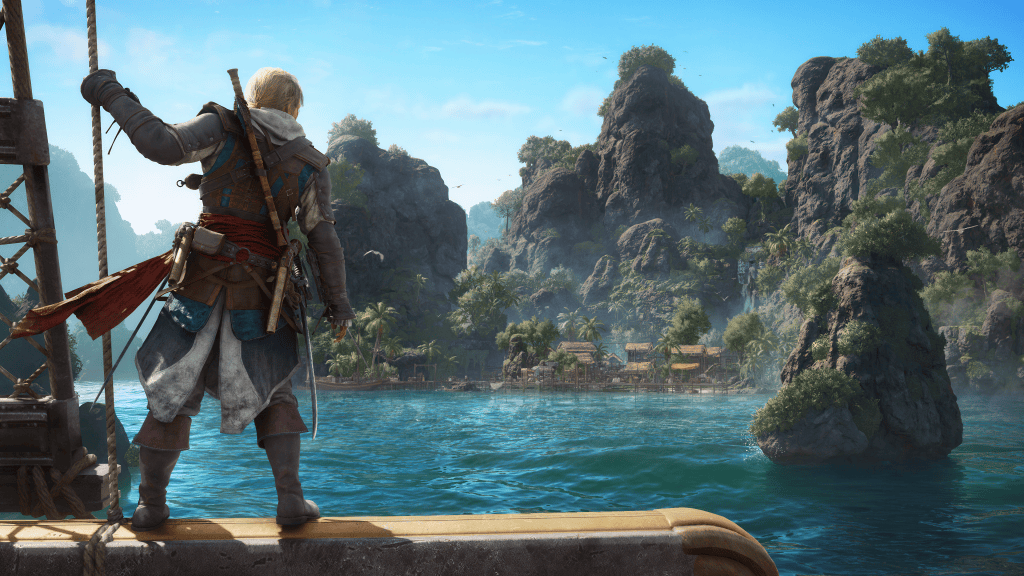
Reassembled on Ubisoft’s in-house Anvil Engine, the striking graphical refresh is probably the very first thing you’ll notice about Black Flag Resynced had you played the original – thrown headfirst into the vibrant Caribbean setting during the game’s opening chapter, the high-end visuals do go a long way in helping to make the experience feel new again for returning players. Story-wise, it is of course a one-to-one reconstruction of Black Flag‘s intro sequence, and that thankfully more or less persists through the rest of the game as you continue on. What I loved then is what I love now; the tale of the pirate-turned-Assassin Edward Kenway, set against the thrilling history of the Golden Age of Piracy, is just as compelling now as it was over a decade ago. That hunger for wealth and power that drives Edward to the brink of ruin, all the while taking many of his loved ones over the edge, gives way to a redemption arc that makes him one of Assassin’s Creed‘s most compelling protagonists amongst an already brilliant cast of supporting characters too. I will admit that revisiting Black Flag on this occasion did highlight a few pacing issues the story might have had – and I do think removing the original game’s modern day sections actually exacerbated this problem, as they were placed in such a way that they broke up the various time jumps in the narrative, without which the plot does seem a bit sporadic. Nevertheless, if nothing else Resynced was a welcome chance to relive one of my favourite story games of all time, and in spite of any changes that brilliance wasn’t lost on me by any means.
The unfortunate side effect of Black Flag‘s story being abidingly excellent is that pretty much all of the narrative content that was added to Resynced is blatantly poor by comparison, and thus the new additions stick out like a sore thumb when muddled in with the original plot. One of the remake’s main selling points was the new “A World Without Gold” questline; an eight-part adventure late in the game that pits Edward against Robert Maynard – the pirate hunter who kills Blackbeard during the main story. Only, it’s a baffling choice that these missions, that portray Edward as singularly driven by greed, unlock at the tail end of his character arc when he’s already seen the error of his ways and all the trouble that his pursuit of riches has wrought. The missions themselves are forgettable as is, and the difference between the original writing and what you get here is stark when you realise how laden some of the new dialogue is with exposition and player handholding; a bleak reminder of how so many game developers insist on catering to the lowest possible denominator. The same is true for more or less every new instance of dialogue or story content – the quests that unlock new Officers for your ship are particularly tacky, with abrupt and disjointed quest chains that “reward” you by leaving you stuck with annoying, out-of-place characters that fit the sanitised mould of modern videogame characters to a tee. Even the replacement modern-day sections feel lame, offering little more than parkour-centric dreamscape segments that try to sell themselves as “What If?” storylines for a handful of characters, and some half-baked commentary about AI.
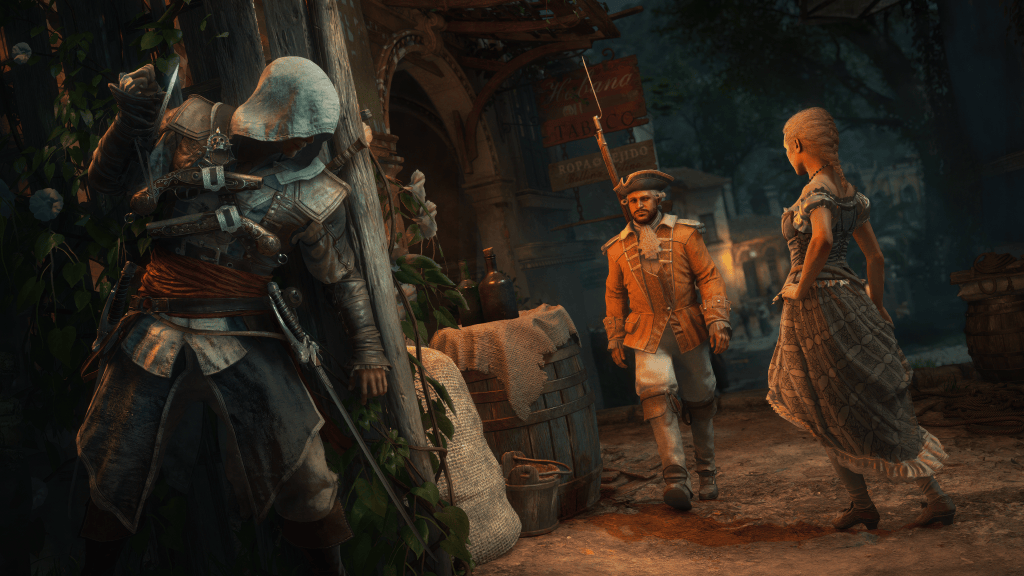
Where the game does benefit a little more is through changes and additions to some of its core mechanics. For one, though I don’t believe it was strictly necessary, the combat receives a massive revamp that places it at a comfortable midway point between the original Black Flag‘s fluid kill-chains and the action combat seen in the newer RPG titles. I was a little disappointed to see that Ubisoft had elected to remove unarmed and Hidden Blade combat as standard options, as well as the option to pick up enemy weapons mid-fight, but it was conversely nice to see some new abilities introduced to complement the new combo-based playstyle. Still, at least “if it ain’t broke, don’t fix it” applies to some areas, with the beloved ship gameplay remaining intact and feeling just as fun as it did 13 years ago. Certain missions have also been restructured to keep the game feeling engaging, namely the much-lamented tailing and eavesdropping segments from the original game, which comes as a welcome change. Parkour also has been brought more in line with newer games with more moves and a higher degree of control – at least, supposedly, since in practice it feels incredibly janky much of the time. By and large however it’s the little quality-of-life changes that make a world of difference – the seamless open world removes the need for loading screens travelling between the game’s cities, Edward’s hood can now be raised or lowered at will, and you’re able to skip through the day/night cycle at will when needed, and environments are redesigned with traversal in mind, just to name a few.
A lot of the supplementary content from the original game is fleshed out too – for one, make your hideout feel more your own with new upgrades available for Edward’s settlement at Great Inagua, as well as further customisation and a very very light quest chain involving Bernard, the butler at the estate who is a new addition to the remake. Naval contracts follow suit with a new character and a small story element too, while Assassin contracts have been revamped and rebalanced for player enjoyment. For the most part, small changes like these do enhance the experience, but they can also fly under the radar if you aren’t paying attention – which doesn’t really do much to make the experience feel new if you’ve already played Assassin’s Creed IV. There are also some instances when the changes aren’t exactly improvements – the Legendary ship battles were difficult enough in Black Flag‘s original release, but here the challenge is nothing short of obscene; taking me hours to beat even one of the four encounters on the highest difficulty. Nevertheless, like the original game there’s no shortage of activities, collectables and encounters to complete outside of the main story, and frankly with all the new additions that Resynced brings on top of that, it teeters on feeling bloated by the time I managed to complete everything after eighty or so hours. Unfortunately on the other side of that, the removal of synchronisation objectives and mission replay (as well as the lack of a dedicated New Game Plus mode) means that there isn’t much of a reason for me to go back to the game at this point in time.
All things considered, my feelings on Black Flag Resynced are pretty conflicting, and it certainly makes it a tough game to put a rating to. As a game – it is still Black Flag, and I would never lament someone playing it to experience the adventure for the first time, or to revisit an old favourite through fresh eyes. Yet, as a remake, it has about as many hits as it does misses in terms of the changes it makes to the gameplay. The illusion of a modernised and polished experience that Resynced creates with its revitalised graphics and revamped gameplay can just as quickly be shattered by the lacklustre additional story content and the changes that take away from Black Flag‘s original vision. Still, more than enough of that DNA remains for it to wow fans both old and new, and while personally I’d sooner recommend that someone unfamiliar with the title took a chance on the original, Resynced is irrespectively a great game either way. For me, as much as there were areas I felt had let me down, I still massively enjoyed my playthrough as a returning player, and in the end I can’t say it wasn’t worth it to revisit such a special game all over again.
8/10



Leave a Reply